
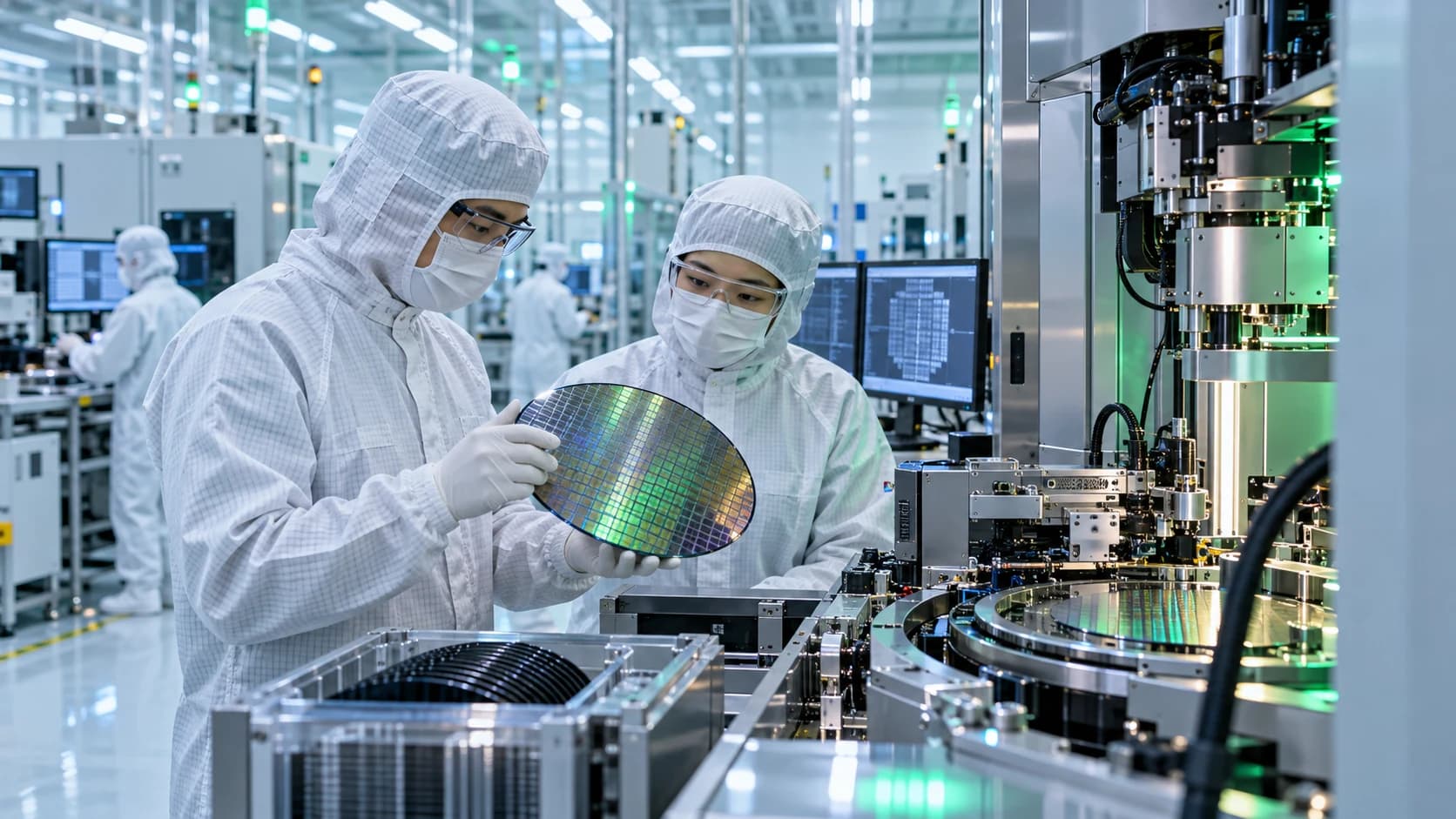
Illustrative image — not a photograph of the company, event, person or site named in this story.Image credit: T3 concept illustration (AI-generated)
Thailand Approves First National Semiconductor Strategy, Targets US$80 Billion by 2050
Thailand's National Semiconductor and Advanced Electronics Policy Board approved the country's first national semiconductor strategy on 24 September 2026, targeting 500 billion baht in investment by 2030 and more than 2.5 trillion baht (about US$80 billion) by 2050.
source verified
Thailand's National Semiconductor and Advanced Electronics Policy Board approved the country's first comprehensive National Semiconductor Strategy on 24 September 2026. The board is chaired by Deputy Prime Minister and Finance Minister Ekniti Nitithanprapas, who described it as "Thailand's first comprehensive national framework for building semiconductor capabilities," intended to give "investors a clear view of our technology priorities."
The strategy sets an investment target of 500 billion baht within five years (by 2030), rising to more than 2.5 trillion baht — roughly US$80 billion — within 25 years (by 2050). It also targets around US$150 billion in annual industry revenue and more than 230,000 new jobs by 2050. A three-phase roadmap runs from strengthening semiconductor assembly, testing and advanced-packaging capability and laying groundwork for front-end wafer production (by 2030), to attracting anchor investors in chip design, wafer fabrication and upstream manufacturing (by 2040), to building a complete domestic supply chain anchored by Thai "local champion" companies (by 2050).
The plan prioritises three technology platforms: photonics for AI and data-centre applications, power semiconductors for electric vehicles and energy storage and grids, and sensors for connected devices, automotive and medical uses. A workforce-development program aims to train 86,600 people by 2030, including 84,900 highly skilled personnel and about 1,700 advanced researchers, in coordination with Thailand's Ministry of Higher Education.
For a country already home to a growing base of electronics and EV-supply-chain investment, the strategy signals a longer-term ambition to move up the value chain from assembly and testing toward chip design and wafer fabrication — a shift relevant to BOI-approved manufacturers and prospective investors evaluating Thailand's industrial roadmap over the next two to three decades.
Sources and Verification
Bangkok Biz News
Thailand Approves First National Semiconductor Strategy, Targets US$80 Billion by 2050
- Publication date:
- Last checked:
Author / publisher: T3 — The True Thailand
Related T3 Pages
T3 provides this independently prepared summary for general information. Facts and figures are attributed to the sources listed below and should be confirmed with the responsible organization before being relied upon.