
T3 FOOD & DINING
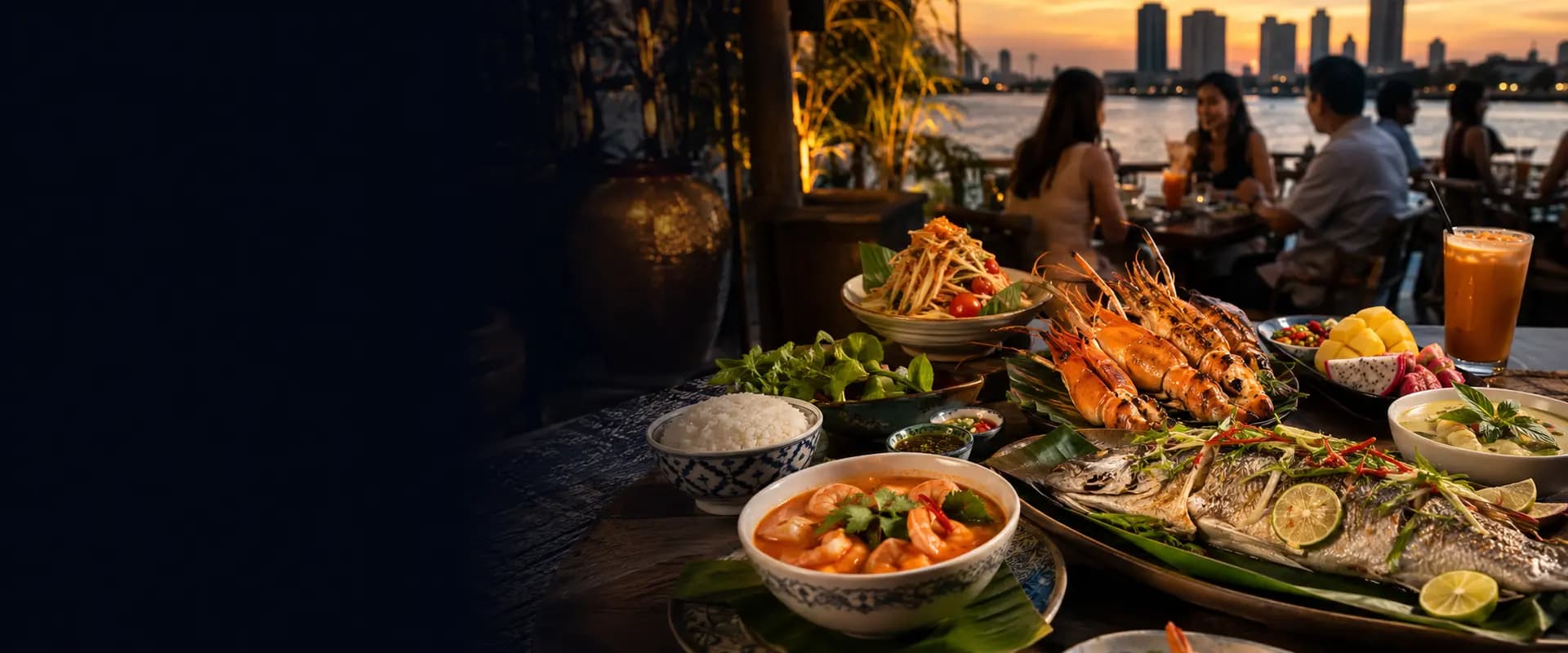
Every Flavour. Every Table. One Thailand.
From legendary street food and regional Thai kitchens to coastal seafood, contemporary fine dining, halal restaurants and international cuisines, Thailand invites every visitor to discover food in their own way.
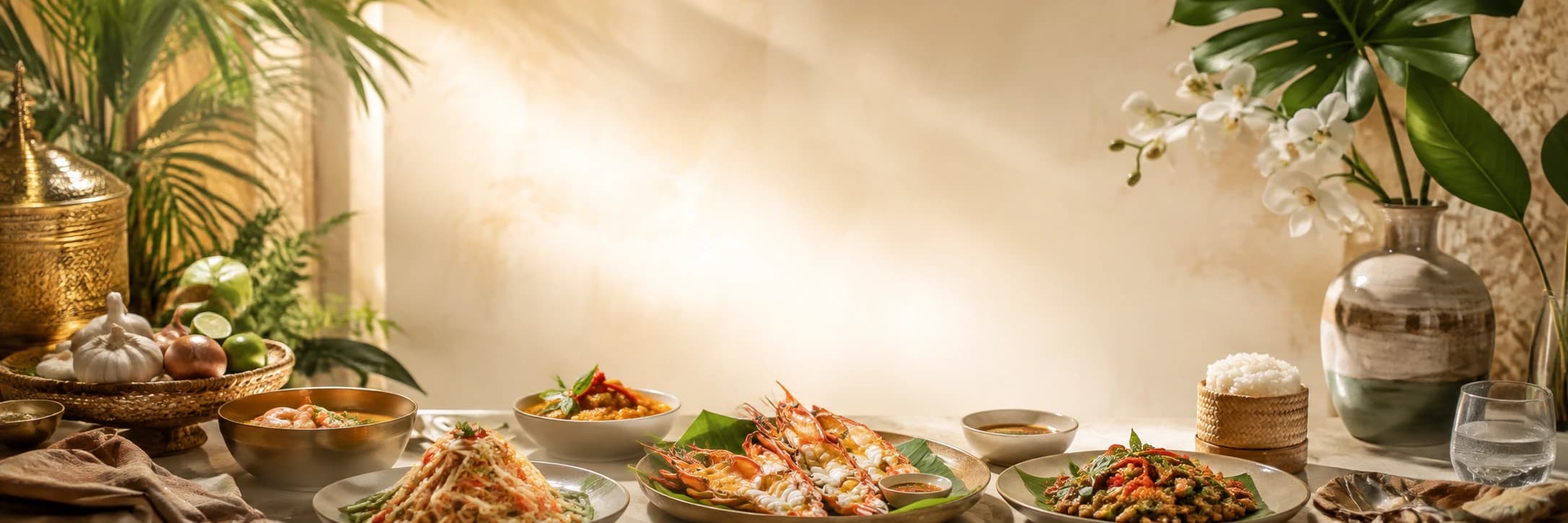
Thailand Is a Country You Can Taste
In Thailand, food is not simply something to eat—it is how places, people and traditions introduce themselves.
Where Thailand Eats
From street stalls and local markets to family restaurants, fine dining and halal-friendly kitchens, Thailand serves every kind of table.
Start with Thailand's Iconic Flavours
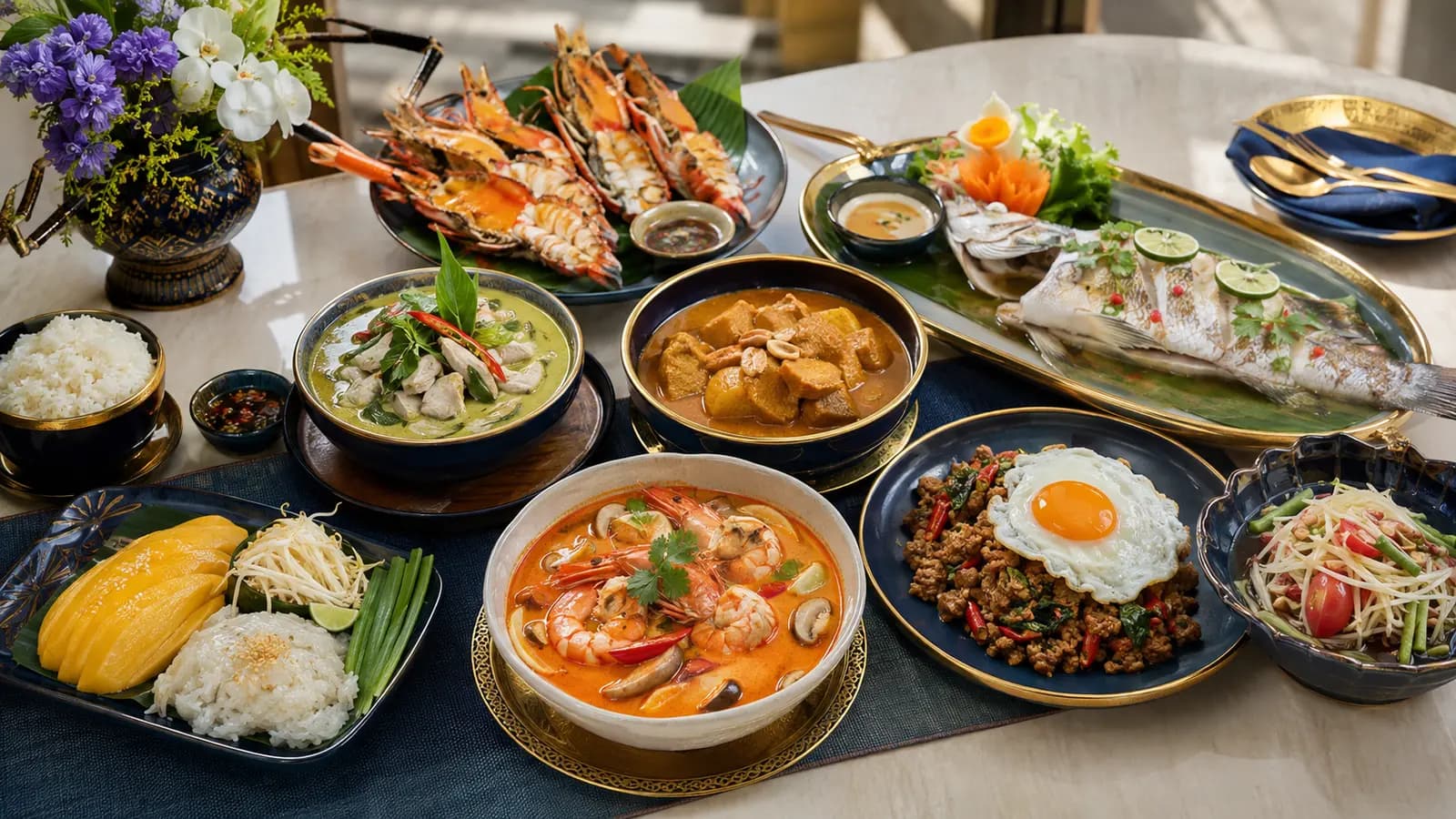
A hot-and-sour soup built on lemongrass, galangal and lime, usually made with prawns.
- Flavour:
- Sour, spicy, aromatic
- Common ingredients:
- Prawns, lemongrass, galangal, lime leaves, chili, fish sauce
- Dietary:
- Typically seafood-based; a vegetarian version is not standard but can sometimes be requested
Stir-fried rice noodles with egg, tofu, bean sprouts and a tamarind-based sauce, often with shrimp or chicken.
- Flavour:
- Sweet, sour, savoury
- Common ingredients:
- Rice noodles, tamarind, fish sauce, palm sugar, egg, bean sprouts, peanuts
- Dietary:
- Meat, seafood or vegetarian versions exist — confirm fish sauce use if avoiding fish products
A coconut-milk curry made with green chili paste, typically with chicken, eggplant and Thai basil.
- Flavour:
- Spicy, aromatic, rich
- Common ingredients:
- Green chili paste, coconut milk, Thai basil, eggplant, fish sauce
- Dietary:
- Usually contains fish sauce and shrimp paste in the curry base — ask if a plant-based paste is used
A milder, spice-forward coconut curry with Muslim and South Asian culinary influence, often made with beef or chicken and potatoes.
- Flavour:
- Sweet, savoury, warmly spiced
- Common ingredients:
- Coconut milk, cinnamon, cardamom, star anise, tamarind, peanuts, potato
- Dietary:
- Meat-based versions are common; vegetarian and halal versions exist depending on the kitchen — always confirm
- Region:
- Southern-influenced, served nationwide
Stir-fried minced meat with holy basil and chili, usually served over rice with a fried egg.
- Flavour:
- Spicy, savoury, aromatic
- Common ingredients:
- Holy basil, chili, garlic, fish sauce, minced chicken or beef
- Dietary:
- Typically meat-based — tofu versions exist at some restaurants
A pounded green papaya salad from Northeastern Thailand, balancing sour, spicy and sometimes sweet flavours.
- Flavour:
- Sour, spicy, savoury
- Common ingredients:
- Green papaya, lime, chili, fish sauce, palm sugar, dried shrimp or peanuts
- Dietary:
- Traditional versions use fish sauce and dried shrimp; a vegetarian version exists using soy sauce instead
- Region:
- Northeastern Thailand (Isan)
A Northern Thai curry noodle soup topped with crispy fried noodles, associated with Chiang Mai and the Lanna region.
- Flavour:
- Rich, spiced, savoury
- Common ingredients:
- Egg noodles, curry paste, coconut milk, chicken or beef, pickled mustard greens
- Dietary:
- Usually meat-based; vegetarian versions are available at some restaurants
- Region:
- Northern Thailand
A minced-meat salad seasoned with toasted rice powder, lime and chili, closely associated with Isan and Lao culinary tradition.
- Flavour:
- Sour, spicy, savoury
- Common ingredients:
- Minced chicken or beef, toasted rice powder, lime, fish sauce, mint
- Dietary:
- Traditionally meat-based; a mushroom or tofu version can be found at some restaurants
- Region:
- Northeastern Thailand (Isan)
A coconut-milk soup with galangal, lemongrass and chicken — milder than tom yum.
- Flavour:
- Creamy, sour, aromatic
- Common ingredients:
- Coconut milk, galangal, lemongrass, chicken, lime leaves, fish sauce
- Dietary:
- Usually chicken-based; a vegetable or tofu version can sometimes be requested
Sweet sticky rice served with fresh mango and coconut cream — a widely recognized Thai dessert.
- Flavour:
- Sweet, creamy
- Common ingredients:
- Glutinous rice, coconut milk, sugar, fresh mango
- Dietary:
- Vegetarian; contains coconut milk — check for other allergens with the vendor
Whole sea bass steamed with garlic, chili and lime — a well-known Thai seafood preparation.
- Flavour:
- Sour, spicy, savoury
- Common ingredients:
- Sea bass, lime juice, garlic, chili, fish sauce, coriander
- Dietary:
- Seafood-based; not suitable for shellfish or fish allergies
Large freshwater prawns grilled and served with a spicy seafood dipping sauce, popular along Thailand's rivers.
- Flavour:
- Smoky, savoury, spicy (from the dipping sauce)
- Common ingredients:
- River prawns, lime, chili, garlic, fish sauce
- Dietary:
- Shellfish-based — not suitable for shellfish allergies
Stir-fried crab in a yellow curry-egg sauce — a well-known dish in coastal and Bangkok Chinese-Thai restaurants.
- Flavour:
- Savoury, mildly spiced, rich
- Common ingredients:
- Crab, curry powder, egg, evaporated milk or coconut milk, spring onion
- Dietary:
- Shellfish-based — not suitable for shellfish allergies
- Region:
- Coastal areas and Bangkok
A crispy fried egg omelette, often served over rice as an everyday comfort dish.
- Flavour:
- Savoury
- Common ingredients:
- Eggs, fish sauce, oil
- Dietary:
- Vegetarian if made without fish sauce — ask, as fish sauce is common
A rich, dark broth noodle soup traditionally sold from boats along Bangkok's canals, usually served in small portions.
- Flavour:
- Rich, savoury, mildly spiced
- Common ingredients:
- Rice noodles, beef, blood (in traditional versions), herbs, chili
- Dietary:
- Traditional versions may contain blood as a broth thickener — ask if you prefer a version without it
- Region:
- Central Thailand, Bangkok
Grilled skewered meat served with a peanut dipping sauce and cucumber relish — found across Thailand and the wider region.
- Flavour:
- Savoury, sweet, nutty
- Common ingredients:
- Chicken or beef, turmeric, coconut milk, peanut sauce
- Dietary:
- Contains peanuts — not suitable for peanut allergies; meat-based
A sharp, sour yellow curry from Southern Thailand, built on turmeric and typically made with fish or vegetables.
- Flavour:
- Sour, spicy, earthy
- Common ingredients:
- Turmeric, fish, tamarind, chili, fish sauce
- Dietary:
- Usually fish-based; vegetable versions exist
- Region:
- Southern Thailand
Before You Order
Ingredients, spice levels and preparation vary by cook, restaurant and region. Always confirm allergens and dietary requirements directly with the restaurant or vendor before ordering — a dish is not automatically vegetarian, vegan or halal simply because one version of it can be prepared that way.
Understanding Thai Flavours
Sweet
From palm sugar, coconut milk and tropical fruit — balances heat and acidity rather than dominating a dish.
Sour
From lime, tamarind and vinegar — a defining feature of many Thai soups and salads.
Salty
Usually from fish sauce or soy sauce rather than table salt.
Spicy
From fresh and dried chilies — intensity varies enormously by region, dish and cook.
Bitter
Found in some herbs, vegetables and Southern dishes — used in smaller amounts to add depth.
Aromatic
From lemongrass, galangal, kaffir lime leaves and fresh herbs — central to Thai cooking's fragrance.
Savoury (Umami)
From fish sauce, fermented ingredients, and shrimp paste — the backbone of many Thai sauces and curries.
What Goes In
A short list of ingredients that show up again and again, in different combinations.
- Lime
- Tamarind
- Lemongrass
- Galangal
- Kaffir (makrut) lime leaves
- Thai basil
- Coconut milk
- Fish sauce
- Palm sugar
- Fresh chilies
- Dried chilies
- Garlic
- Shallots
- Coriander
- Fermented ingredients
Balance, Not a Single Flavour
Thai dishes are often balanced rather than defined by one flavour alone. Recipes and spice levels vary by region, cook and restaurant.
A Useful Visitor Note
If you need less heat, ask before ordering. "Not spicy" may still contain chili or chili-based seasoning.
From the Wok to the Table
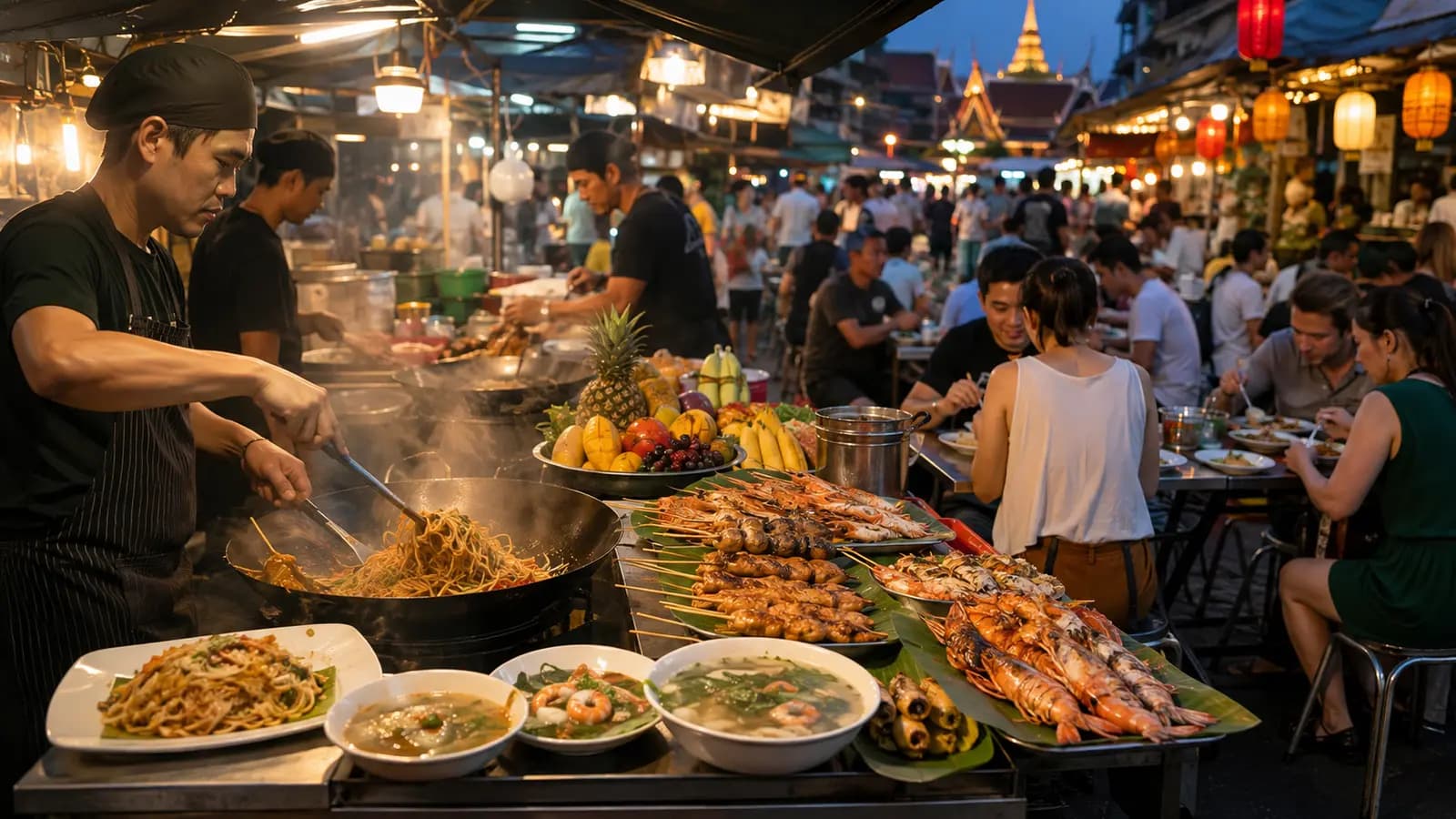
Fast, fragrant and full of theatre—some of Thailand's most memorable meals are cooked before your eyes and remembered long after the last bite.
Where the Flavour Lives
One street-food culture. Countless ways to experience it.
Street food in Thailand is not limited to pavement stalls. It moves through morning markets, night bazaars, neighbourhood shophouses, food courts and specialist family-run kitchens. Each setting offers a different rhythm—from a quick bowl of noodles before work to an evening shared around grilled seafood, curries and freshly prepared desserts.
Follow the sound of the wok, the aroma of charcoal and the steady queue of local diners.
- Street-food stalls
- Morning markets
- Night markets
- Food courts
- Shophouse restaurants
- Noodle specialists
- Rice-and-curry shops
- Grilled-food vendors
- Fruit and dessert stalls
- Seafood markets
Choose busy stalls with visible turnover
Ingredient freshness is easier to judge when a stall is actively cooking and serving, not simply busy or popular online.
Watch the cooking, not just the queue
Visible, cooked-to-order preparation is a more useful signal than a stall's popularity alone.
Drinking water
Bottled or filtered water is widely available; ask if unsure about tap water at a specific stall.
Allergies
Fish sauce, shrimp paste, peanuts and shellfish appear across many street dishes — ask before ordering if you have an allergy.
Spice levels
You can usually request less spice — ask before the dish is cooked, not after.
Cash and digital payments
Cash remains common at street stalls; QR/digital payment acceptance varies by vendor.
Opening times
Many stalls operate specific hours (morning, evening or night-market only) — check before making a special trip.
Queue etiquette
Order clearly, be ready to pay, and give up your seat once you have finished eating at busy stalls.
Waste reduction
Bring a reusable bag or container where practical, and dispose of packaging responsibly.
Respectful food photography
Ask before photographing vendors closely, and be mindful of blocking a stall's workflow.
Hygiene Varies by Stall
Hygiene standards vary between individual stalls and locations — busy or popular does not automatically mean higher standards, and this page does not rank or endorse specific vendors.
Regional Food Diversity
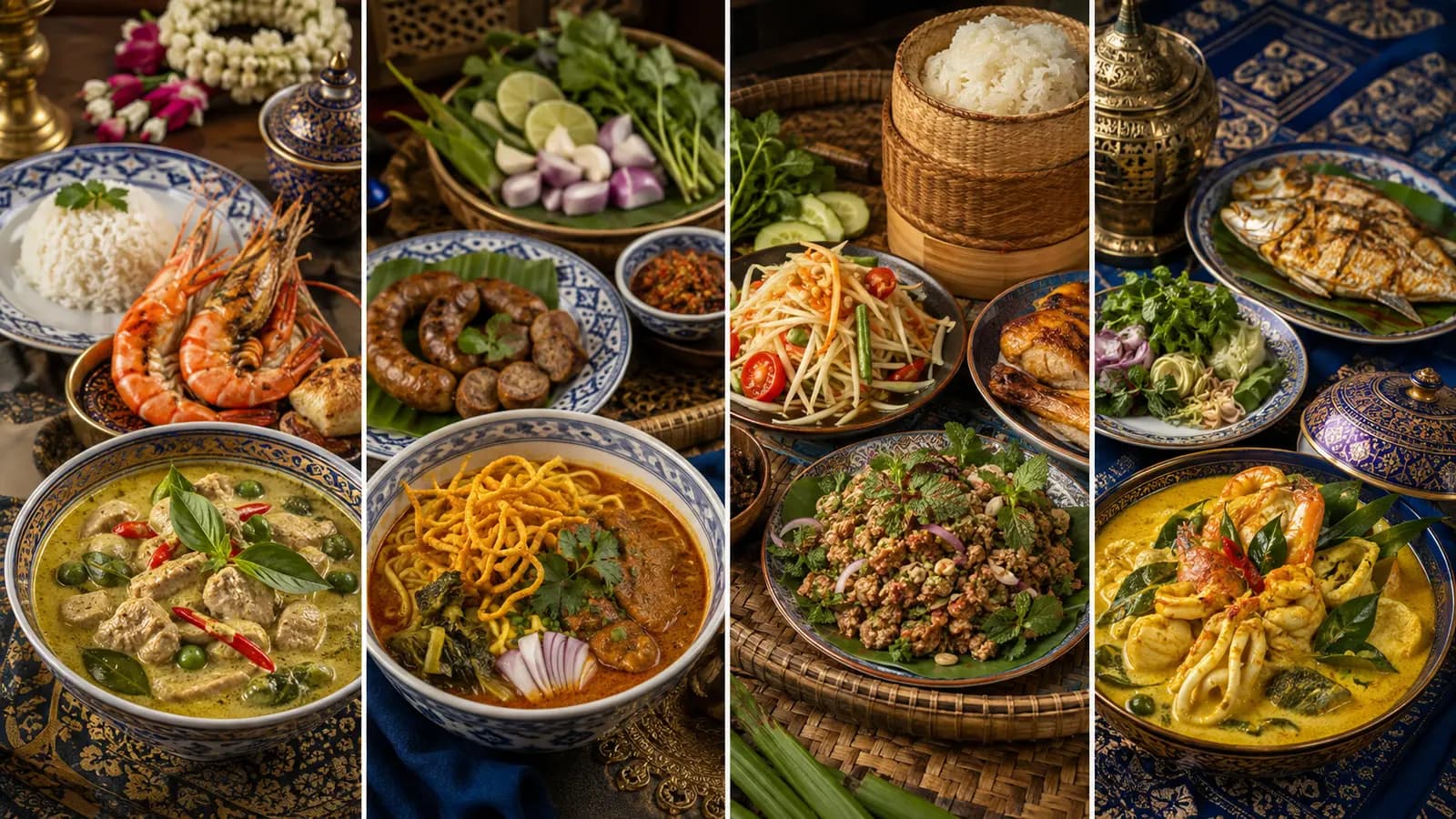
Central Thailand
Balanced, coconut-milk-forward curries with royal-influenced refinement — the cuisine most internationally associated with "Thai food."
Northern Thailand
Milder and herb-forward, shaped by neighboring Lanna and Burmese culinary traditions.
Northeastern Thailand (Isan)
Bold, fermented, and chili-forward, closely tied to Laotian culinary tradition.
Southern Thailand
Intensely spiced and seafood-forward, influenced by Malay and Muslim culinary traditions.
Regional Labels, Not Rules
Regional labels describe broad culinary traditions. Recipes, ingredients and identities vary within every region.
Where Will Your Appetite Take You?
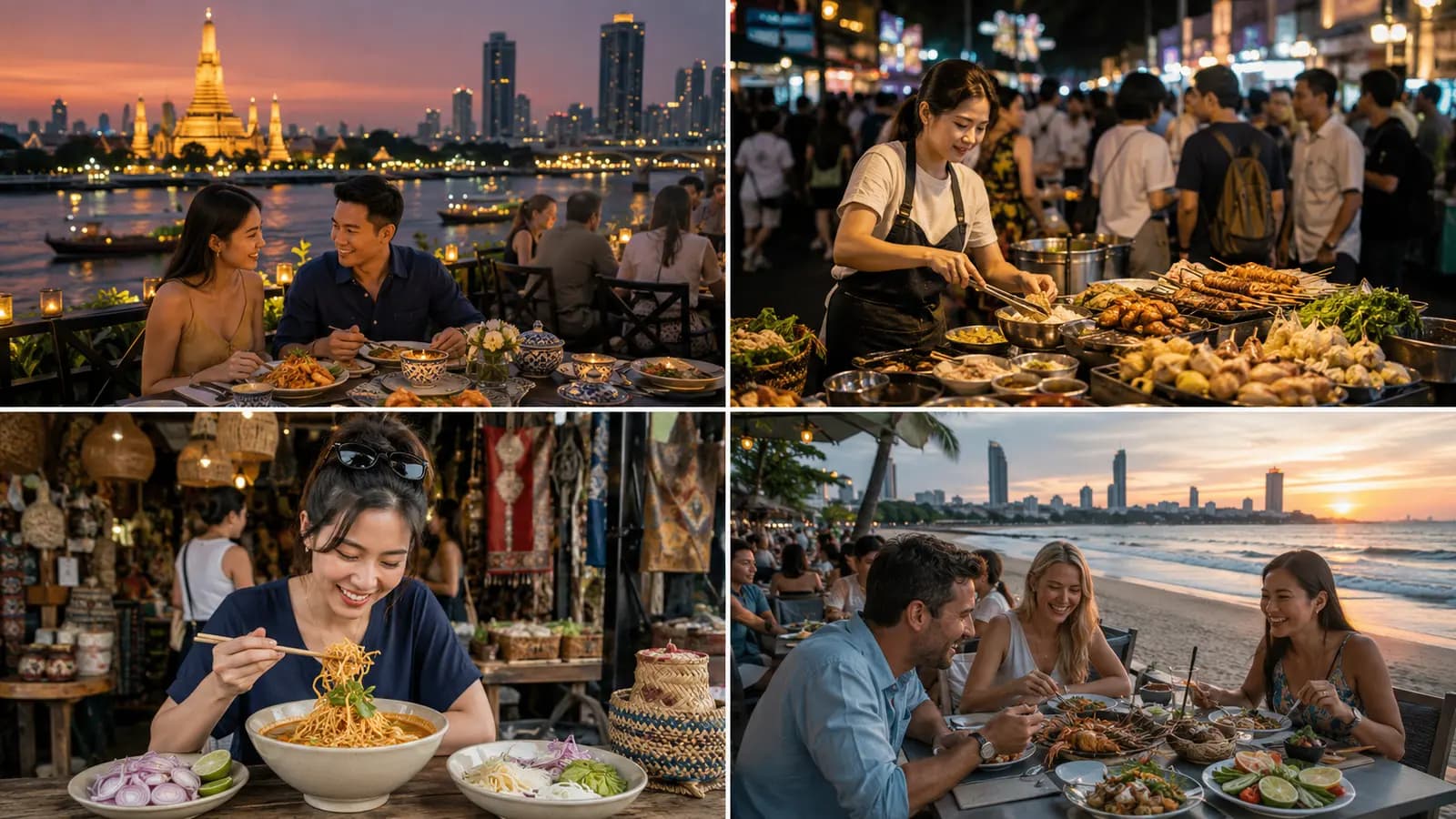
From Bangkok's riverside and night markets to northern kitchens and coastal dining, every destination brings a different food experience.
Where to Go
Every region and city serves it differently — here is where to start.
- Bangkok
- Chiang Mai
- Phuket
- Pattaya
- Ayutthaya
- Hua Hin
- Krabi
- Samui
- Isan
- Southern Border Provinces
- Other Regions
Bangkok
- Street food
- Historic neighborhoods
- Chinatown dining
- Riverside dining
- Food courts
- Contemporary Thai restaurants
- Fine dining
- Rooftop restaurants
- International cuisines
- Muslim-friendly dining areas
Chiang Mai
- Northern Thai cuisine
- Khao soi
- Sai ua
- Markets
- Cafés
- Farm-to-table experiences
- Cooking classes
Phuket
- Seafood
- Southern Thai cooking
- Phuket Peranakan (Baba) culinary influences
- Old Town dining
- Beach and resort restaurants
- Muslim-friendly options
Pattaya
- Beachside seafood
- International restaurants
- Thai casual dining
- Hotel dining
- Indian, Pakistani, Middle Eastern, Chinese, Korean, Japanese and European options
Ayutthaya
- River prawns
- Boat noodles
- Riverside restaurants
- Historic-market experiences
Hua Hin & Cha-am
- Coastal seafood
- Night markets
- Resort dining
- Local desserts
Krabi & Southern Thailand
- Seafood
- Southern curries
- Muslim-influenced food
- Halal options
- Island and coastal dining
Thailand from the Sea
With two coastlines, island communities and a river system woven through everyday life, seafood in Thailand is more than a holiday indulgence. It is part of the country's daily food culture—from market prawns and charcoal-grilled fish to southern curries and elegant coastal dining.
From the Gulf to the Andaman, every coast brings a different catch, cooking tradition and sense of place to the table.
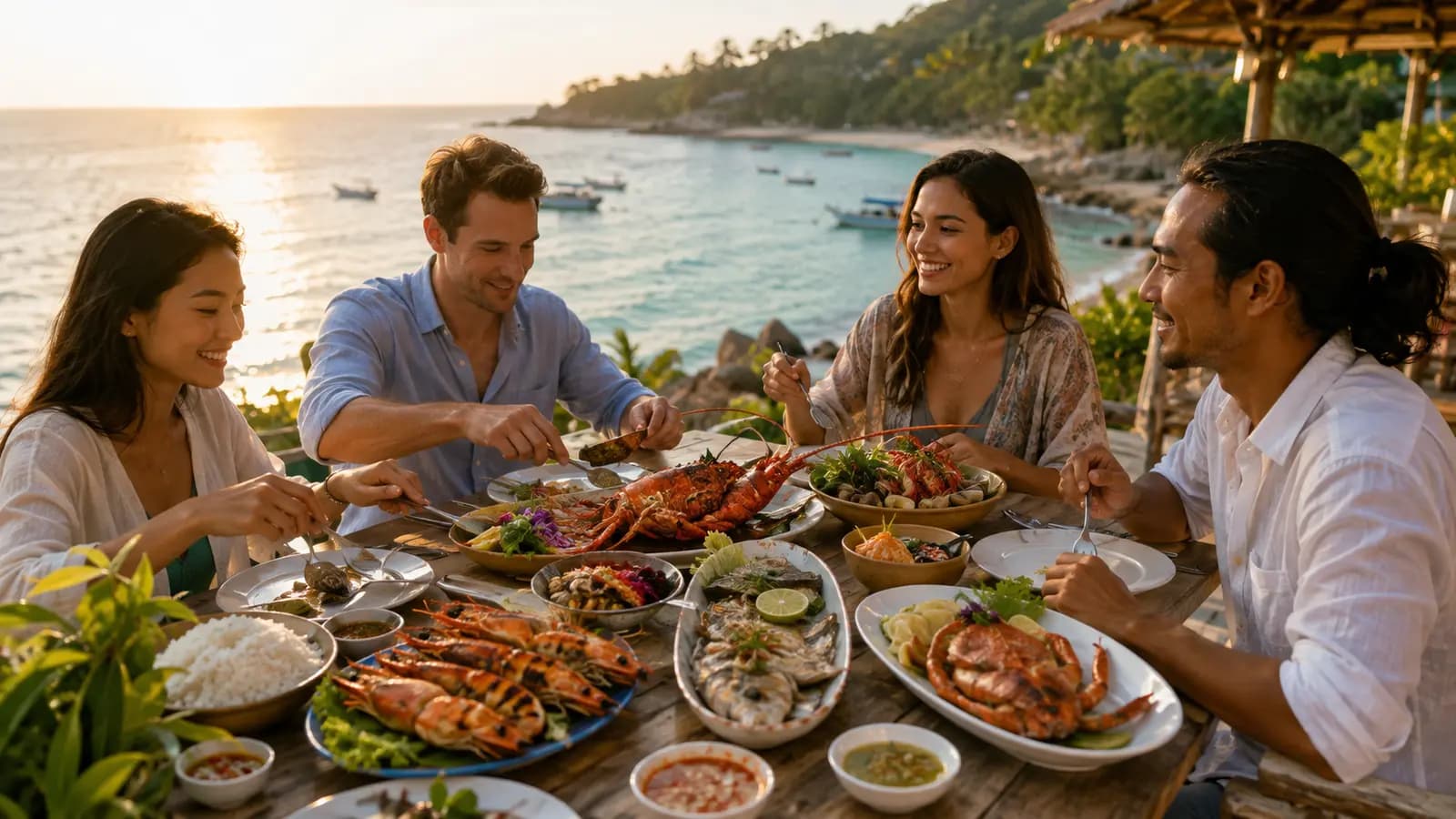
A Coastline on the Plate
Fresh catches, regional recipes and seaside tables worth lingering over.
Menus change with destination, season and local supply. Gulf-coast cooking often features sea bass, squid, crab and mussels, while Andaman destinations are known for prawns, lobster, reef fish and herb-forward southern flavours. River prawns and freshwater fish add another dimension in central Thailand.
Fresh Catches
- Sea bass
- River prawns
- Marine prawns
- Lobster
- Crab
- Squid
- Shellfish
Ways to Enjoy Them
- Charcoal-grilled fish
- Steamed fish
- Seafood curries
- Spicy seafood salads
- Regional dipping sauces
Region
Gulf Coast Cooking
Along the Gulf coast — from Phetchaburi and Cha-am down toward the Gulf islands — menus often lean on sea bass, squid, blue crab and mussels, commonly steamed or stir-fried with Thai basil and chilli, reflecting a long tradition of coastal fishing communities and calmer inshore waters.
Region
Andaman Coast Cooking
On the Andaman coast — Phuket, Krabi and Phang Nga — catches typically run larger, with rock lobster, tiger prawns and reef fish featuring more often, frequently served simply grilled or folded into the sourer, herb-forward curries associated with southern Thai cooking.
River Prawns, Marine Prawns & Lobster
River prawns, marine prawns and lobster are different products with different textures, sizes and typical pricing — river prawns are freshwater and often grilled whole, marine prawns are saltwater and used across many preparations, and lobster is generally the most expensive of the three. Ask the restaurant which one you are ordering, especially when seafood is priced by weight.
A useful question at the table: is this river or marine, and is it priced by weight or by plate? A clear, specific answer is usually a good sign about how the kitchen sources its seafood.
Sourcing Varies
Not all seafood in Thailand is local, wild-caught or sustainably sourced — sourcing varies by restaurant, season and species. Ask if you would like to know more about a specific dish's origin.
Tradition, Reimagined
Thailand's contemporary dining scene begins with memory: family recipes, regional ingredients and techniques refined over generations. Today's chefs are carrying those foundations forward—presenting familiar flavours with new precision, thoughtful sourcing and a distinctly modern sense of place.
Tradition is not being replaced. It is being rediscovered, refined and shared with a new generation.
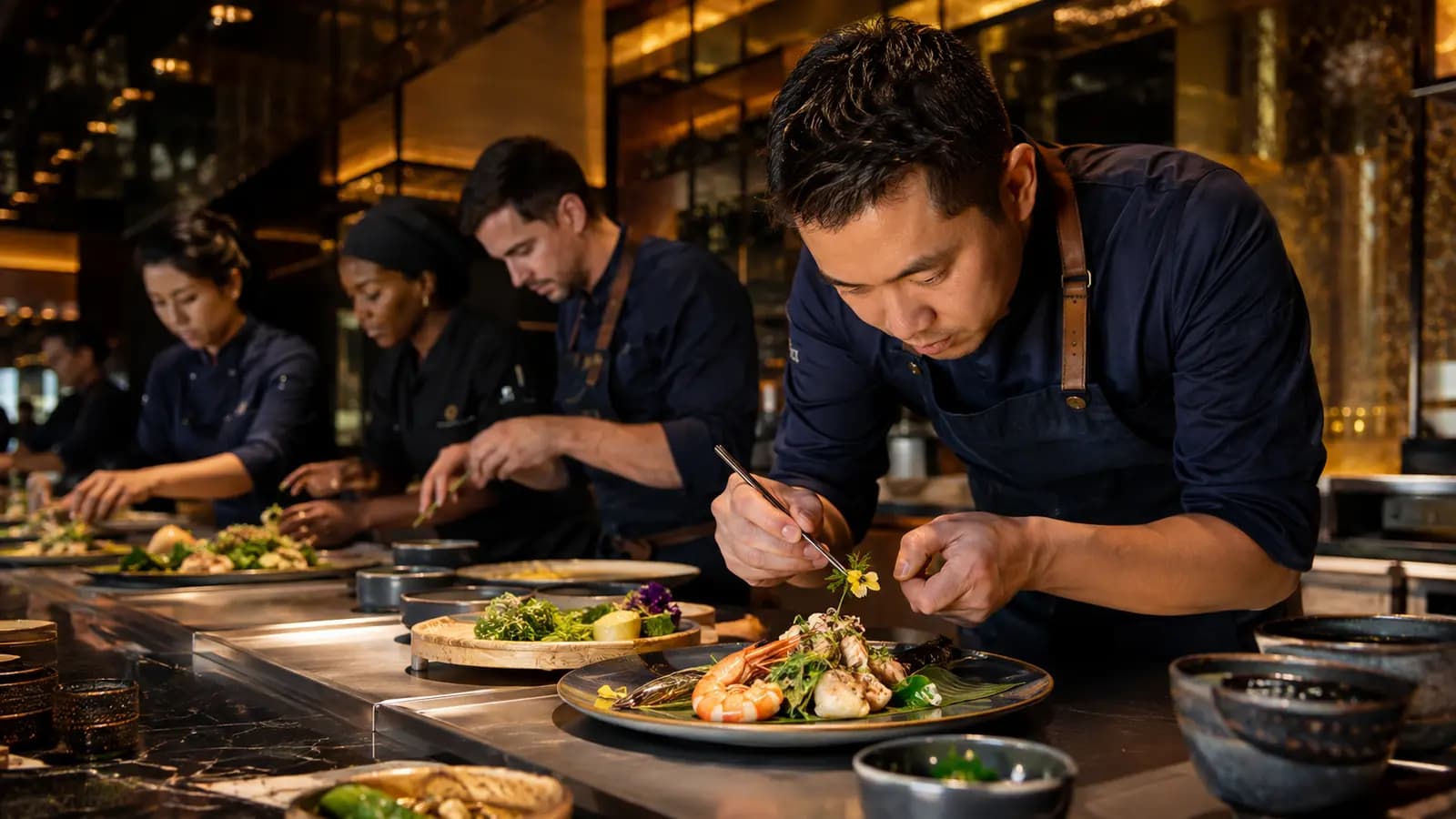
How Tradition Evolves
Old recipes. New expressions. A flavour that still feels unmistakably Thai.
Across chef-led restaurants, hotel dining rooms and intimate tasting counters, regional dishes are being examined with fresh attention. A curry may become lighter without losing its characteristic herbs and spice. A familiar street-food dish may appear as a carefully composed course. Local seafood, fermented ingredients, tropical produce and traditional desserts are being given space to tell a deeper story.
- Contemporary Thai cuisine
- Chef-led tasting menus
- Regional ingredient stories
- Hotel fine dining
- Rooftop dining
- Modern seafood
- Farm-to-table concepts
- Reimagined Thai desserts
- International chef collaborations
468 Dining Venues
The Michelin Guide Thailand 2026 edition (announced November 2025, its ninth edition) recognizes 468 dining venues across the country.
2 Three-Star Restaurants
Sorn and Sühring — the first time Thailand has held two Three-Star restaurants simultaneously, with Sühring newly promoted in the 2026 edition.
8 Two-Star, 33 One-Star
A deep and growing bench of internationally recognized fine dining across Bangkok and other Thai cities.
137 Bib Gourmand, 288 Selected
Michelin's Bib Gourmand and Selected categories recognize exceptional everyday dining — Thailand's celebrated food culture, at every level, in one guide.
MICHELIN Guide Thailand 2026
- Announced:
- 27 November 2025 (award ceremony); "save the date" notice published 30 October 2025
- Category:
- Three Stars, Two Stars, One Star, Bib Gourmand and MICHELIN Selected
- Scope:
- Nationwide (Thailand)
- Verified:
- 22 August 2026
About These Figures
Michelin star and category status shown above reflects the MICHELIN Guide Thailand 2026 edition only and may change in future editions. This page does not reproduce Michelin's marks, logos or full restaurant list — see the official MICHELIN Guide Thailand site for the current, complete selection.
A World of Food in Thailand
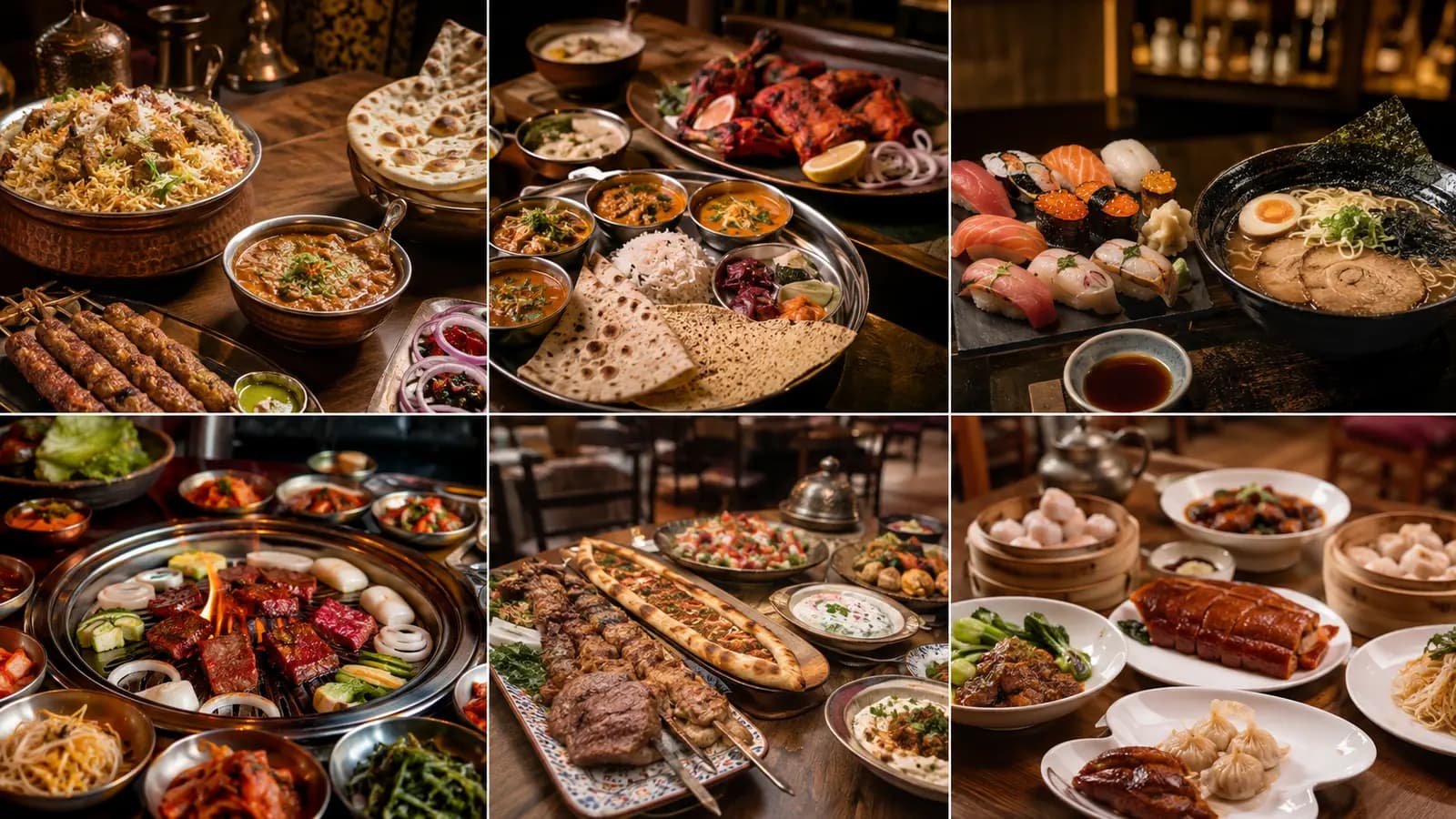
Thailand's major visitor destinations offer far more than Thai cuisine. Bangkok, Phuket, Pattaya, Chiang Mai and other urban and tourism centers support a broad international dining landscape—from long-established Japanese and Chinese restaurants to Korean, Indian, European, Middle Eastern, Turkish and Pakistani dining.
Japanese
One of Thailand's most visible international dining categories, ranging from casual noodle counters and family restaurants to specialist sushi and premium omakase dining.
Dishes commonly found
Chinese
A deeply established cuisine in Thailand, represented through Cantonese, Teochew, Sichuan, Yunnan, Hainanese and other regional traditions.
Dishes commonly found
Korean
A popular contemporary dining category across Bangkok and other major cities, spanning Korean barbecue, shared hot-pot meals, casual street-style dishes and café culture.
Dishes commonly found
Indian
A well-established international cuisine in Thailand, with restaurants representing northern, southern, coastal, vegetarian and contemporary Indian traditions.
Dishes commonly found
European
A broad dining category covering Italian, French, Spanish, Mediterranean and other European cuisines, particularly visible in Bangkok, Phuket, Pattaya and major resort destinations.
Dishes commonly found
Middle Eastern
A visible dining category in Thailand's major tourism centers, including Lebanese, Levantine, Egyptian, Gulf and other regional traditions.
Dishes commonly found
Turkish
An established cuisine in Thailand's major tourism areas, ranging from casual kebab restaurants to full Turkish dining experiences.
Dishes commonly found
Pakistani
Available particularly in Bangkok, Pattaya and other tourism centers, offering distinctive Pakistani barbecue, rice dishes, curries, breads and traditional breakfasts.
Dishes commonly found
Other International Cuisines
Thailand's dining landscape also includes Vietnamese, American, Mexican, Indonesian, Malaysian, Singaporean, African and other international cuisines in varying concentrations.
Dishes commonly found
Pakistani and Indian Cuisine Are Distinct
This order reflects visitor navigation and the visibility of each cuisine across Thailand's tourism centers—not a popularity or quality ranking. Pakistani and Indian cuisine are shown as separate, distinct categories; both have their own biryani tradition, but the two are never merged into a single entry.
A Navigation Order, Not a Ranking
Bangkok, Pattaya, Phuket, Chiang Mai and other tourism centers have substantial international dining ecosystems. Unless reliable current tourism or restaurant data is cited, this page does not claim any cuisine is more popular than another, and dish tags describe dishes commonly found within a cuisine—not a guarantee that every restaurant in that category serves them.
Enjoy Thailand with Confidence
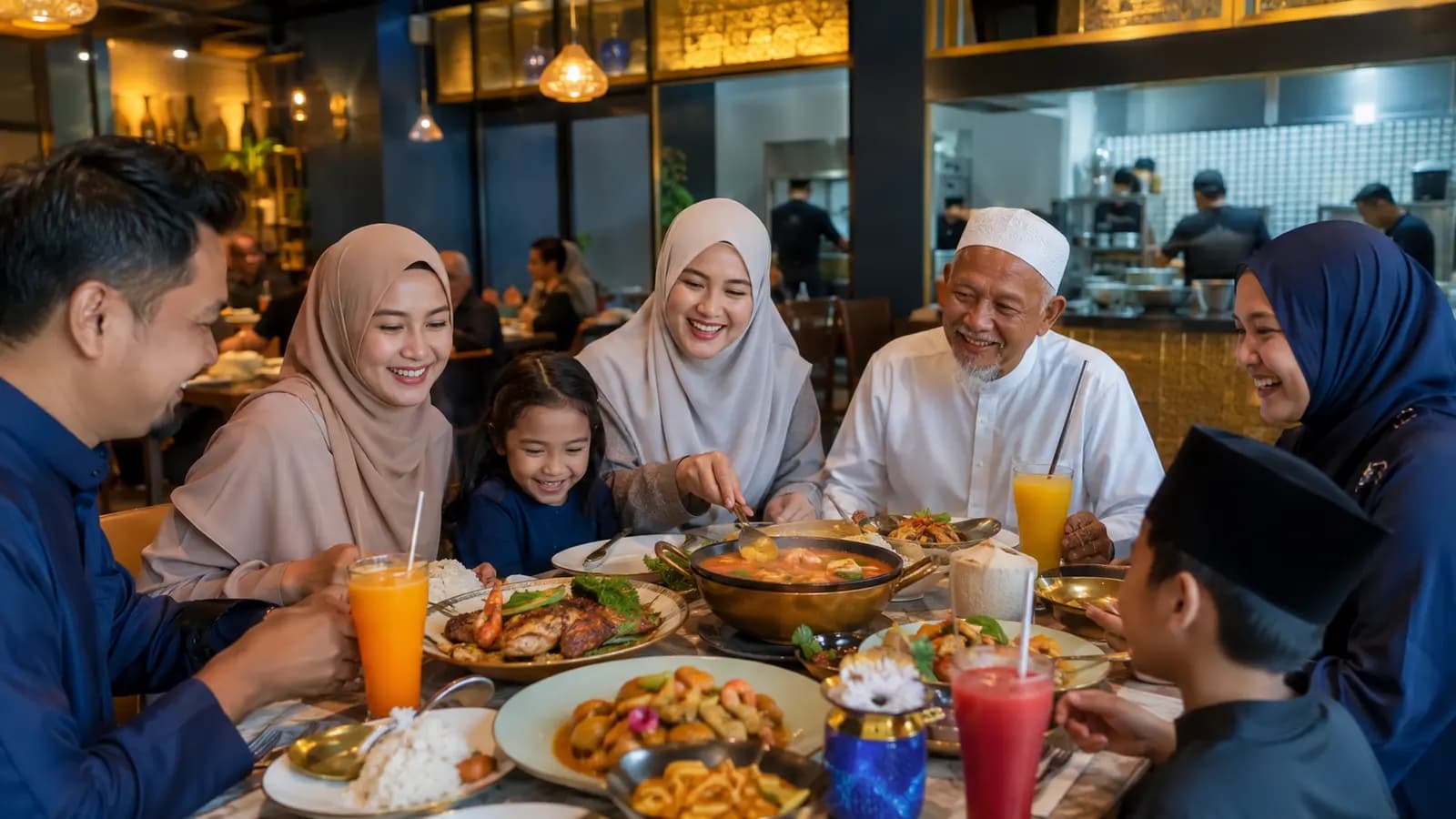
DINING WITH CLARITY
Understand the Label Before You Choose
"Halal-certified," "Muslim-owned," "pork-free" and "Muslim-friendly" describe different things. Use the definitions beside this image to understand what each label does — and does not — confirm.
Halal-certified restaurant
The restaurant itself holds a current halal certificate from CICOT or a provincial Islamic committee.
Halal-certified product
A specific packaged product carries halal certification — this does not automatically mean the restaurant serving it is certified.
Muslim-owned restaurant
The restaurant is owned or operated by a Muslim individual or family — not the same as holding formal halal certification.
Restaurant serving halal ingredients
The restaurant states it uses halal ingredients, without necessarily holding a facility-level halal certificate.
Restaurant offering some halal dishes
Only specific menu items are halal or halal-ingredient-based — the rest of the menu and kitchen may not be.
Pork-free restaurant
The restaurant does not serve pork, which is not the same as being halal-certified or fully halal-compliant (alcohol, cross-contamination and other factors also matter).
Muslim-friendly tourism service
A broader hospitality or tourism service (hotel, tour, transport) positioned as accommodating Muslim travelers' needs — not a food-certification term.
These Labels Are Not Interchangeable
"Halal," "pork-free" and "Muslim-friendly" do not necessarily mean the same thing. Travelers should verify current certification, ingredients, preparation practices and kitchen arrangements directly before dining.
5th Among Non-OIC Destinations
Thailand ranked 5th among non-OIC (Organisation of Islamic Cooperation) destinations in the 2025 Global Muslim Travel Index (GMTI), per Mastercard-CrescentRating — its most recent confirmed ranking.
Led by the Tourism Authority of Thailand
Thailand's Muslim-friendly positioning is an active, TAT-led strategy — including a dedicated Muslim-friendly destination guide, app and halal-oriented travel routes developed specifically for Muslim travelers.
A Growing Hospitality Network
A growing network of halal-certified dining and prayer facilities across the country, distinct from Thailand's broader tourism identity.
Halal Certification Ecosystem
Thailand's halal certification system is anchored by the Central Islamic Council of Thailand (CICOT), the body responsible for certifying, monitoring, and supervising halal products nationwide. CICOT's national halal certification framework dates to 2001, building on the Ministry of Industry's 1998 adoption of Codex Halal standards. The Halal Standard Institute of Thailand (HSIT) supports CICOT on halal standards and guidelines, aligned with international standards set by the Standards and Metrology Institute for Islamic Countries (SMIIC/OIC).
T3 is not a certification body. This is a factual description of Thailand's halal certification ecosystem only — it is not a certification, endorsement, or guarantee of halal status for any product, business, or service.
Central Islamic Council of Thailand (CICOT)
Thailand's national halal certification and regulatory body.
Provincial Islamic councils
Certify and support halal businesses at the provincial level, where applicable.
Halal Standard Institute of Thailand (HSIT)
Supports CICOT on halal standards, guidelines and international alignment.
Tourism Authority of Thailand (TAT)
Publishes Muslim-friendly visitor information, including a dedicated destination guide and app.
Official halal directories and apps
Where verified — check current listings directly rather than relying on this page alone.
Checking a Restaurant's Current Status
To check a specific restaurant's current halal status, ask the restaurant directly which body certified it and when the certificate is valid until, or use CICOT's own certification resources.
Save Room for Something Sweet
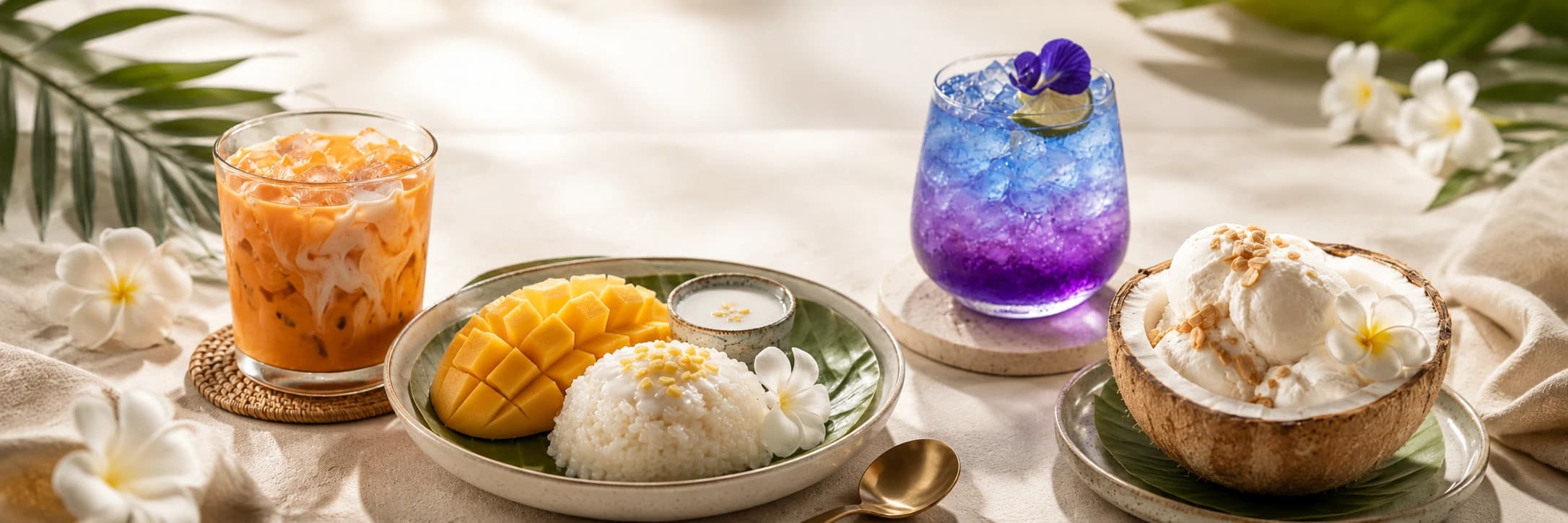
Drinks
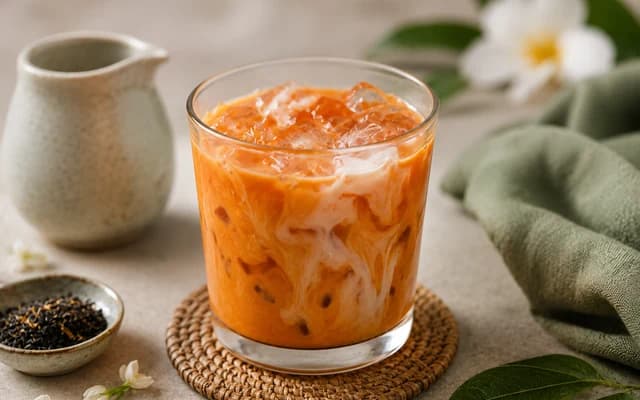
Thai Iced Tea
Strong black tea sweetened with sugar and condensed milk, served over ice.
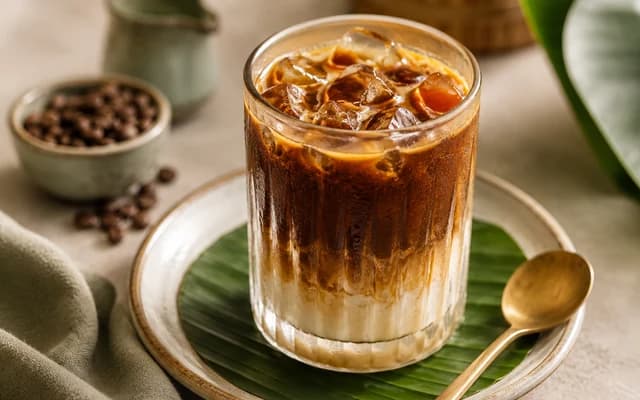
Traditional Thai Coffee
Often filtered through a cloth sock and served with condensed milk.
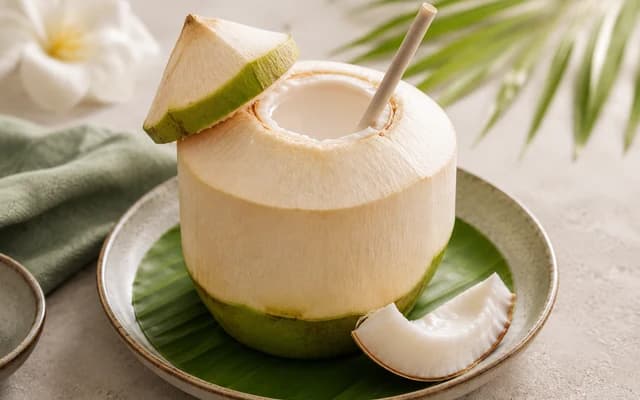
Fresh Coconut
Served chilled, straight from the shell — widely available at markets and street stalls.
Tropical Fruit Drinks
Fresh fruit shakes and juices, seasonal availability varies.
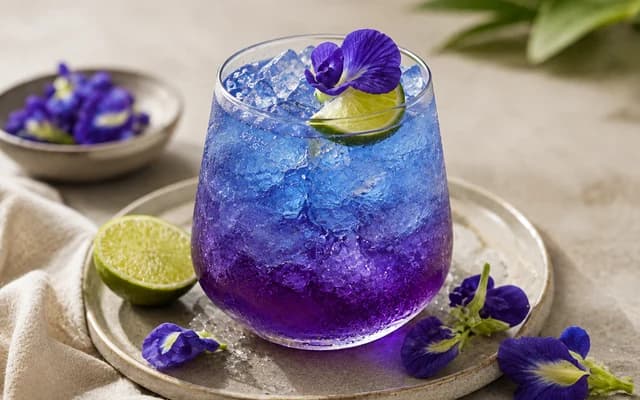
Butterfly-Pea Drinks
A naturally blue herbal drink, often mixed with lime for a color-changing effect.
Pandan Drinks
A fragrant, naturally green drink made from pandan leaf.
Desserts
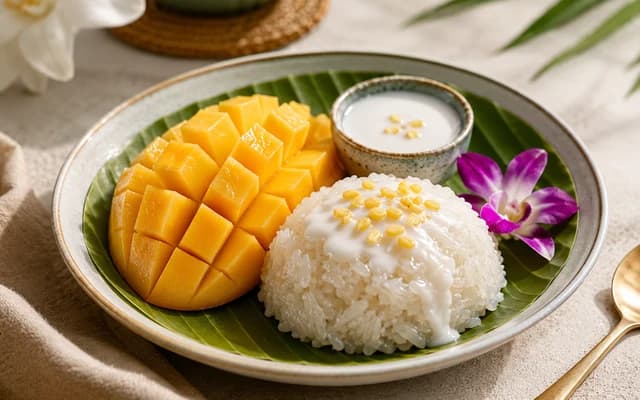
Mango Sticky Rice
Also a dessert in its own right — sweet sticky rice, coconut cream and fresh mango.
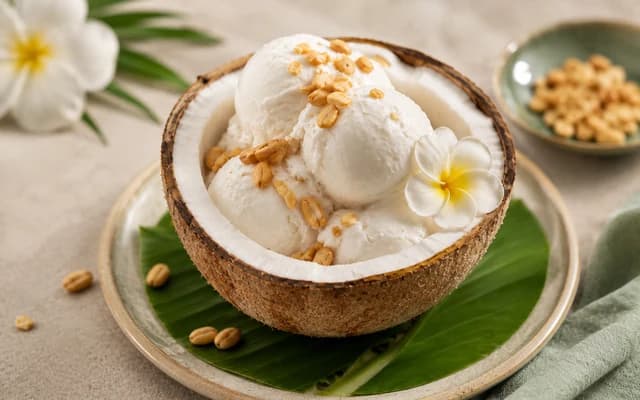
Coconut Ice Cream
Traditionally served in a coconut shell with toppings such as peanuts or sticky rice.
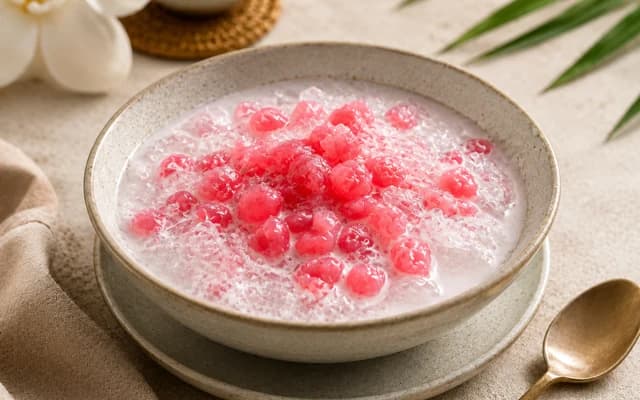
Tub Tim Grob
A red, crunchy water-chestnut dessert served in sweetened coconut milk with crushed ice.
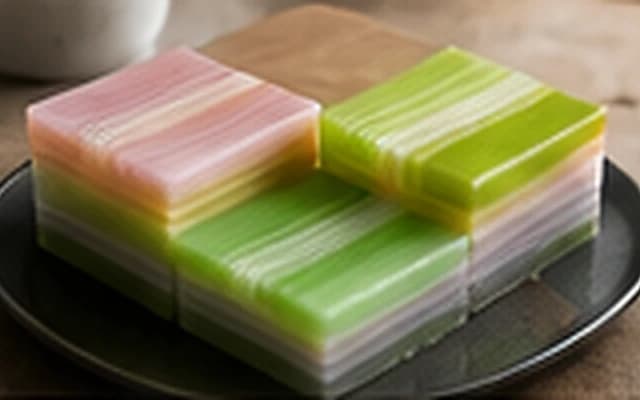
Khanom Chan
A layered, colorful steamed dessert made from rice flour and coconut milk.
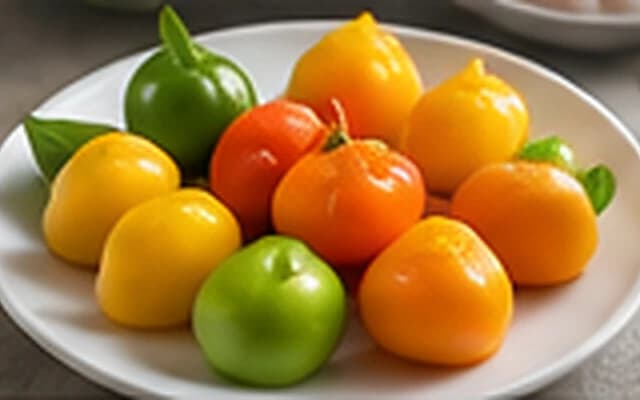
Luk Chup
Miniature fruit- and vegetable-shaped mung-bean sweets, a traditional Thai confection.
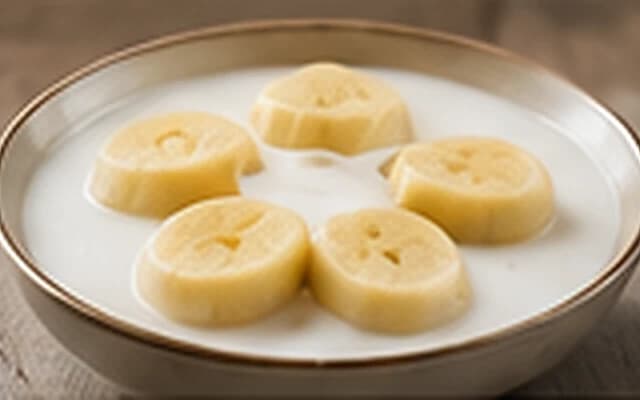
Banana and Coconut Desserts
A wide family of desserts using banana, coconut milk and palm sugar.
Seasonal Fruit
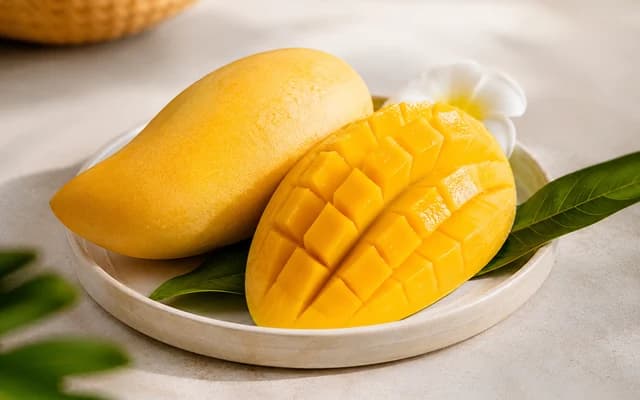
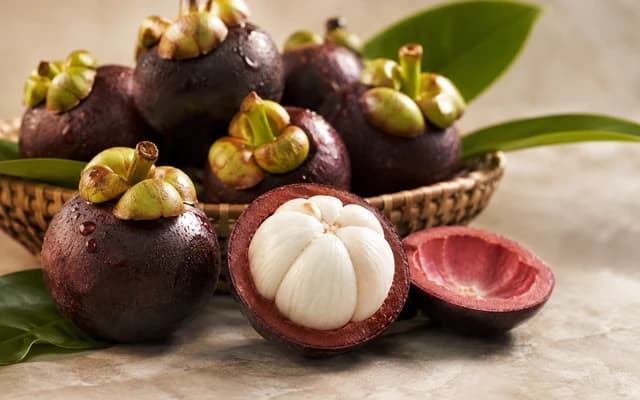
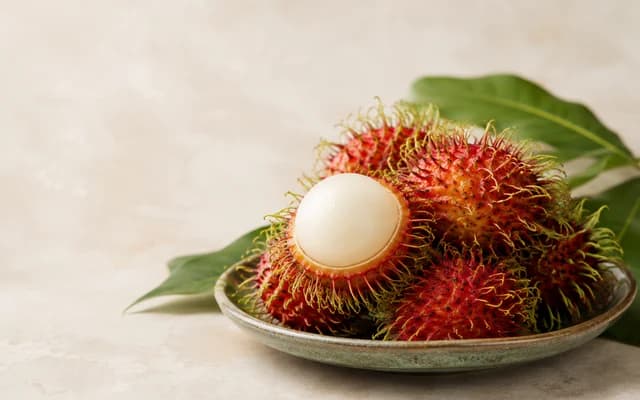
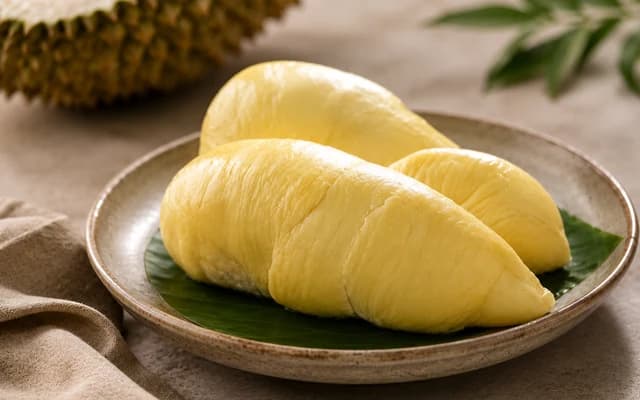
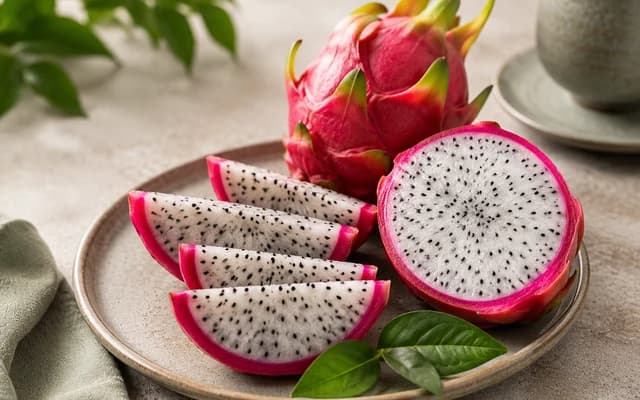
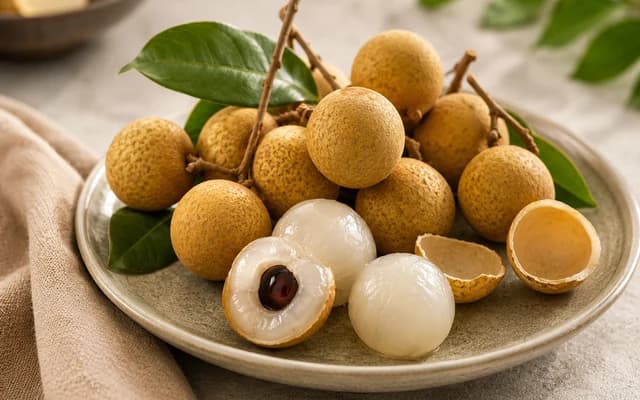
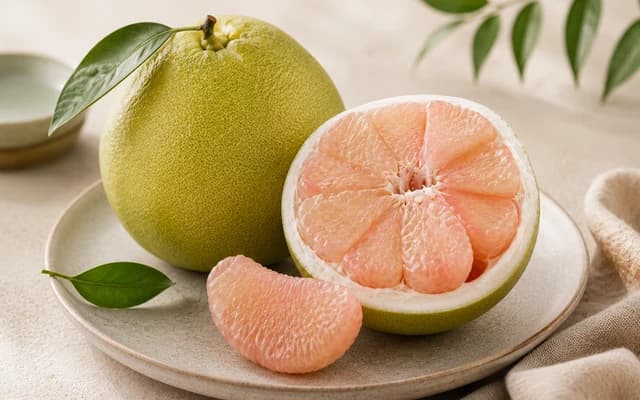
Seasonality Varies by Region
Fruit availability is seasonal and varies by region — a fruit in season in one part of Thailand may not be available everywhere at the same time.
Non-Alcoholic Section
This section covers non-alcoholic drinks, fruit and desserts only. Any alcoholic content on T3 would always be clearly labelled separately.
Go Beyond the Menu
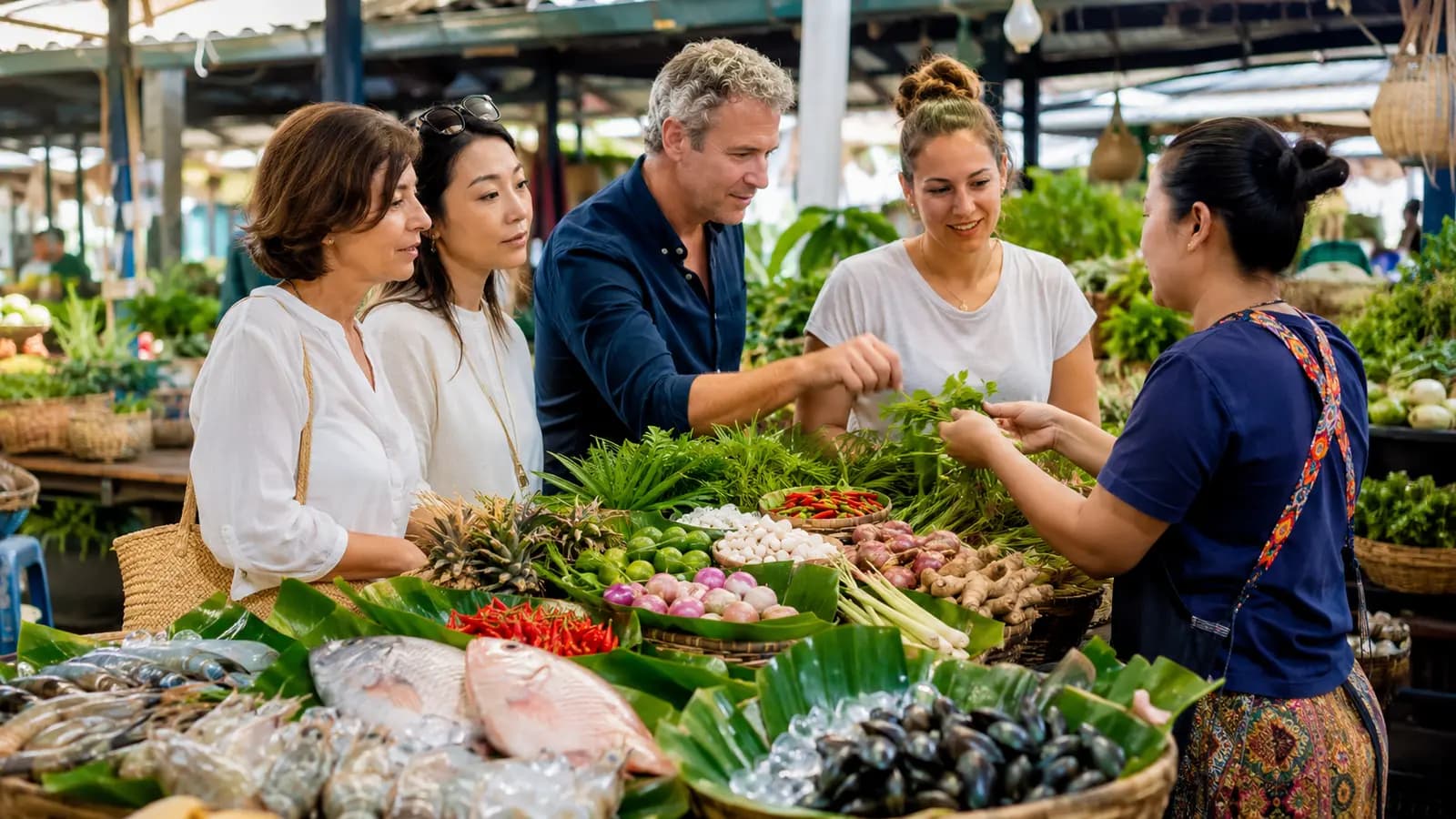
Ways to Go Deeper
The most memorable meals are often the ones you helped make.
- Fresh markets
- Morning markets
- Night markets
- Floating-market food
- Seafood markets
- Farm visits
- Fruit orchards
- Cooking classes
- Chef-led experiences
- Community-based culinary tourism
- Food festivals
- Tea and coffee experiences
- Dessert-making
- Market-to-kitchen experiences
Where Thailand's Ingredients Come From
Local seafood
Widely available, with sourcing that varies by restaurant and season.
Rice
A national staple and a major Thai export crop.
Tropical fruit
Extensive seasonal variety across the country.
Fresh herbs
Central to Thai cooking's aromatic profile.
Poultry
A major domestic production category and export product.
Lamb and goat
A recognized protein category in Middle Eastern, Turkish, Pakistani and Indian dining in Thailand.
Beef
Both domestic and imported beef are available across Thailand's dining scene.
Imported premium beef
Available as a distinct imported dining category in many restaurants — not a claim of Thai agricultural origin.
Australian beef and other imported origins
A recognized imported category in Thailand's premium dining scene, where verified on a restaurant's own menu.
International cheeses and specialty products
Increasingly available in Bangkok and other major dining centers.
Japanese ingredients
Widely available, supporting Thailand's large Japanese dining category.
Halal-certified ingredients
Available through CICOT-certified suppliers and importers.
Plant-based products
A growing category across Thai and international restaurants alike.
Local and international beverages
Both domestic and imported beverage brands are widely available.
Imported Does Not Mean Better
Imported ingredients are not automatically higher quality than local ones — they represent a different, often premium-priced dining category. This page does not make food-safety guarantees; confirm sourcing and safety practices directly with the restaurant.
Find Food That Fits Your Journey
First-Time Visitor
Start with Thailand's iconic dishes and everyday street food.
ExploreFamily Dining
Explore destinations and dining styles suited to family meals.
ExploreMuslim Traveler
Understand halal certification and Muslim-friendly dining with confidence.
ExploreVegetarian or Vegan Visitor
See dish-by-dish adaptability notes before you order.
ExploreSeafood Lover
Discover Thailand's coastal and river seafood traditions.
ExploreStreet-Food Explorer
Learn how to enjoy street food safely and respectfully.
ExploreFine-Dining Traveler
Explore contemporary Thai cuisine and current Michelin recognition.
ExploreFood Photographer
Markets, night stalls and plating-forward fine dining, in one place.
ExploreBusiness Traveler
Find hotel dining, rooftop restaurants and international cuisine near you.
ExploreLong-Stay Resident
Go deeper into regional cuisine and Thailand's food-business ecosystem.
ExploreFind Your Thailand Table
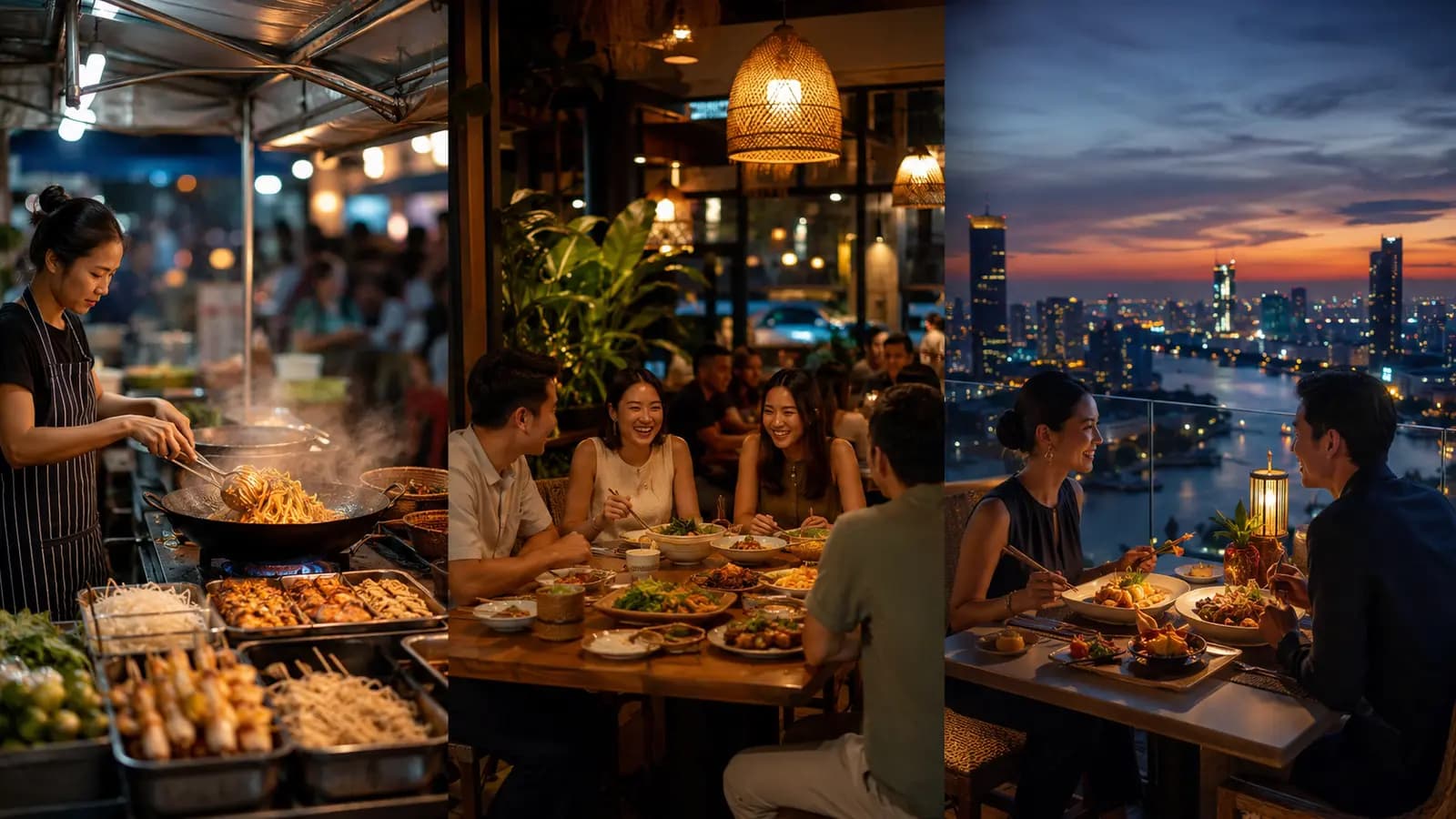
Restaurant Directory
Verified Restaurant Directory Coming Soon
T3 is currently reviewing restaurants across Thailand by destination, cuisine, dining style and dietary orientation. Listings will be published progressively after their identity, location, official contact details and relevant certification information have been checked.
New verified listings will be added in stages.
Until then, explore the available food guides and use official restaurant or certification sources when making dining decisions.
Directory filters preview
Location
Dining Style
Cuisine
Dietary Orientation
Filters will become active as verified restaurant listings are published.
What Every Entry Will Include, Once Verified
Why Listings Are Being Verified Before Publication
Restaurant details can change, and terms such as halal-certified, Muslim-owned, vegetarian-friendly and allergy-aware are not interchangeable. T3 is therefore checking each proposed listing against current official information before publication. This process is intended to reduce outdated, unclear or misleading directory entries.
Each Published Entry Will Aim to Include
- Official restaurant name
- Destination and verified location
- Cuisine and dining style
- Official website or verified social account
- Current contact information
- Relevant dietary information
- Halal-certification authority and status, where applicable
- Last-verified date
- Direct source links
Inclusion will not constitute endorsement, ranking, certification or a guarantee by T3. Visitors must confirm current menus, opening hours, prices, ingredients, allergen procedures and certification directly before dining.
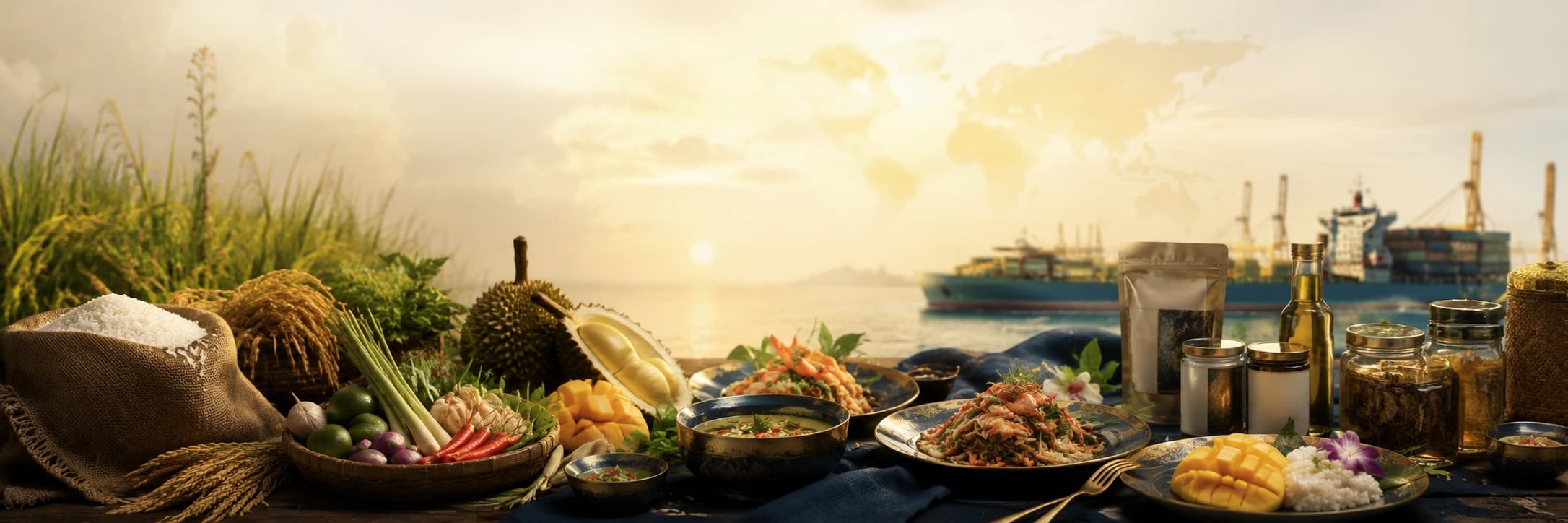
Thailand: Global Kitchen for the World
From Thailand's Farms to the World's Table
A Global Food Reputation, Built on Balance
Thai cuisine is one of Thailand's most internationally recognized cultural assets — built on fresh ingredients and a careful balance of sweet, sour, salty, spicy, and umami used together, with a strong regional identity that varies considerably across the country. That reputation has been reinforced by international recognition of specific dishes, including Tom Yum Kung's 2024 inscription on UNESCO's Representative List of the Intangible Cultural Heritage of Humanity (see T3's Culture and Heritage page), and by a sustained, government-led promotion strategy running since the early 2000s.
Global Thai — Launched 2002
A state-led culinary diplomacy program aiming to grow authentic Thai restaurants worldwide, with an initial goal of roughly 5,500 to 8,000 restaurants by 2003.
Past 10,000 by 2011
Within a decade of launch, the number of Thai restaurants worldwide had grown past 10,000 — a program with real, sustained international reach.
17,478 Restaurants Today
Thailand's Department of International Trade Promotion (DITP) reports 17,478 Thai restaurants worldwide currently — roughly a 218% increase from the 2002 baseline of about 5,500, evolving into the broader "Kitchen of the World" campaign.
Thailand's food exports were valued at approximately US$39.8 billion (around 1.37 trillion baht) in 2023, with 2024 exports projected at approximately US$40.6 billion (around 1.4 trillion baht), per Thailand's Department of International Trade Promotion (DITP). Thailand's official Thai SELECT certification for authentic Thai restaurants overseas currently covers 1,419 certified restaurants across 70 countries, as of May 2026.
Despite being a Buddhist-majority country, Thailand has built a substantial halal food production and export sector. Thailand's 2024 halal food exports reached approximately 335 billion baht (about US$10.27 billion), and Thailand ranks as the world's 11th-largest halal exporter and 5th-largest halal producer. Thailand's halal exports represent only about 1.6% of the global halal market today — real room for growth, framed here as an opportunity rather than an overstated claim.
US$1.53 Trillion Global Market (2024)
The global halal food market was valued at US$1.53 trillion in 2024, projected to reach US$2.06 trillion by 2029, per DinarStandard's State of the Global Islamic Economy Report (SGIE), 2025/26 edition.
A Stated Ambition, Not Yet Dominance
Thailand's halal exports represent only about 1.6% of the global halal market today — real room for growth, not an overstated claim of market leadership.
ASEAN "Hub of Halal Excellence"
Thailand's government has stated an ambition to become a regional hub of halal excellence within ASEAN, supported by a multi-year industry growth plan.

Food Industry Support
National Food Institute — From Product Readiness to Market Intelligence
Explore official food-industry intelligence, laboratory and proficiency services, regulatory guidance, product-readiness support and industry connections.
Thailand's Food & Halal Institutional Network
Organizations Behind Thailand's Food and Halal Ecosystem
The institutions connecting standards, certification, trade and industry growth.
An overview of the public bodies, certification authorities and trade associations that support Thailand's food and halal economy — and help connect the sector to trade, investment and global market opportunity.
- Government Bodies
- Certification Authorities
- Trade Associations
- Halal Standards
- Food Industry
- Export Ecosystem
Government & Public Support
Ministries and public agencies shaping trade, tourism and food-industry policy.
Tourism Authority of Thailand (TAT)
Leads Thailand's Muslim-friendly travel positioning, halal-oriented tourism routes and general visitor information.
Department of International Trade Promotion (DITP)
Ministry of Commerce body overseeing Thai SELECT certification and Thailand's food-export trade data.
National Food Institute (NFI)
Supports Thailand's food-processing industry with standards, testing and industry data.
Ministry of Public Health
Parent ministry for Thai FDA and national food-safety policy.
Department of Business Development (DBD)
Company registration and business-information authority relevant to opening a restaurant business.
Certification & Standards Bodies
The regulatory and certification authorities behind halal and food-safety standards.
Central Islamic Council of Thailand (CICOT)
Thailand's national halal certification and regulatory body for halal products.
Halal Standard Institute of Thailand (HSIT)
Supports CICOT on halal standards and guidelines, aligned with SMIIC/OIC international frameworks.
Thai Food and Drug Administration (Thai FDA)
Food product registration, labelling requirements and safety oversight under the Ministry of Public Health.
Trade Bodies & Industry Associations
Industry associations connecting restaurants, processors, hotels and Muslim-economy trade.
Thai Food Processors' Association (TFPA)
Represents Thailand's processed and packaged food manufacturing and export industry.
Thai Restaurant Association (TRA)
Represents restaurants operating in Thailand on industry and policy matters.
Thai Hotels Association (THA)
The national hotel and hospitality industry association, including hotel dining.
Thai Muslim Trade Association (TMTA)
Represents Thailand's Muslim business community and promotes halal-economy trade internationally.
Muslim Business Matching (MBM)
A Muslim entrepreneur and business-matching network based in Bangkok supporting member connections in food and halal-economy sectors.
Chambers, Federations & Business Networks
Beyond food-specific bodies, Thailand's chambers, apex federations, business councils and sector associations offer broader commercial connections relevant to food and halal businesses.
BOI & Investment Support
Thailand's Board of Investment promotes food processing, agriculture and halal-linked activities through dedicated incentive categories. Explore the verified incentive detail on each sector page rather than a restated summary here.
T3 Does Not Represent Any Organization
T3 does not represent, act on behalf of, or speak for any organization above. Official names, roles and websites are shown as published — confirm current procedures and contact points directly with each body before acting. The Thai Restaurant Association's documented role is confirmed through independent industry reporting; no verified official website was located in this research pass, so no link is shown pending further verification.
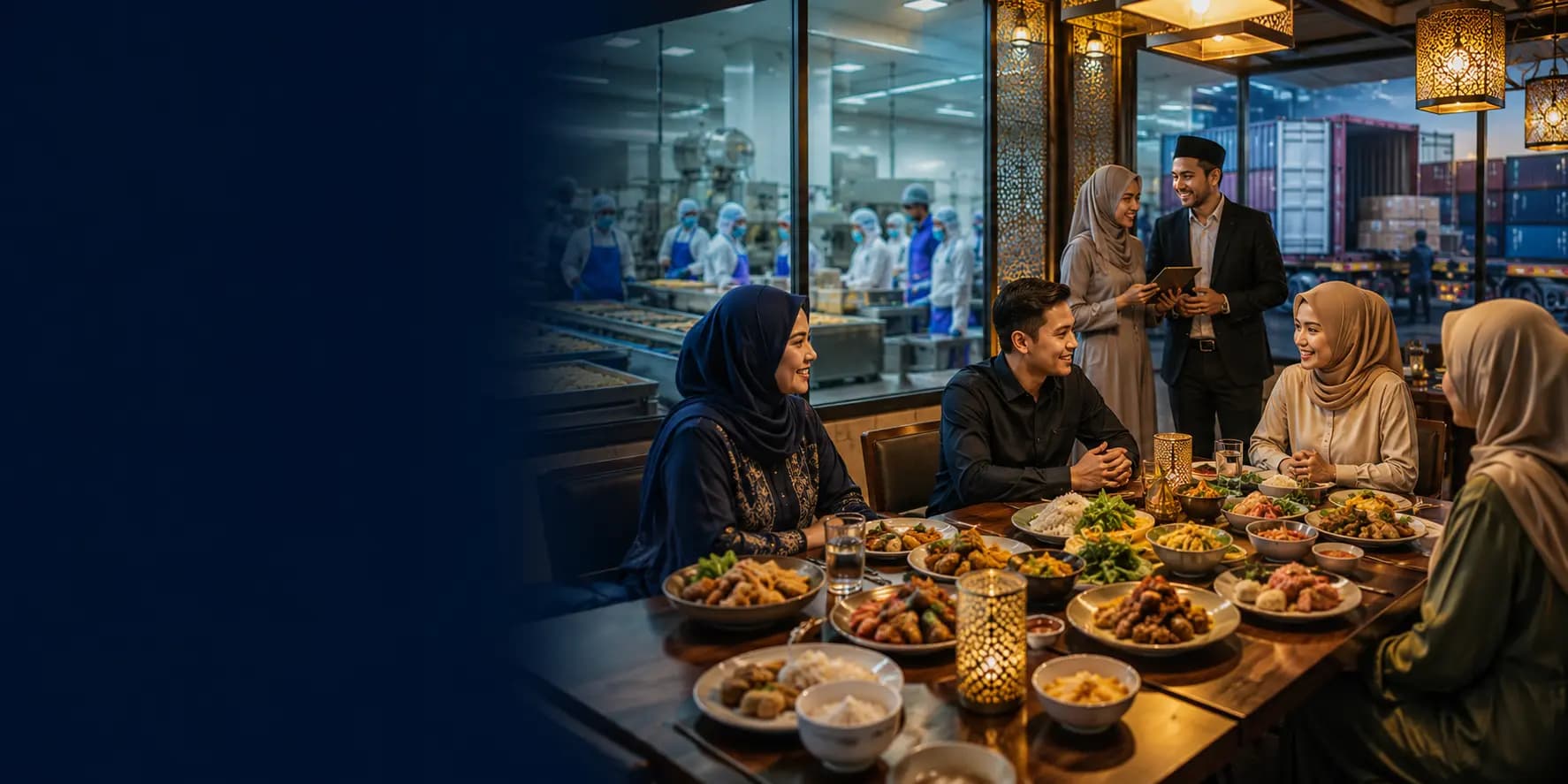
FROM DINING TO GLOBAL BUSINESS
Explore Thailand's Halal Economy
Thailand's halal ecosystem connects certified food production, hospitality, standards, finance, trade organizations and export-market access. Explore the dedicated business guide for verified institutions, sector pathways and commercial context.
Conceptual Image Notice
The conceptual image does not depict a named certified facility. Certification status must always be confirmed through the responsible authority.
Sources & Verification
Every source above was checked against current, primary or official material where available. Restaurant-level information (names, addresses, hours, prices, awards, halal status) is published only once independently confirmed against that restaurant's own official website or verified official account — see the Restaurant Discovery Directory section for why no individual restaurants are listed yet.
MICHELIN Guide
468 venues, 2 Three-Star, 8 Two-Star, 33 One-Star, 137 Bib Gourmand, 288 Selected
Official source ↗ (opens in a new tab)Central Islamic Council of Thailand (CICOT)
CICOT's role as Thailand's national halal certification and regulatory body.
Official source ↗ (opens in a new tab)Department of International Trade Promotion (DITP)
Food export values, 17,478 Thai restaurants worldwide, 1,419 Thai SELECT-certified restaurants in 70 countries.
Official source ↗ (opens in a new tab)DinarStandard
Global halal food market value (US$1.53T 2024, projected US$2.06T by 2029) and Thailand's ~1.6% share.
Official source ↗ (opens in a new tab)
TASTE THAILAND BY PLACE
Come Hungry. Leave with a Story.
Explore Thailand one dish, one market and one destination at a time — from the first bowl of noodles to the table you will remember long after the journey ends.