
Business & Investment · Automotive
Thailand's Automotive Manufacturing Gateway
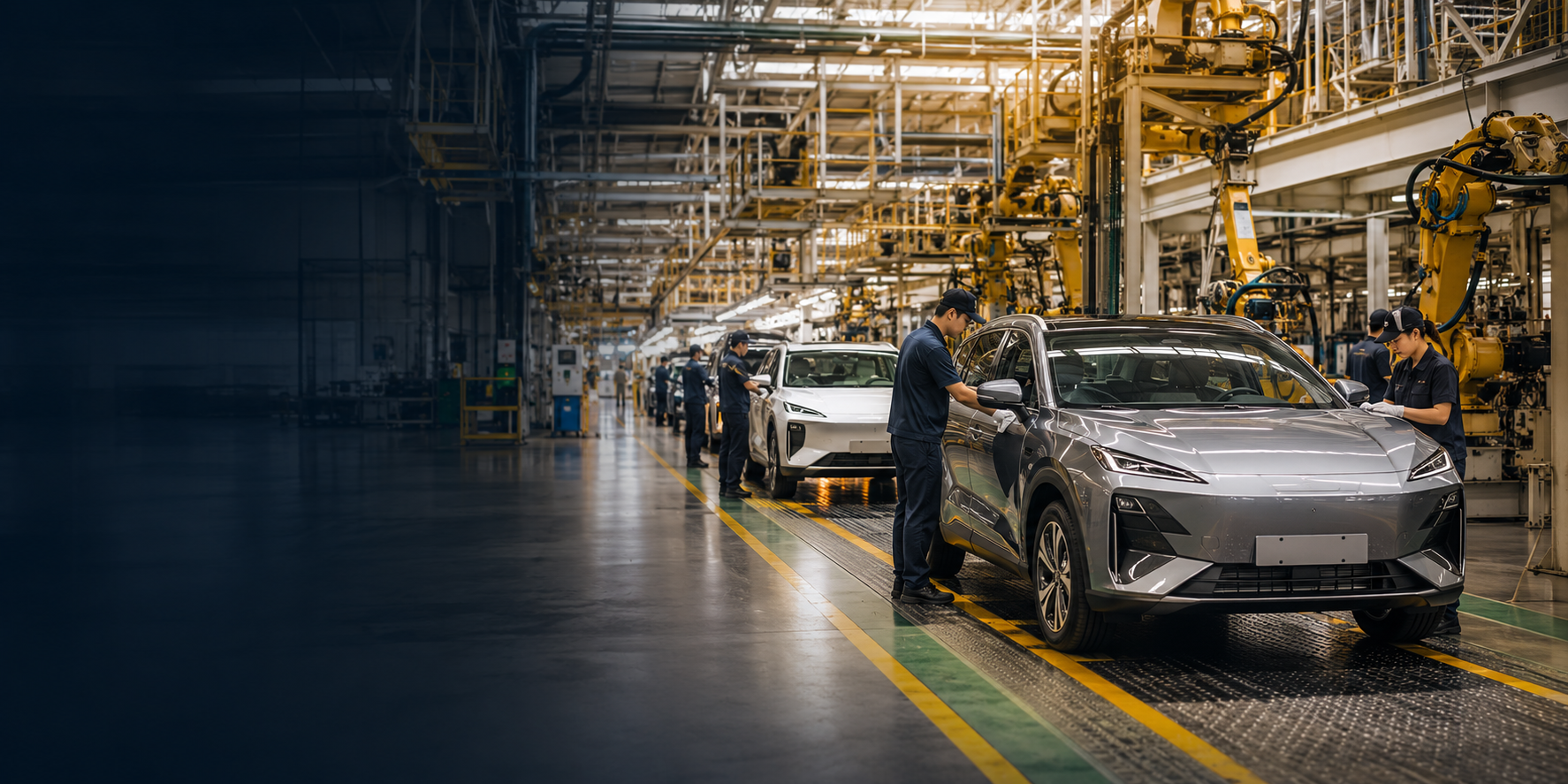
Southeast Asia's most established vehicle-manufacturing base — full-scale OEM assembly, a deep component-supplier network, and an automotive sector now building its battery-electric and hybrid future.
Automotive Industry Overview
Thailand builds passenger cars, 1-ton pickup trucks, commercial vehicles, and — increasingly — battery-electric and hybrid models, through a mix of established global OEMs and a layered domestic supplier base. Around two-thirds of production is built for export, while a large replacement-parts and aftermarket sector serves the domestic vehicle fleet.
A Regional Manufacturing Base
Thailand hosts full-scale OEM assembly for Japanese, American, European, and Chinese vehicle brands, built up over more than six decades of continuous automotive investment.
Pickup Trucks & Commercial Vehicles
1-ton pickup trucks are Thailand's largest single production category, alongside passenger cars, heavy trucks, and a long-standing commercial-vehicle base.
A Layered Supplier Base
An estimated 386 Tier 1 component manufacturers and roughly 1,700 Tier 2 and Tier 3 suppliers support OEM production, alongside a large replacement-parts and aftermarket sector.
Export-Oriented Production
Around two-thirds of Thai vehicle production is built for export, reaching markets across Asia-Pacific, the Middle East, Australia, and beyond.
A Sector in Transition
Alongside its established combustion-engine base, Thailand is actively building battery-electric, hybrid, and plug-in hybrid production, supported by dedicated BOI and Excise Department measures.
Deep Government Support Infrastructure
A dedicated ecosystem of investment promotion, industrial standards, and vehicle-certification bodies — BOI, the Office of Industrial Economics, the Department of Land Transport, and others — supports the sector.
Source: Federation of Thai Industries (FTI) automotive production data, as reported by M Report · Accessed 17 Aug 2026 · M Report is an established Thai industrial trade-news outlet; figures are attributed directly to Mr. Surapong Paisitpatanapong, Spokesman, Automotive Industry Group, Federation of Thai Industries.
The Automotive Value Chain
From design through to end-of-life recycling, Thailand's automotive ecosystem spans ten connected stages.
Design & Engineering
Product engineering, localisation, and testing support for models built or adapted for the Thai and export markets.
Tooling, Dies & Machinery
Machine tools, dies, moulds, and industrial machinery that equip Thai OEM and parts-manufacturing plants.
Raw Materials
Steel, aluminium, plastics, rubber, and other base materials feeding component and vehicle manufacturing.
Components & Subassemblies
Tier 1, Tier 2, and Tier 3 suppliers producing everything from engines to wiring harnesses.
OEM Assembly
Full-scale vehicle assembly plants operated by global and regional manufacturers across Thailand's industrial belt.
Testing & Certification
Type approval, component certification, and quality verification before vehicles reach the market.
Distribution & Dealerships
Domestic sales networks and dealership infrastructure for the Thai market.
Aftermarket Parts & Accessories
Replacement parts, accessories, and repair services distinct from OEM-fitted components.
Export & Logistics
Port, rail, and road infrastructure moving finished vehicles and components to export markets.
Recycling & Circular Manufacturing
Emerging end-of-life vehicle recycling and circular-manufacturing practices, tied to Thailand's wider BCG (Bio-Circular-Green) economy direction.
OEM Manufacturing in Thailand
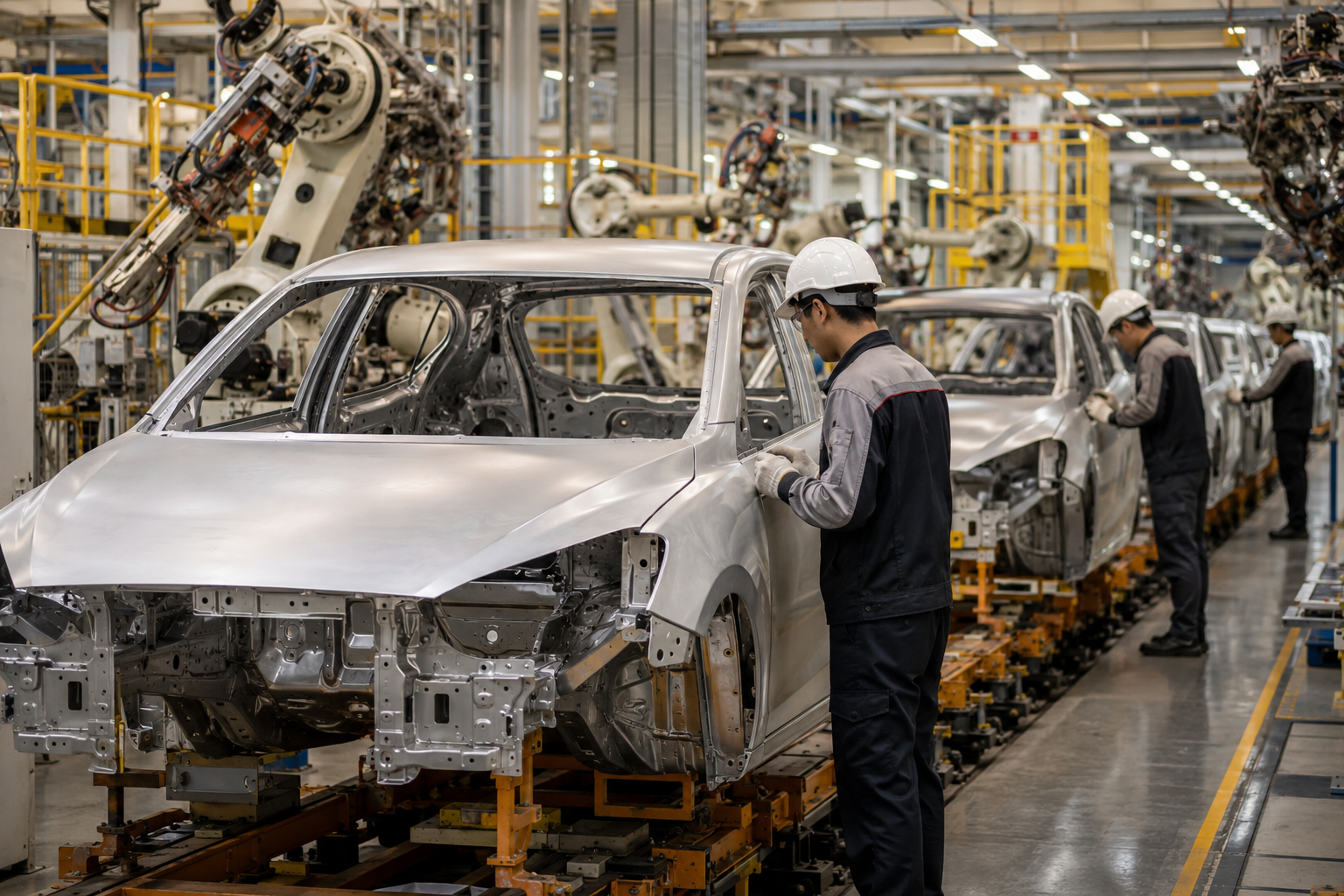
Thirteen global vehicle manufacturers operate confirmed manufacturing presence in Thailand — from Toyota's six-decade history to Chinese EV makers BYD, Changan, and GAC Aion, all of whom opened plants within the past two years. Every entry below shows only what was directly verified: presence, product category, and location. Production-capacity, investment, and employment figures are shown only where a specific company or industrial-estate source confirmed them.
Toyota Motor Thailand Co., Ltd.
Wholly owned Toyota Motor Corporation subsidiary; three plants across two provinces (Samrong; Ban Pho and Gateway in Chachoengsao). Established 1962.
Product category: Passenger cars, pickup trucks, commercial vehicles, hybrid models
Location: Samrong (Samut Prakan); Ban Pho and Gateway (Chachoengsao)
Official website ↗Search-verified against Toyota Motor Thailand's own corporate-profile page and Wikipedia cross-reference; not independently opened via direct fetch this session. Checked 17 Aug 2026.
Isuzu Motors (Thailand) Co., Ltd.
Two assembly plants (Samrong; Gateway, Chachoengsao) with a combined 385,000-unit annual capacity for pickups and heavy trucks. Pickup-truck production relocated from Japan to Thailand in 2002.
Product category: Pickup trucks, heavy trucks
Location: Samrong (Samut Prakan); Gateway City Industrial Estate (Chachoengsao)
Official website ↗Search-verified against Isuzu Motors (Thailand)'s own site and industry press; not independently opened via direct fetch this session. Checked 17 Aug 2026.
Honda Automobile (Thailand) Co., Ltd.
Prachinburi plant is the primary vehicle-assembly site (opened 2016); the Ayutthaya plant, open since 1996, is transitioning from vehicle assembly to automotive-component production.
Product category: Passenger cars
Location: Rojana Industrial Park, Prachinburi; Ayutthaya (components)
Official website ↗Search-verified against Honda's own global newsroom releases and trade press (Just Auto, Bangkok Post); not independently opened via direct fetch this session. Checked 17 Aug 2026.
Mitsubishi Motors (Thailand) Co., Ltd.
Laem Chabang facility is Mitsubishi's largest manufacturing centre outside Japan, with three assembly plants, one engine factory, and one paint factory in Thailand; produces five models including the Triton, Pajero Sport, and Mirage.
Product category: Pickup trucks, SUVs, passenger cars
Location: Laem Chabang Industrial Estate, Sriracha, Chonburi
Official website ↗Search-verified against Mitsubishi Motors Thailand's own site; not independently opened via direct fetch this session. Checked 17 Aug 2026.
Nissan Motor (Thailand) Co., Ltd.
Two plants in Bang Sao Thong, Samut Prakan (Plant No.1: 220,000 units/year; Plant No.2: 150,000 units/year, per company-linked reporting). Nissan has produced vehicles in Thailand since 1963.
Product category: Passenger cars, pickup trucks
Location: Bang Sao Thong, Samut Prakan
Official website ↗Search-verified against Nissan's own ASEAN newsroom; not independently opened via direct fetch this session. Checked 17 Aug 2026.
AutoAlliance (Thailand) Co., Ltd. (Ford / Mazda joint venture)
Joint-venture assembly plant co-owned by Ford and Mazda in the Eastern Seaboard Industrial Estate, producing over 100,000 Mazda vehicles per year alongside Ford models; operating since 1998.
Product category: Pickup trucks, passenger cars (Ford Ranger, Mazda BT-50, Mazda2/3, CX-3, CX-30)
Location: Eastern Seaboard Industrial Estate, Rayong
Official website ↗Search-verified against AutoAlliance Thailand's own site and Mazda's global newsroom; not independently opened via direct fetch this session. Checked 17 Aug 2026.
Ford Thailand Manufacturing (FTM)
Ford's Rayong manufacturing operations, run in conjunction with the AutoAlliance Thailand joint venture; a separate, wholly Ford-owned engine plant also operates in Rayong.
Product category: Pickup trucks (Ford Ranger)
Location: Rayong
Official website ↗Search-verified against Ford Thailand's own site; not independently opened via direct fetch this session. Checked 17 Aug 2026.
BMW Manufacturing (Thailand) Co., Ltd.
Subsidiary of BMW Group Thailand (founded 1998), operating an assembly plant in Rayong.
Product category: Passenger cars
Location: Rayong
Official website ↗Search-verified; company presence cross-referenced via Wikipedia and BMW Group Thailand's own site. Not independently opened via direct fetch this session. Checked 17 Aug 2026.
Thonburi Automotive Assembly Plant Co., Ltd. (Mercedes-Benz)
Mercedes-Benz has assembled vehicles in Thailand since 1961 (utility vehicles) and 1979 (passenger cars), via its Thonburi Automotive Assembly Plant partner.
Product category: Passenger cars
Location: Samut Prakan / Bangkok metropolitan area
Official website ↗Search-verified against general company and industry-history sources; not independently opened via direct fetch this session. Checked 17 Aug 2026.
SAIC Motor-CP Co., Ltd. (MG)
Joint venture between SAIC Motor and the Charoen Pokphand Group, operating a 10-billion-baht plant in the WHA Eastern Seaboard Industrial Estate 2, Chonburi (up to 100,000 units/year) plus a separate EV battery plant (50,000 units/year).
Product category: Battery-electric and combustion passenger cars (MG brand)
Location: WHA Eastern Seaboard Industrial Estate 2, Chonburi
Official website ↗Search-verified against WHA Industrial Development's own announcement and SAIC Motor's global newsroom. Thailand-specific MG consumer-site URL was not independently confirmed this session, so the SAIC Motor Group corporate site is shown instead. Checked 17 Aug 2026.
Great Wall Motor (Thailand) Co., Ltd. (GWM)
Acquired General Motors' former Rayong assembly plant; first full-process vehicle plant of its kind for GWM in Southeast Asia, with total capacity of 120,000 units/year.
Product category: Battery-electric and hybrid passenger cars (GWM Ora, Haval brands)
Location: Rayong
Official website ↗Search-verified against GWM's own global and Thailand-brand sites; not independently opened via direct fetch this session. Checked 17 Aug 2026.
Changan Automobile (Thailand) Co., Ltd.
Changan's first complete-vehicle manufacturing base outside China; THB ~10 billion investment on a 245-rai site in Rayong, production started 16 May 2025 with initial capacity of 100,000 units/year.
Product category: Battery-electric passenger cars
Location: Rayong
Official website ↗Search-verified against Changan Thailand's own site and Board of Investment-linked trade press (PR Newswire, CnEVPost). Not independently opened via direct fetch this session. Checked 17 Aug 2026.
GAC Aion (Thailand)
GAC Aion's first overseas plant, at Amata City Rayong Industrial Estate, went live 17 July 2024 with an annual assembly capacity of 50,000 units.
Product category: Battery-electric passenger cars (Aion V and other models)
Location: Amata City Rayong Industrial Estate, Pluak Daeng, Rayong
Official website ↗Search-verified against industry press (electrive.com, Yicai Global). A confirmed Thailand-specific GAC Aion website was not located this session, so the global GAC Aion site is shown instead — treat as a lower-confidence field pending direct verification. Checked 17 Aug 2026.
Company inclusion on this page is informational only and does not constitute a ranking, endorsement, or partnership with T3. Production-capacity figures shown are as publicly reported by the company, an industrial-estate developer, or trade press at the time of a specific plant opening or investment announcement — they may not reflect current output and should be confirmed directly with the company.
Auto-Parts Manufacturing
Thailand's component industry spans everything from engines and powertrains to wiring harnesses, tyres, and batteries, built on a three-tier supplier structure that feeds every OEM plant in the country.
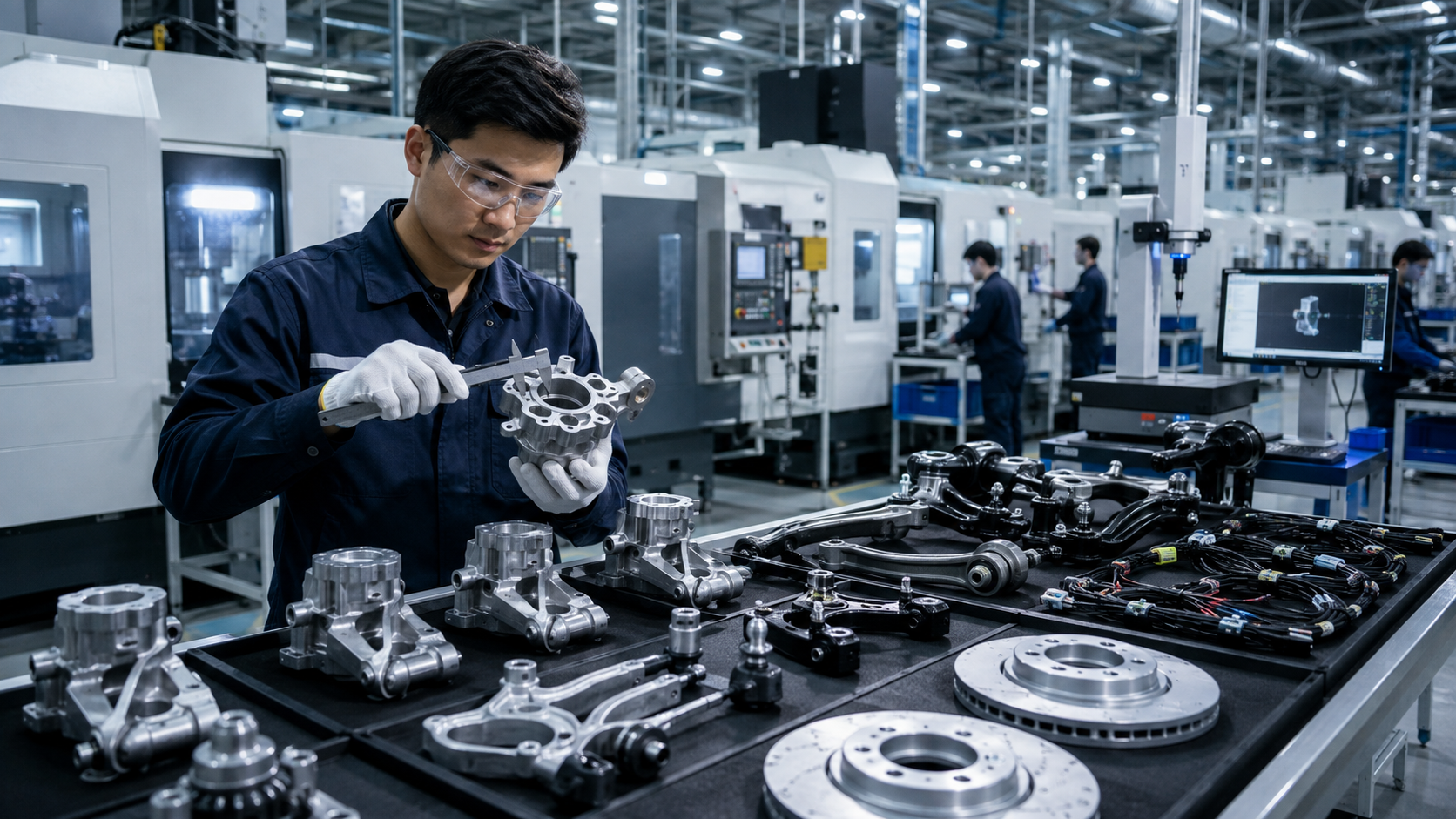
Engines and powertrain components
Transmissions
Chassis and suspension
Brake systems
Electrical and electronic components
Wiring harnesses
Tyres and rubber products
Plastics and polymers
Metal stamping and casting
Precision parts
Seats and interiors
Safety systems
Lighting
Air-conditioning and thermal systems
Batteries and power electronics
Thailand's Supplier Tiers
Tier 1
Companies supplying parts and subassemblies directly to vehicle manufacturers (OEMs).
Approximately 386 companies (vehicle-parts Tier 1), per Thailand Automotive Institute-linked industry research.
Tier 2 & Tier 3
Companies supplying components to Tier 1 suppliers (Tier 2) and raw materials or smaller parts to Tier 2 (Tier 3) — covering stamping, plastics, rubber, machining, casting, forging, and electrical/trimming work.
Approximately 1,700 companies combined, per the same industry research.
Source: Thailand automotive Tier 1–3 supplier structure (industry/academic research, citing Thailand Automotive Institute data) · Accessed 17 Aug 2026 · Search-verified secondary/academic tier — figures were not independently re-confirmed via a direct TAI primary-source fetch in this session; treat as directionally indicative rather than a current official count.
Verified Parts & Tyre Suppliers
Thai Summit Group
Metal forming, interiors/exteriors, wiring harnesses, dies & tooling
One of Thailand's largest homegrown automotive-parts manufacturers, with over 40 subsidiaries covering metal forming, interior and exterior components, motorcycle structures, wiring harnesses, die casting, forging, machining, and dies & tooling.
Location: Laem Chabang, Nakhon Nayok, Rayong, Samut Prakan
Official website ↗Search-verified against Thai Summit Group's own site; not independently opened via direct fetch this session.
Aapico Hitech Public Company Limited
Body parts, jigs, sub-assemblies
Described as the largest turnkey jig supplier in Southeast Asia; produces body parts (floor parts, cross members, pillars, brackets) and fuel tanks for the OEM supply chain.
Official website ↗Search-verified against Aapico Hitech's own site; not independently opened via direct fetch this session.
Somboon Advance Technology PCL
Drivetrain and suspension components
Manufactures rear axle shafts, brake drums, brake discs, flywheels, leaf springs, stabilizer bars, and coil springs for the automotive supply chain.
Official website ↗Search-verified against Somboon Advance Technology's own site; not independently opened via direct fetch this session.
Bridgestone Tire Manufacturing (Thailand)
Tyres
Tyre manufacturer in Thailand since 1969; passenger-tyre production centred at Nong Khae, truck/bus tyres at Chonburi, and a dedicated construction/mining radial-tyre plant in Rayong (opened 2019).
Location: Nong Khae, Chonburi, Rayong
Official website ↗Search-verified against Bridgestone's own corporate newsroom; not independently opened via direct fetch this session.
Michelin Siam Group
Tyres
Operating in Thailand since the 1980s, with major tyre-production facilities at Laem Chabang and Nong Khae serving Michelin's global supply chain.
Location: Laem Chabang, Nong Khae
Official website ↗Search-verified against industry reporting; not independently opened via direct fetch this session.
Accessories, Aftermarket & Repair
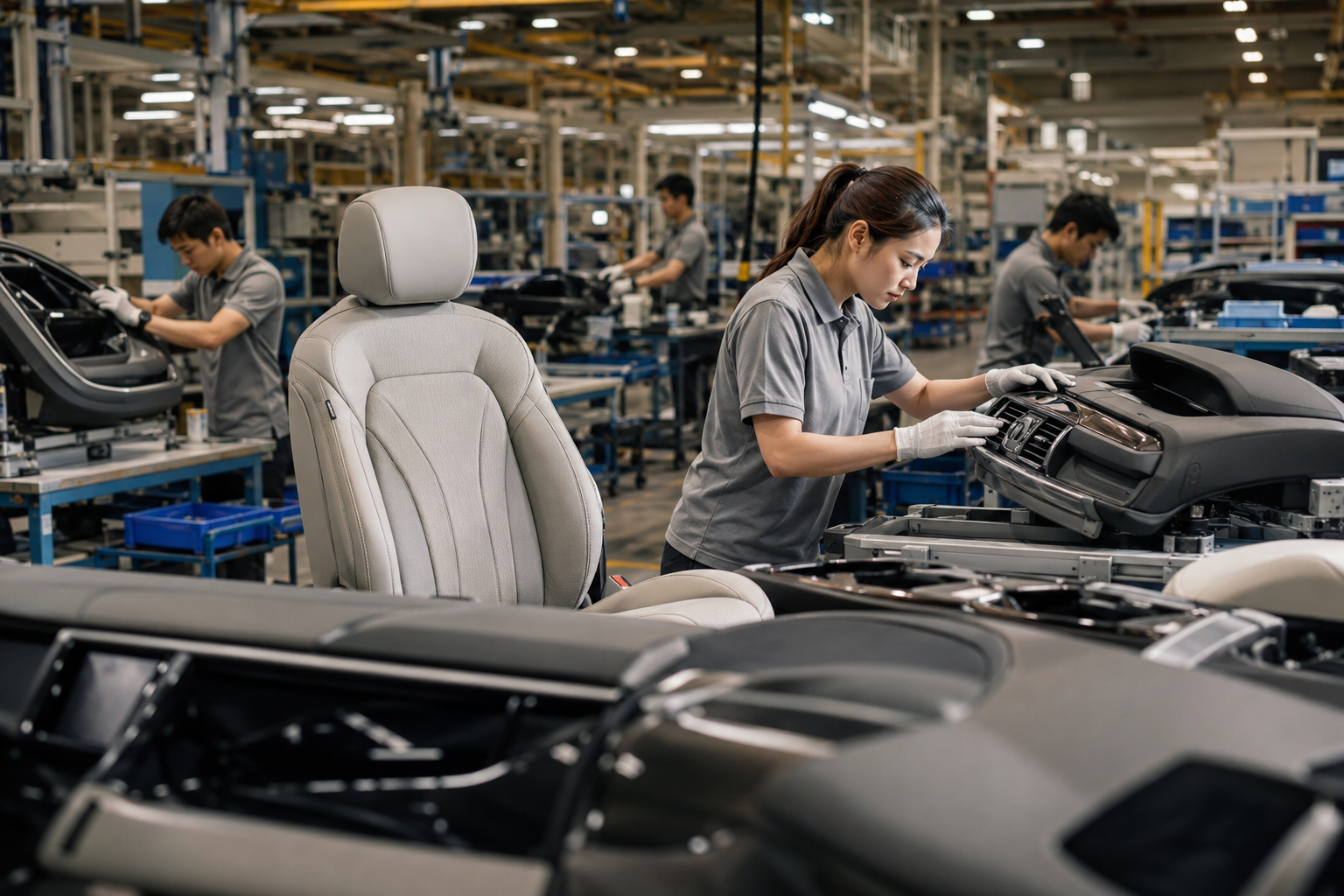
Alongside OEM production, Thailand supports a large domestic aftermarket — interior and exterior accessories, replacement parts, workshop equipment, and a growing e-commerce distribution channel.
OEM vs. Aftermarket Parts
OEM parts are made by or for the original vehicle manufacturer to original specification; aftermarket and replacement parts are produced independently and vary widely in brand, quality tier, and certification.
Interior & Exterior Accessories
A large domestic industry supplies interior trim, seat covers, exterior styling, and vehicle-customization products for the Thai and regional aftermarket.
Tyres, Wheels & Workshop Equipment
Replacement tyres and wheels, alongside workshop tools and diagnostic equipment, support Thailand's large vehicle-repair and maintenance sector.
Fleet Services & Distribution
Fleet maintenance providers and parts distributors — increasingly including e-commerce channels — connect aftermarket suppliers with commercial and individual vehicle owners.
Tooling, Machinery & Factory Automation
A dedicated tooling and automation supply base — machine tools, dies, robotics, and industrial software — equips Thailand's OEM and Tier 1 plants, supported by associations such as the Thai Tool and Die Industry Association and Thai Subcontracting Promotion Association (see the Ecosystem Directory below).
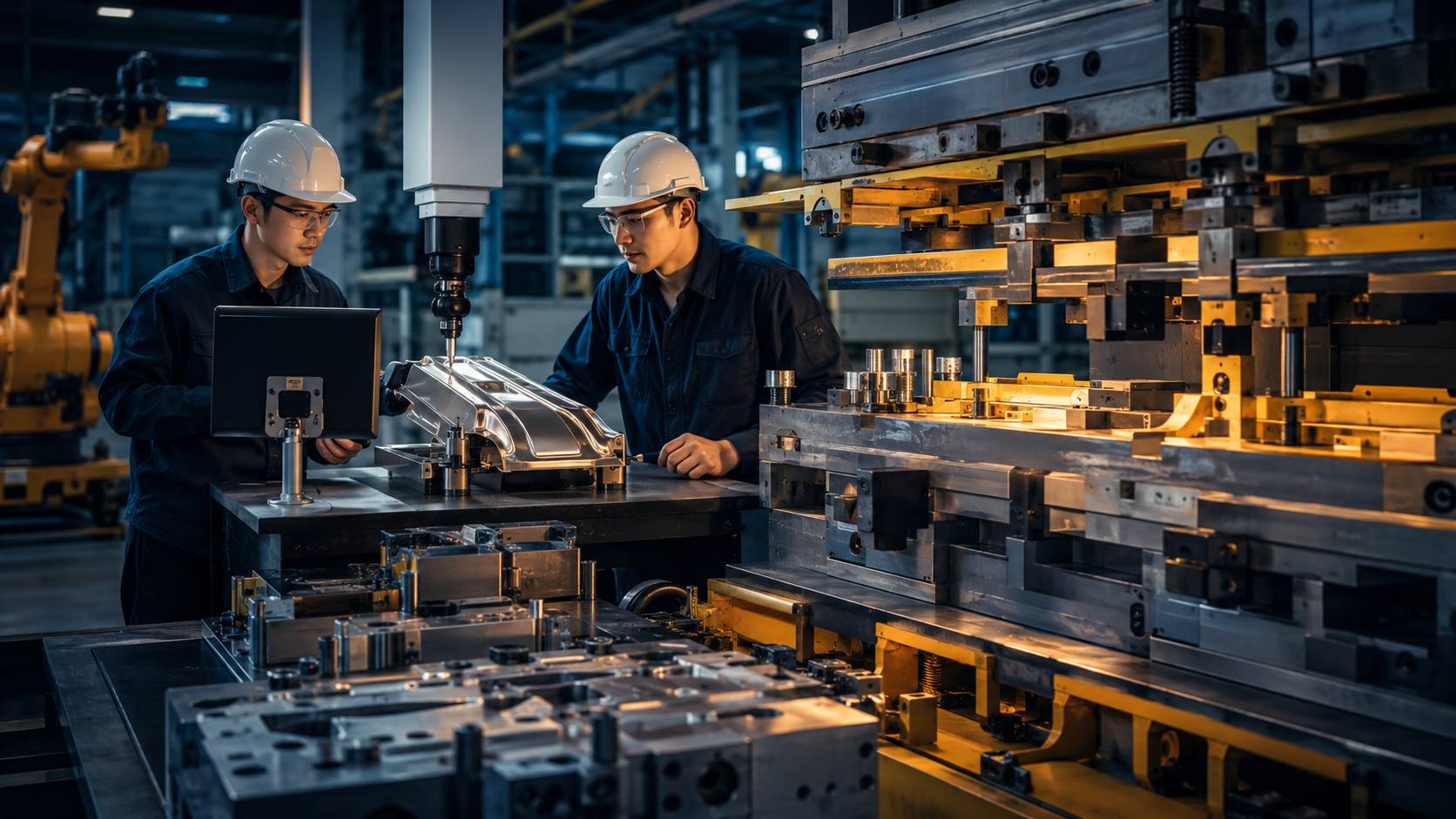
Machine Tools & Dies
A dedicated machine-tool, die, and mould industry supplies the presses and tooling used across Thai OEM and Tier 1 parts production.
Robotics & Industrial Automation
Welding, assembly, and quality-control automation is increasingly standard across Thailand's larger OEM and Tier 1 facilities.
Industrial Software & Smart Factories
Manufacturing-execution software and smart-factory initiatives are being adopted across the supply chain, often supported by BOI's Smart and Sustainable Industrial Upgrade measures.
Maintenance & Engineering Services
A supporting ecosystem of machinery maintenance, engineering, and subcontracting service providers underpins day-to-day plant operations.
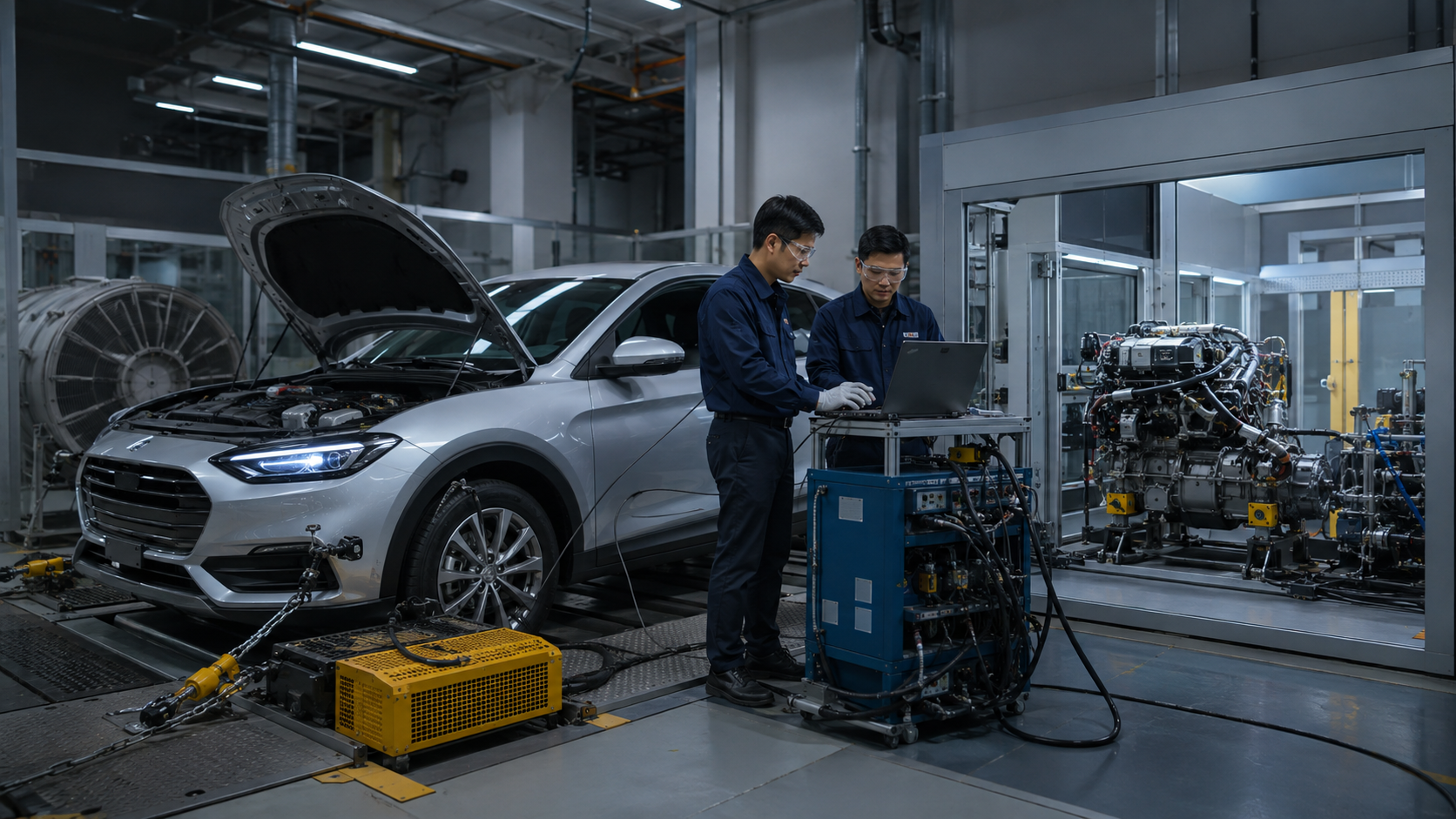
Testing, Standards, Certification & R&D
Whole-vehicle type approval and component certification in Thailand are administered by two specific authorities — general international standards are not a substitute for these Thai requirements.
Department of Land Transport (DLT)
Whole-vehicle type approval and registration authority in Thailand.
Official resource ↗Thai Industrial Standards Institute (TISI)
Component-level certification and Thailand's national industrial-standards body, established under the Industrial Product Standards Act (1969).
Official resource ↗Thailand Automotive Institute (TAI)
Provides vehicle and component testing, consulting, certification, and quality-system auditing services to the automotive industry.
Official resource ↗Thailand's vehicle and component certification requirements are set and administered by DLT and TISI directly — general international standards (such as ISO series standards) are not a substitute for these specific Thai regulatory requirements, which should be confirmed directly with DLT or TISI for any given vehicle or component.
Workforce & Industrial Skills
Engineers, technicians, and specialised tool-and-die and mechatronics skills underpin Thailand's automotive base, increasingly supported by direct automaker–government training partnerships as the sector shifts toward EV manufacturing.
Source: Changan Thailand — official announcement · Accessed 17 Aug 2026
One verified current example: Changan and Thailand's Department of Skill Development are running the Automotive Human Resource Development Academy (AHRDA), training Department personnel on EV maintenance and service so they can extend that training across 41 target provinces, with a stated goal of training 2,000 people in 2025.
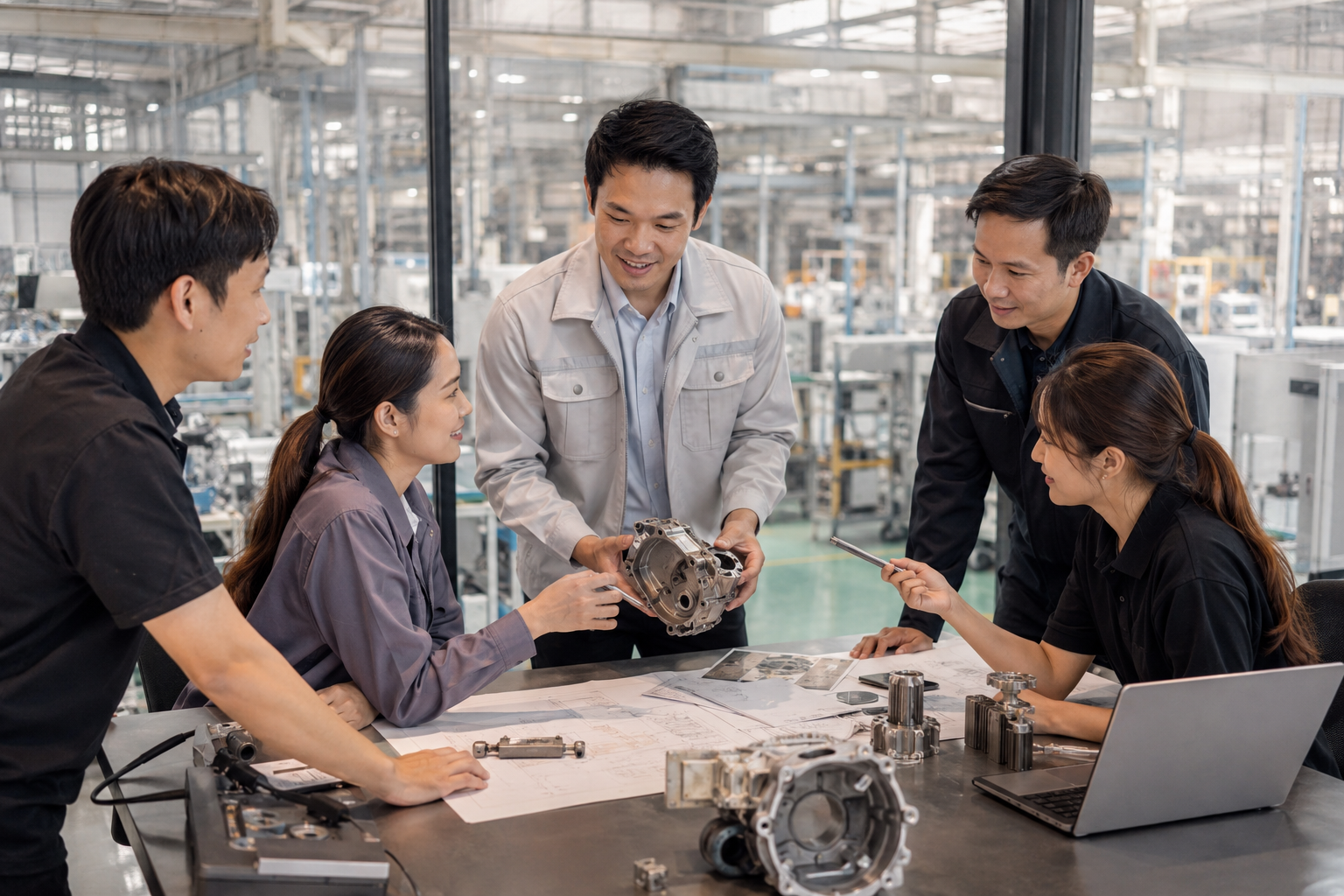
Engineers & Technicians
Thailand's automotive base draws on a large pool of manufacturing and mechanical engineers, alongside vocational-trained technicians.
Tool-and-Die & Mechatronics Skills
Specialised tool-and-die, mechatronics, and robotics/automation skills are supported by dedicated technical institutes and industry-sponsored training programmes.
Vocational Education & TVET
Thailand's Technical and Vocational Education and Training (TVET) system, including dedicated automotive skill-development hubs, supplies much of the sector's technician workforce.
University–Industry Collaboration
Universities and the Department of Skill Development partner directly with automakers on workforce programmes, including EV-specific maintenance and service training.
Important Automotive Locations
Seven provinces and one flagship investment zone anchor Thailand's automotive manufacturing footprint.
Samut Prakan
Home to Toyota's Samrong plant (company HQ and primary production facility), Isuzu's Samrong plant, and Nissan's two Bang Sao Thong plants — one of Thailand's original automotive manufacturing bases.
Typical activities: OEM vehicle assembly (passenger cars, pickups, commercial vehicles)
Infrastructure: Close to Bangkok and Suvarnabhumi Airport, with established road and port access.
Chachoengsao
Site of Toyota's Ban Pho and Gateway plants and Isuzu's Gateway plant, within the Gateway City Industrial Estate.
Typical activities: OEM vehicle assembly, including hybrid and export-oriented models
Infrastructure: Gateway City Industrial Estate; positioned between Bangkok and the Eastern Seaboard.
Chonburi
Home to Mitsubishi Motors' Laem Chabang complex (its largest manufacturing centre outside Japan) and the SAIC Motor-CP (MG) plant at WHA Eastern Seaboard Industrial Estate 2, plus Bridgestone and Michelin tyre plants.
Typical activities: OEM vehicle assembly, EV and battery production, tyre manufacturing
Infrastructure: Directly served by Laem Chabang Port, Thailand's principal deep-sea port for vehicle and container exports.
Official resource ↗Rayong
The single largest concentration of new EV OEM investment in Thailand — BYD, Great Wall Motor, Changan, and GAC Aion all operate plants here, alongside the long-established AutoAlliance Thailand (Ford/Mazda) and BMW Manufacturing Thailand plants.
Typical activities: OEM vehicle assembly (combustion, hybrid, and battery-electric), battery and power-electronics production
Infrastructure: Part of the Eastern Economic Corridor (EEC); served by multiple WHA and Amata industrial estates and close to Laem Chabang and Map Ta Phut ports.
Official resource ↗Prachinburi
Site of Honda Automobile (Thailand)'s primary vehicle-assembly plant, opened in 2016 with a cell-production-style assembly line.
Typical activities: OEM vehicle assembly
Infrastructure: Rojana Industrial Park, Prachinburi.
Ayutthaya
A long-standing Honda manufacturing site (since 1996), transitioning from vehicle assembly toward automotive-component production as Honda consolidates vehicle output at Prachinburi.
Typical activities: Automotive-component manufacturing (transitioning from prior vehicle assembly)
Infrastructure: Established industrial-estate infrastructure north of Bangkok.
Eastern Economic Corridor (EEC)
Thailand's flagship investment-promotion zone spanning Chonburi, Rayong, and Chachoengsao, explicitly designed around 'next-generation automotive' as one of its target S-curve industries.
Typical activities: OEM and EV assembly, battery production, advanced manufacturing, and supporting logistics
Infrastructure: Coordinated by the Eastern Economic Corridor Office (EECO); includes new industrial-estate development such as Chachoengsao Blue Tech City, approved by the Industrial Estate Authority of Thailand for modern automotive industry use.
Official resource ↗Locations are described based on verified OEM, industrial-estate, or government-programme presence only. No city or province is described as a "major cluster" without a specific, cited example of that activity.
Production, Domestic Market & Economic Statistics
| Metric | Value | Period |
|---|---|---|
| Total vehicle production | 1,341,714 units | Jan–Nov 2025 (down 1.64% YoY) |
| Passenger cars produced | 504,597 units (37.82% of total) | Jan–Nov 2025 (down 2.90% YoY) |
| — of which Battery Electric Vehicles (BEV) | 60,200 units | Jan–Nov 2025 (up 609.07% YoY) |
| — of which Hybrid Electric Vehicles (HEV) | 197,757 units | Jan–Nov 2025 (up 13.04% YoY) |
| — of which Plug-in Hybrid (PHEV) | 16,921 units | Jan–Nov 2025 (up 210.31% YoY) |
| Trucks produced (incl. 1-ton pickups) | 837,117 units | Jan–Nov 2025 (down 0.86% YoY) |
| — of which 1-ton pickup trucks | 827,446 units (62.39% of total production) | Jan–Nov 2025 (down 0.13% YoY) |
| Vehicles produced for export | 862,886 units (64.31% of total production) | Jan–Nov 2025 (down 8.39% YoY) |
| Vehicles produced for domestic market | 478,828 units | Jan–Nov 2025 (up 13.42% YoY) |
| Full-year total production | ≈1.455 million units (down 0.9% YoY) | 2025 (FTI-reported full-year figure) |
| Full-year vehicle exports | 935,750 units, valued at THB 622 billion | 2025 (down 8.2% in units, down 11.1% in value YoY) |
| Domestic vehicle sales | 621,166 units (up 8.47% YoY) | 2025 |
| 2026 production forecast | ≈1.5 million units (FTI forecast, +3.0% YoY) | 2026 (forecast, not actual) |
| Tier 1 automotive-parts suppliers | ≈386 companies | Industry research estimate (see Tier-structure source note above) |
| Tier 2 & Tier 3 suppliers | ≈1,700 companies | Industry research estimate (see Tier-structure source note above) |
Source: Federation of Thai Industries (FTI) Automotive Industry Group, as reported by M Report, Khaosod English, Bangkok Post, and Trading Economics · Accessed 17 Aug 2026 · Full calendar-year 2025 and 2026-forecast figures were cross-checked across three independent trade-press reports citing FTI; the January–November 2025 breakdown comes from a single directly-quoted FTI spokesperson statement. Figures are shown exactly as reported; no totals were invented or interpolated.
Employment and sector GDP-contribution figures were not verified to a specific, citable, current source in this research pass and are intentionally omitted rather than estimated.
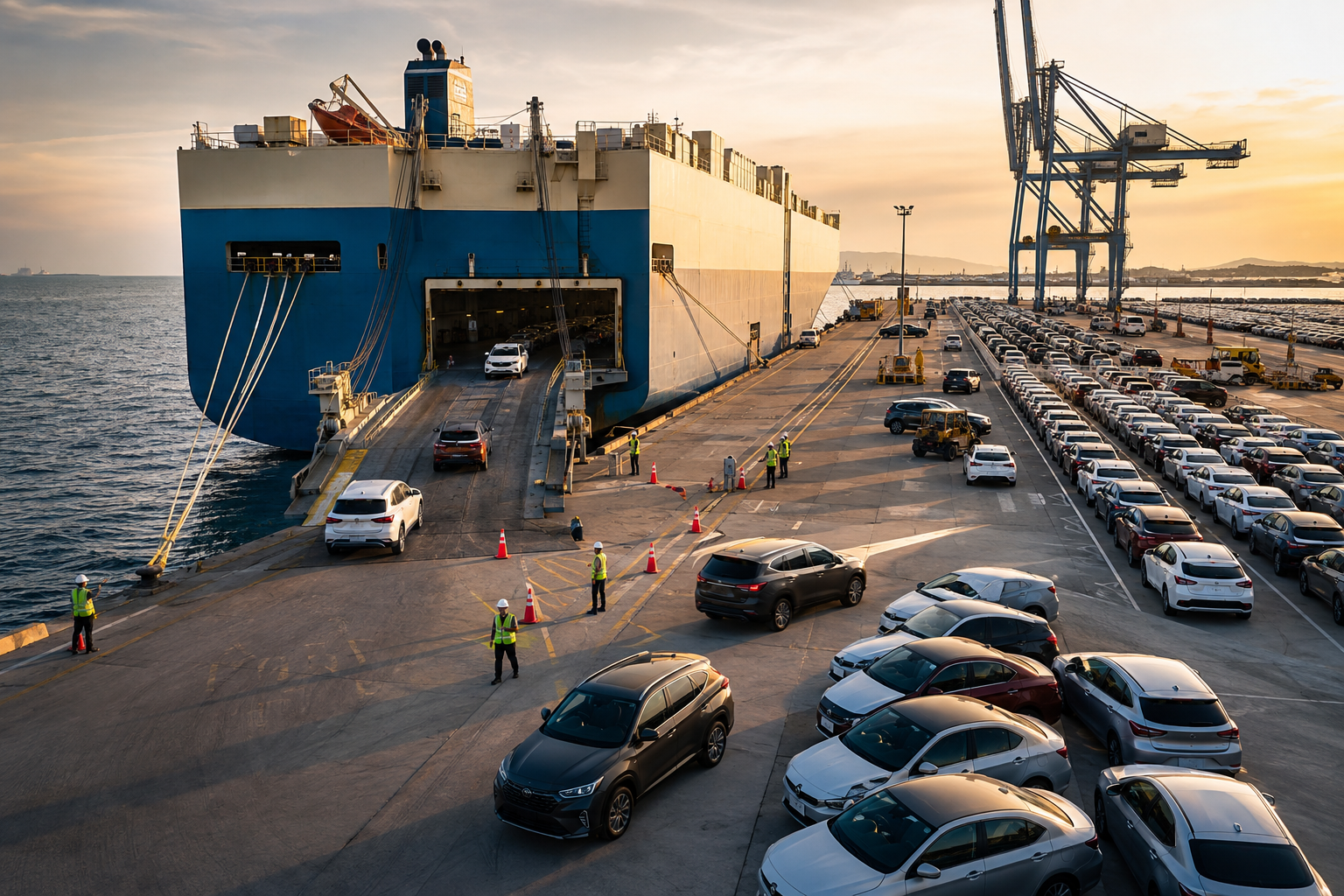
Imports and Exports
Thailand's automotive exports (HS Chapter 87 — vehicles and parts) reached US$33.62 billion in 2025. Major destination markets include Australia, Japan, and ASEAN countries, with the Middle East noted as a fast-growing destination for Thai automotive products.
Source: UN Comtrade (HS Chapter 87), as compiled and reported by trade-data publishers · Accessed 17 Aug 2026
This session verified the aggregate HS-87 export value and general destination-market pattern via search-tier sources, but did not independently re-derive a primary Comtrade query this session. A finer breakdown separating finished vehicles from engines, tyres, batteries, and electrical/electronic components by exact value was not verified to primary-source precision in this pass and is intentionally omitted rather than estimated — see the Production, Domestic Market & Economic Statistics section above instead, which reports verified unit-based vehicle export figures separately from FTI.
Verified, citable Thailand automotive import figures (by value and HS-code scope, separated from exports) were not confirmed to primary-source precision in this research pass and are intentionally omitted rather than estimated. Import clearance for vehicles and components is administered by the Thai Customs Department.
Government Policy and BOI Incentives
BOI-linked measures currently supporting automotive, EV, and battery investment in Thailand — verified against the current EV Board and BOI framework.
EV 3.5 package
Battery-electric vehicle (BEV) assembly under BOI/Excise Department import-to-local-production conditions
Requires domestic production of two vehicles for every vehicle imported under the scheme in 2026, rising to a three-to-one ratio in 2027.
Period: 2024–2027
Search-verified across multiple industry sources (ASEAN Briefing, Just Auto); not independently opened via a direct BOI/EV Board primary fetch in this session.
Hybrid (HEV) and Mild-Hybrid (MHEV) excise measure
Locally produced hybrid and mild-hybrid passenger vehicles (up to 10 seats)
A temporarily reduced excise-tax rate for locally produced HEVs, extended to a new MHEV category (electrical systems below 60 volts), conditional on low-CO2 emissions, at least 4 of 6 Advanced Driver-Assistance Systems (ADAS) features, and use of designated Thailand-made key parts.
Period: 2026–2032
Search-verified against multiple trade-press reports on the EV Board's 2026 decision; not independently opened via a direct Excise Department primary fetch in this session.
EV battery-cell manufacturing cash grants
Battery-cell manufacturers investing in Thailand
Cash-grant support through a national competitiveness fund, conditional on batteries meeting performance thresholds of at least 150 Wh/kg energy density and 1,000 charge/discharge cycles under standard testing.
Period: Applications open until end of 2027
Search-verified against multiple industry-press reports on EV Board decisions; not independently opened via a direct BOI/EV Board primary fetch in this session.
Battery local-content counting extension
BEV manufacturers using imported battery cells
Deadline extended to 30 June 2026 for imported battery cells to still count toward local-content requirements, capped at up to 10% of the BEV's price.
Search-verified against multiple industry-press reports; not independently opened via a direct BOI/EV Board primary fetch in this session.
Automotive, auto-parts, EV, battery, testing, and R&D activities are covered within BOI's broader promoted-activity framework (including its manufacturing, technology and innovation, and BCG economy categories). This page does not reproduce the complete BOI activity list for automotive — use the Eligible Activities & Conditions link above to review the current, activity-specific conditions directly with BOI.
Eligibility and incentives depend on the promoted activity, technology, location, investment plan, and current BOI rules. Applicants should obtain confirmation directly from the Thailand Board of Investment before making an investment decision.
How to Apply for BOI Promotion
A 14-step orientation pathway — not a reproduction of BOI's complete guide.
1. Define the automotive activity and proposed products
Decide precisely which automotive activity you plan to operate — OEM assembly, component manufacturing, EV/battery production, testing/R&D, or a supporting/tooling activity.
Required information
A written description of the proposed product(s) and activity.
Responsible organisation
Applicant, with reference to BOI's promoted-activity list
Eligible Activities & Conditions ↗2. Identify the correct BOI activity category
Match the proposed activity to the specific BOI promoted-activity category and code it falls under.
Required information
Activity description matched against the current Eligible Activities list.
Responsible organisation
Thailand Board of Investment (BOI)
Eligible Activities & Conditions ↗3. Review eligibility, conditions, and incentive tier
Review the specific conditions attached to the activity (e.g. technology requirements, minimum investment, certification) and the resulting incentive tier.
Required information
Current Investment Promotion Guide entry for the matched activity.
Responsible organisation
Thailand Board of Investment (BOI)
BOI Investment Promotion Guide (2026) ↗Eligibility and benefits depend on the precise promoted activity, project scope, and current BOI rules — confirm directly with BOI before proceeding.
4. Prepare the business and investment plan
Develop a business plan covering investment size, ownership structure, and project timeline.
Required information
Investment capital plan, shareholding structure, project timeline.
Responsible organisation
Applicant
5. Prepare technical, production, employment, environmental, market, and financial information
Assemble the detailed supporting information BOI's application process requires.
Required information
Production process description, machinery list, employment plan, environmental-compliance plan, market analysis, and financial projections.
Responsible organisation
Applicant
6. Create or access the BOI application system
Register for access to BOI's e-Investment Promotion System.
Required information
Company registration details (or incorporation plan) for system registration.
Responsible organisation
Thailand Board of Investment (BOI)
e-Investment Promotion (Apply Online) ↗7. Submit the application
Submit the completed application and supporting documents through the e-Investment Promotion System.
Required information
All information gathered in Steps 4–5, formatted per BOI's application forms.
Responsible organisation
Thailand Board of Investment (BOI)
BOI Forms & Online Services ↗8. Attend project clarification or interview if requested
Respond to any BOI request for clarification, additional documentation, or a project interview.
Required information
Prompt, complete responses to BOI's specific requests.
Responsible organisation
Thailand Board of Investment (BOI)
9. Receive the BOI resolution
BOI issues its decision on the application; evaluation timeframes vary by investment size.
Required information
None — this step is BOI's internal review and decision.
Responsible organisation
Thailand Board of Investment (BOI)
10. Accept the promotion
Formally accept the promotion offer within BOI's stated deadline.
Required information
Promotion Acceptance form, submitted within the applicable deadline.
Responsible organisation
Applicant
Acceptance deadlines are strict and may only be extended a limited number of times — confirm the current deadline rules directly with BOI.
11. Establish the legal entity and complete required registrations
Incorporate (if not already done) and complete Thai company registration requirements.
Required information
Company registration documents.
Responsible organisation
Department of Business Development, Ministry of Commerce
This step involves company-law and tax-registration requirements — a qualified Thai corporate lawyer or accountant is strongly recommended.
12. Apply for the promotion certificate
Submit the Promotion Certificate application once the entity is established.
Required information
Promotion Certificate Application form and supporting company documents.
Responsible organisation
Thailand Board of Investment (BOI)
13. Complete machinery, raw-material, land, visa, and work-permit procedures where applicable
Process machinery and raw-material import approvals, land-ownership permissions, and any foreign-expert visa/work-permit needs tied to the promotion.
Required information
Machinery list, raw-material list, land documentation, and expert/technician details, as applicable.
Responsible organisation
Thailand Board of Investment (BOI); One Start One Stop Investment Center (OSOS) for visa/work-permit facilitation
One Start One Stop Investment Center (OSOS) ↗14. Meet operational and reporting conditions
Fulfil ongoing conditions tied to the promotion (e.g. reaching full operation by a stated deadline, meeting any activity-specific certification requirements) and complete BOI's periodic reporting.
Required information
Ongoing operational and compliance reporting per BOI's terms.
Responsible organisation
Thailand Board of Investment (BOI)
Non-compliance with promotion conditions can affect incentive eligibility — track conditions and deadlines carefully.
How to Enter Thailand's Automotive Sector
Ten commercial pathways for founders, investors, suppliers, and service providers.
Establish an OEM or component-manufacturing project Vehicle manufacturers and large component makers planning a full production facility
First practical action
Review BOI eligibility for the specific activity (see the BOI Incentives and Application sections above)
Relevant institution
Thailand Board of Investment (BOI)
Official resource ↗Typical regulatory questions
Which BOI activity category applies? What are the foreign-ownership rules for this activity?
Suggested due diligence: Confirm activity-specific BOI conditions and site/location requirements before committing capital.
Supply an existing manufacturer Component and materials suppliers seeking to enter an OEM's approved-supplier list
First practical action
Identify the target OEM's sourcing/procurement contact and applicable quality-certification requirements
Relevant institution
Individual OEMs; Thailand Automotive Institute for testing/certification support
Official resource ↗Typical regulatory questions
What quality and certification standards does the OEM require?
Suggested due diligence: Confirm the OEM's specific supplier-qualification process directly.
Become a Tier 1, Tier 2, or Tier 3 supplier Manufacturers positioning within Thailand's layered supplier structure
First practical action
Assess which tier matches your product and production capability
Relevant institution
Thai Auto-Parts Manufacturers Association (TAPMA); Thai Subcontracting Promotion Association
Official resource ↗Typical regulatory questions
Does the product require component-level certification (TISI) before supply?
Suggested due diligence: Review TAPMA and Thai Subcon membership/networking channels for introductions.
Import machinery, tools, components, or accessories Businesses supplying equipment or parts into the Thai market rather than manufacturing locally
First practical action
Register with Thai Customs and confirm the applicable tariff classification
Relevant institution
Thai Customs Department
Official resource ↗Typical regulatory questions
What import duties and any BOI machinery-duty exemptions apply?
Suggested due diligence: Confirm HS classification and duty treatment directly with Thai Customs before shipping.
Export Thai-made vehicles or parts Thai manufacturers and traders seeking international buyers
First practical action
Engage the Department of International Trade Promotion (DITP) and relevant trade associations
Relevant institution
Department of International Trade Promotion (DITP), Ministry of Commerce
Typical regulatory questions
What export documentation and destination-market vehicle-safety standards apply?
Suggested due diligence: Verify destination-market import and safety-certification requirements before shipment.
Establish a distribution or aftermarket business Businesses selling replacement parts, accessories, or vehicles into the Thai domestic market
First practical action
Register the business with the Department of Business Development
Relevant institution
Department of Business Development, Ministry of Commerce
Typical regulatory questions
Does the activity require any specific import licence or product certification (TISI)?
Suggested due diligence: Confirm product-certification requirements for any imported parts before distribution.
Form a joint venture Foreign investors seeking a Thai partner for activities subject to Foreign Business Act restrictions
First practical action
Confirm Foreign Business Act status of the specific activity with a licensed Thai lawyer
Relevant institution
Department of Business Development, Ministry of Commerce
Typical regulatory questions
Is the activity Foreign Business Act–restricted? Does BOI promotion allow majority/full foreign ownership instead?
Suggested due diligence: This is general orientation only — engage a qualified Thai corporate lawyer for the specific structure.
License technology Technology owners and Thai manufacturers seeking a licensing agreement
First practical action
Review BOI's Technology and Innovation merit-based incentive category alongside the licensing agreement itself
Relevant institution
Thailand Board of Investment (BOI) for the related incentive; private contract otherwise
Typical regulatory questions
Does the licensing arrangement require IP registration in Thailand?
Suggested due diligence: Confirm intellectual-property protections directly with a qualified adviser.
Provide engineering, software, automation, testing, or R&D services Engineering firms, software providers, automation integrators, and testing/R&D specialists
First practical action
Identify target OEMs, Tier 1 suppliers, or TAI for service opportunities
Relevant institution
Thailand Automotive Institute (TAI); individual OEMs and Tier 1 suppliers
Official resource ↗Typical regulatory questions
Does the service require a specific professional licence in Thailand?
Suggested due diligence: Confirm licensing/registration requirements for the specific professional service.
Participate through industrial estates and supplier-development programmes Manufacturers seeking a ready-built industrial site with existing automotive-cluster infrastructure
First practical action
Contact the Industrial Estate Authority of Thailand (IEAT) or a private industrial-estate developer active in the automotive cluster (e.g. WHA, Amata)
Relevant institution
Industrial Estate Authority of Thailand (IEAT)
Official resource ↗Typical regulatory questions
What zoning, environmental, and utility conditions apply to the specific industrial estate?
Suggested due diligence: Compare industrial-estate options against your logistics, workforce, and supplier-proximity needs.
This pathway is general business orientation only and is not legal, investment, customs, tax, licensing, environmental, labour, or regulatory advice.
Automotive Ecosystem Directory
Filter by category to explore Thailand's automotive government and industry-association ecosystem. Directory inclusion is informational. It does not indicate endorsement, membership, partnership or recommendation by T3.
Aapico Hitech Public Company Limited
Body parts, jigs, sub-assemblies
AutoAlliance (Thailand) Co., Ltd. (Ford / Mazda joint venture)
Pickup trucks, passenger cars (Ford Ranger, Mazda BT-50...
BMW Manufacturing (Thailand) Co., Ltd.
Passenger cars
Bridgestone Tire Manufacturing (Thailand)
Tyres
- Location:
- Nong Khae, Chonburi, Rayong
BYD (Thailand)
Battery-electric vehicle OEM
Changan Automobile (Thailand) Co., Ltd.
Battery-electric passenger cars
Department of Industrial Works (DIW)
Government department (Ministry of Industry)
Department of Land Transport (DLT)
Government department (Ministry of Transport)
Eastern Economic Corridor Office (EECO)
Government agency
Electric Vehicle Association of Thailand (EVAT)
Non-profit association (established 2015)
Excise Department
Government department (Ministry of Finance)
Federation of Thai Industries (FTI) — Automotive Industry Group
Industry federation
Major Companies and Supplier Landscape
Companies are grouped for navigation only. Grouping and order do not imply ranking, market share, or T3 endorsement. Global OEMs and Tier 1 parts manufacturers are covered in the OEM and Auto-Parts sections above rather than repeated here. Explore these and other verified companies, institutions, and associations — including tyre and rubber manufacturers, tooling and automation providers, EV and battery makers, and testing and engineering organisations — in the Automotive Ecosystem Directory above.
Trade Shows, Exhibitions & Forums
From Thailand's two flagship consumer motor shows to dedicated tooling, subcontracting, and EV/mobility exhibitions — verified dates, status, and organiser for each.
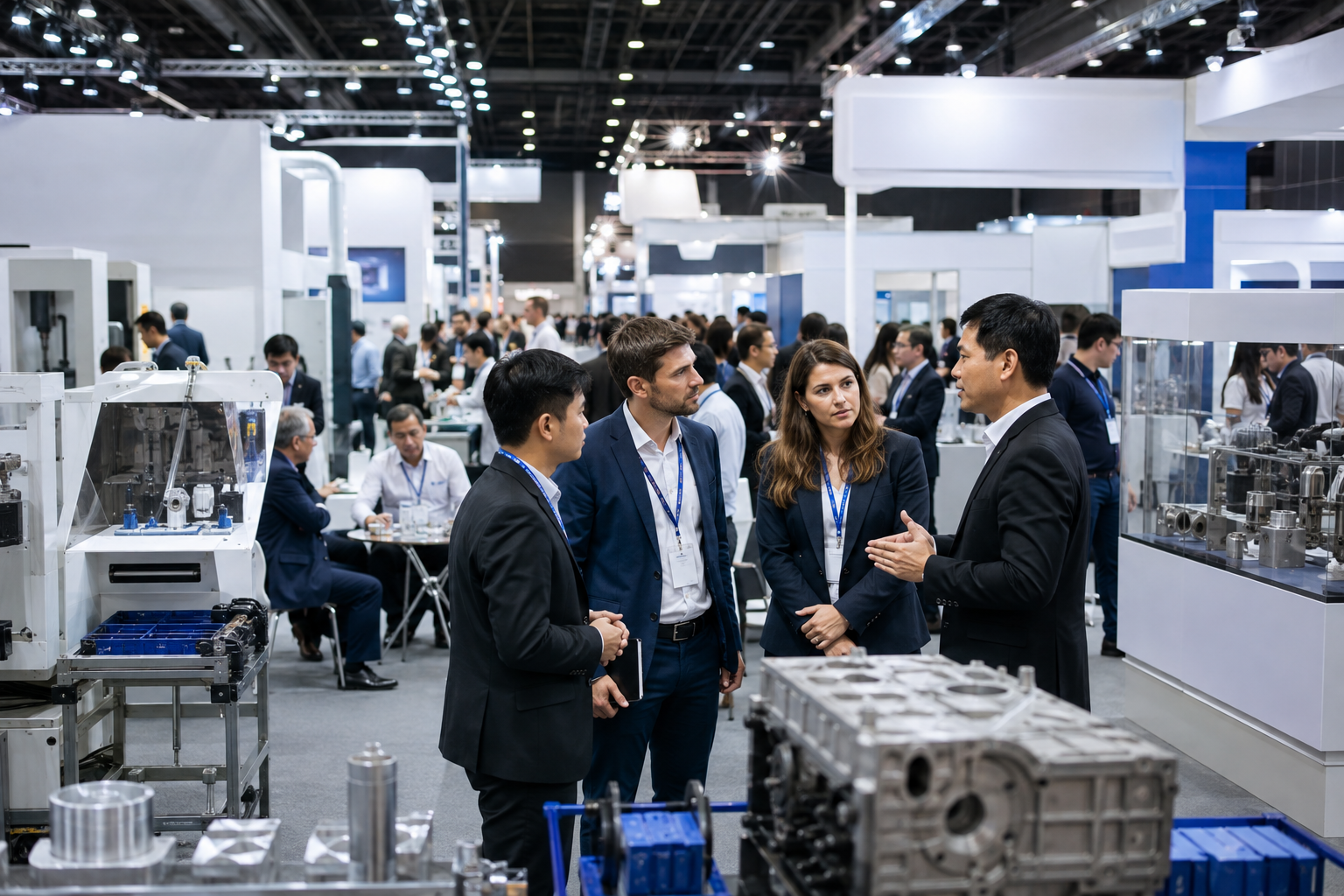
Bangkok International Motor Show
Thailand's flagship consumer motor show, covering new-vehicle launches across all categories including EVs.
Venue: Bangkok International Trade & Exhibition Centre (BITEC), Bangkok
Organiser: Grand Prix International Co., Ltd.
Official event website ↗Last verified 17 Aug 2026
Thailand International Motor Expo
Major consumer motor show, historically Thailand's largest year-end automotive event, covering vehicles and EVs.
Venue: IMPACT Challenger, Muang Thong Thani, Nonthaburi
Organiser: Inter Media Consultant Co., Ltd.
Official event website ↗Last verified 17 Aug 2026
METALEX Thailand
ASEAN's largest machine-tools and metalworking-technology exhibition, directly relevant to automotive tooling, dies, and precision manufacturing.
Venue: Bangkok International Trade & Exhibition Centre (BITEC), Bangkok
Organiser: Reed Tradex Co., Ltd. (per METALEX's own site branding)
Official event website ↗Last verified 17 Aug 2026
SUBCON Thailand
Subcontracting and supporting-industries exhibition, connecting OEMs and Tier 1 buyers with parts and component subcontractors.
Venue: Bangkok International Trade & Exhibition Centre (BITEC), Bangkok
Organiser: Reed Tradex Co., Ltd. (per event branding)
Official event website ↗Last verified 17 Aug 2026
Thailand International Auto Parts & Accessories Show (TAPA)
Auto parts, accessories, and aftermarket trade show.
Venue: Bangkok International Trade & Exhibition Centre (BITEC), Bangkok (2025 edition)
Organiser: Event organiser not independently re-confirmed this session
Official event website ↗Last verified 17 Aug 2026
Future Mobility Asia
EV, charging-infrastructure, and future-mobility exhibition and summit.
Venue: Queen Sirikit National Convention Center (QSNCC), Bangkok (2025 edition)
Organiser: Event organiser not independently re-confirmed this session
Official event website ↗Last verified 17 Aug 2026
No visitor, exhibitor, or country-count figures are shown for any event on this page unless directly confirmed by the organiser. Please verify current dates and details directly with the organiser before travel, registration, or participation.
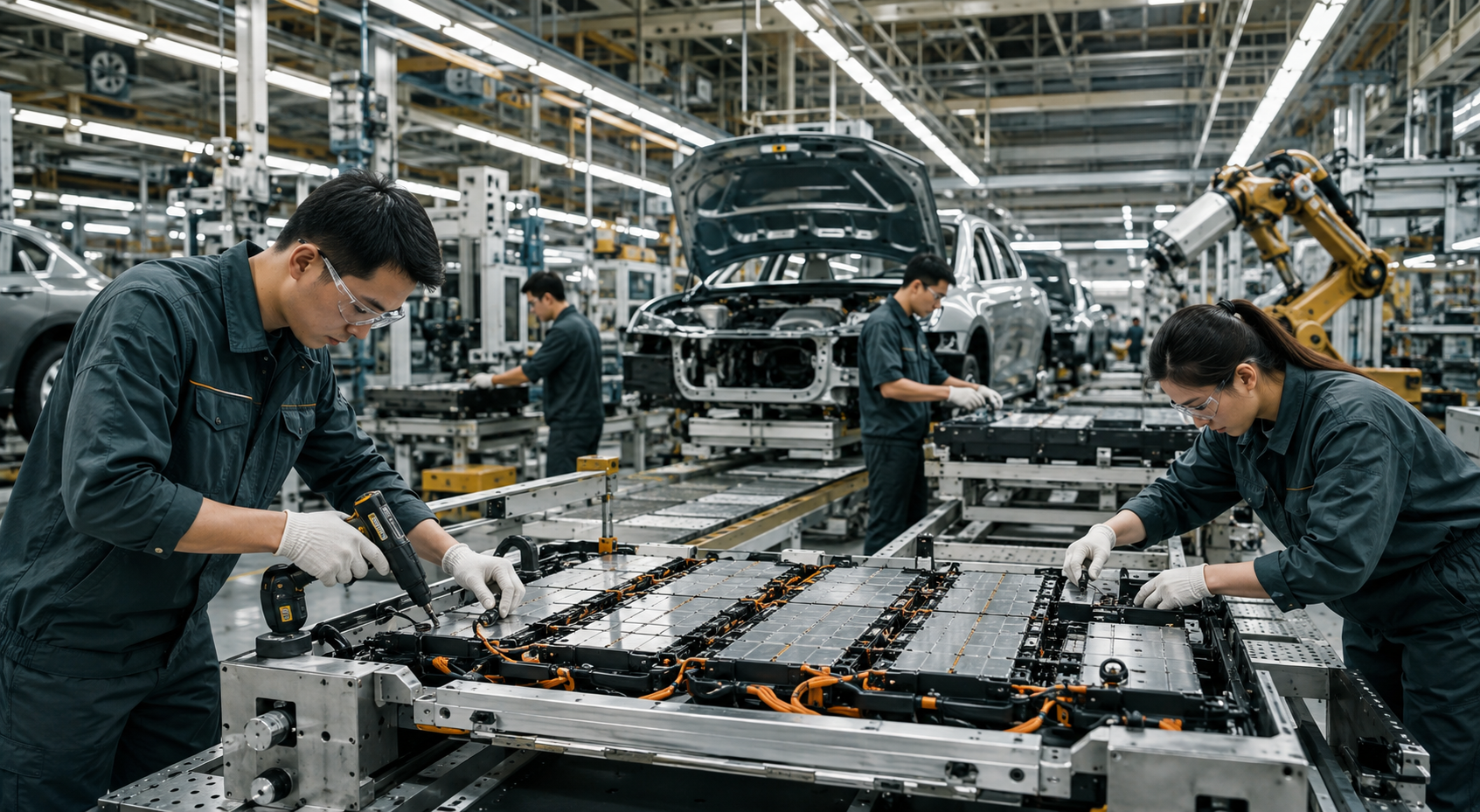
Future Mobility & Industrial Transformation
Thailand distinguishes clearly between what is already happening — live BEV, HEV, and PHEV production — and what remains a government target, such as the 30@30 policy.
Battery-Electric Vehicles — Confirmed Current Production
BEV passenger-car production reached 60,200 units in the first 11 months of 2025 (up over 600% year-on-year), and four global BEV makers (BYD, Changan, GAC Aion, and GWM) now operate live assembly plants in Thailand.
Hybrid & Plug-in Hybrid — Confirmed Current Production
HEV and PHEV passenger-car production reached 197,757 and 16,921 units respectively over the same period, supported by a dedicated 2026–2032 excise-tax measure for locally produced hybrids.
Batteries & Power Electronics — Confirmed Current Investment
Dedicated battery-manufacturing capacity is already operating or under BOI-linked cash-grant support, including a SAIC-CP battery plant in Chonburi and a national battery-cell competitiveness fund open through 2027.
The 30@30 Target — Government Policy Ambition, Not Yet Achieved
Thailand's 2021 '30@30' policy targets zero-emission vehicles reaching 30% of total auto production by 2030 (roughly 725,000 EV cars/pickups and 675,000 EV motorcycles). Current BEV output remains well below this share — this is a stated government target, not a current achievement.
Charging & Connected-Vehicle Infrastructure — Government Target
The 30@30 policy also envisions 12,000 public fast-charge stations and 1,450 battery-exchange stations; this is described here as an infrastructure target, not a confirmed current count.
Circular Manufacturing & Low-Carbon Production — Emerging Direction
End-of-life vehicle recycling and circular-manufacturing practices are an emerging direction tied to Thailand's wider Bio-Circular-Green (BCG) economic model, rather than an established, separately measured industry segment at this time.
Source: Thailand EV policy and 30@30 target — multiple industry and policy sources (ASEAN Briefing, Green Energy Thailand, EPPO) · Accessed 17 Aug 2026 · The 30@30 target and its unit/infrastructure breakdown were cross-checked across multiple independent policy and industry sources; not independently opened via a single primary EV Board or EPPO document fetch in this session.
Explore More of Thailand with T3
Investing in Thailand
Explore Thailand's wider investment landscape, including BOI incentives across priority sectors.
Explore Investment →ASEAN Gateway
Understand Thailand's role as a regional manufacturing and export hub within ASEAN.
View ASEAN Gateway →Thailand Business & Trade Gateway
See how automotive fits within Thailand's broader business, manufacturing, and trade ecosystem.
Back to Business →Sources, Methodology & Data Coverage
Production, sales, and export figures on this page come from the Federation of Thai Industries' Automotive Industry Group, as reported through Thai industrial trade press. Company and association records carry one of two verification tiers, shown on each record: directly opened at the source, or confirmed by cross-matching the organisation's name, domain, and published contact details across independent search results without a direct page fetch in this pass. Detailed import statistics split by finished vehicles, engines, tyres, batteries, and electrical components; current sector employment and GDP-contribution figures; and confirmed next-edition dates for two recurring trade shows (TAPA, Future Mobility Asia) were not verified to primary-source precision in this research pass and are intentionally omitted rather than estimated.
Page last updated: 17 August 2026
Questions about entering Thailand's automotive sector?
T3 provides general orientation and connection support. T3 is not a government authority and does not issue licences, approve investments, or guarantee business outcomes.
T3 — The True Thailand is an independent knowledge and business-gateway platform. T3 is not a government agency, investment adviser, customs broker, or authorised representative of any institution or company listed on this page. This page explains Thailand's automotive sector's transition toward EVs, batteries, and future mobility as part of the wider industry — it is not a complete standalone EV deep-dive page.