
T3 Culture and Heritage
Thailand's Living Heritage
A respectful overview of Thai culture and heritage — values, spiritual life, festivals, arts, craftsmanship, and the traditions that continue to shape Thailand today.
Thailand's Cultural Heritage at a Glance
Thai culture is shaped by a long, continuous history centered on Buddhism, a strong artistic and architectural tradition, and real regional diversity across the North, Northeast (Isan), Central, and Southern regions — each with its own dialects, crafts, and customs. This page presents that heritage as a serious subject worth understanding, not a tourist-brochure summary.
Thai Values and Social Harmony
Commonly-discussed cultural touchstones that shape everyday social life in Thailand — presented as discussed concepts, not a claim about how every individual behaves.
Kreng Jai — Consideration for Others
A widely-discussed cultural concept describing consideration for others' feelings and circumstances, shaping everyday social interaction. Documented in academic sources including Chulalongkorn University's Manusya journal, not treated here as a rule every individual follows.
Mai Pen Rai — An Easygoing Outlook
A commonly-cited expression reflecting a relaxed, non-dwelling attitude toward setbacks, often linked by scholars to Buddhist concepts of impermanence. Presented here as a discussed cultural touchstone, not a claim about every person's temperament.
Respect for Elders and Social Hierarchy
Regard for age, experience, and social position is a commonly-noted feature of everyday Thai social life, expressed through gesture, language, and custom.
Community and Family Ties
Strong family and community bonds are frequently described as a central feature of Thai social life, supporting everything from local festivals to craft traditions passed between generations.
Temples and Spiritual Heritage
Buddhism in Everyday Life
Buddhism, primarily in its Theravada tradition, is central to Thailand's spiritual and cultural life — visible in the country's temples (wat), everyday customs, and major religious observances such as Asanha Bucha, Khao Phansa (the beginning of Buddhist Lent), Makha Bucha, and Visakha Bucha.
Temple Architecture as Visual Heritage
Stepped roofs, gilded chedi spires, and intricate mural traditions make Thai temple architecture one of the country's most recognizable visual signatures — a living heritage still actively used and maintained today.
A Religiously Diverse Nation
Alongside its Buddhist majority, Thailand is home to Muslim, Christian, and other faith communities, each contributing to the country's broader cultural and spiritual life. This page treats that diversity as part of Thailand's identity, not a footnote to it.
Festivals and National Celebrations
Songkran — Thai New Year
Celebrated nationally in mid-April with water-throwing traditions, temple visits, and merit-making. Songkran was inscribed on UNESCO's Representative List of the Intangible Cultural Heritage of Humanity in 2023.
Loy Krathong and Yi Peng
Held on the full moon of the twelfth month of the Thai lunar calendar — typically in November — Loy Krathong sees decorated krathong floated on rivers and waterways nationwide, with the North's Yi Peng lantern release often celebrated alongside it. In 2026, this falls on November 25. Because the date follows the lunar calendar, it shifts every year and should always be reconfirmed for the specific year referenced.
Asanha Bucha and Khao Phansa
Marking the beginning of Buddhist Lent, these observances (see Spiritual Heritage above) are also occasions for community and family gathering, including candlelight processions in some regions.
Ubon Ratchathani Candle Festival
A regional festival marking the start of Buddhist Lent, known for elaborate wax sculpture processions — a striking example of how a religious observance and a distinct regional craft tradition come together.
Regional and Ethnic Celebrations
From Chinese New Year celebrations in Bangkok's Chinatown to southern Thai cultural festivals, Thailand's festival calendar reflects real regional and ethnic diversity, not a single central-Thai tradition applied everywhere.
Traditional Arts and Crafts
Wood Carving and Lacquerware
Long-standing craft traditions, often regionally concentrated, that continue to shape Thai decorative arts and temple ornamentation today.
Nielloware and Celadon Ceramics
Distinct metalworking and ceramic traditions with roots reaching back centuries, still practiced by dedicated artisans and community workshops.
Temple Mural Painting
A narrative art form found across Thailand's temples, historically used to illustrate religious teachings and stories through detailed, symbolic imagery.
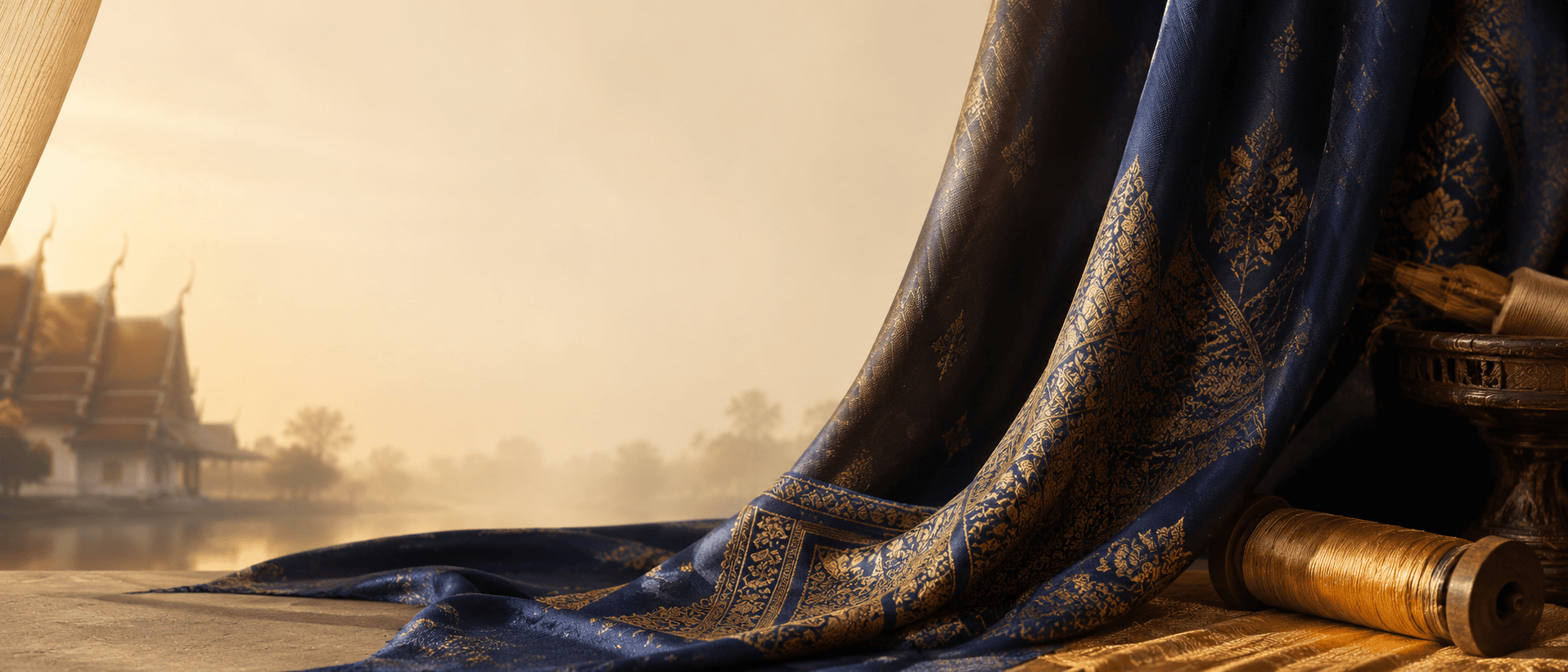
Textiles and Craftsmanship
Thailand's textile heritage — anchored by silk weaving in the Northeast — is one of the country's most distinctive and enduring craft traditions.
Thai Silk and the Isan Region
Thai silk weaving is most closely associated with Thailand's northeastern (Isan) region — provinces including Surin, Khon Kaen, Chaiyaphum, and Nakhon Ratchasima — with weaving traditions tracing back to the historical Khmer presence in the region.
Mat Mi (Mudmee/Ikat) Patterning
A tie-dye patterning technique used on silk and cotton alike, considered one of the world's oldest textile-patterning traditions and still practiced by weaving communities today.
Ban Tha Sawang and Chonabot
Surin's Ban Tha Sawang village is recognized, per the Tourism Authority of Thailand, for producing exceptionally fine gold-thread silk — including fabric used for international dignitaries at Thailand's 2003 APEC summit — while Khon Kaen's Chonabot village is known for fine mudmee silk. Both are cited here via Tourism Authority of Thailand sourcing, not Ministry of Culture attribution.
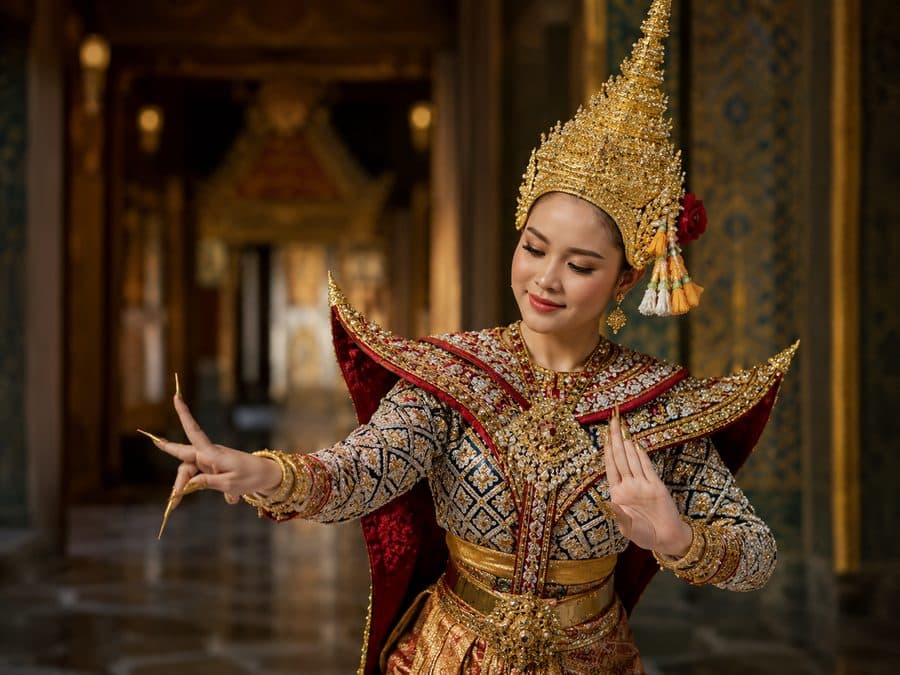
Performing Arts, Music, and Dance
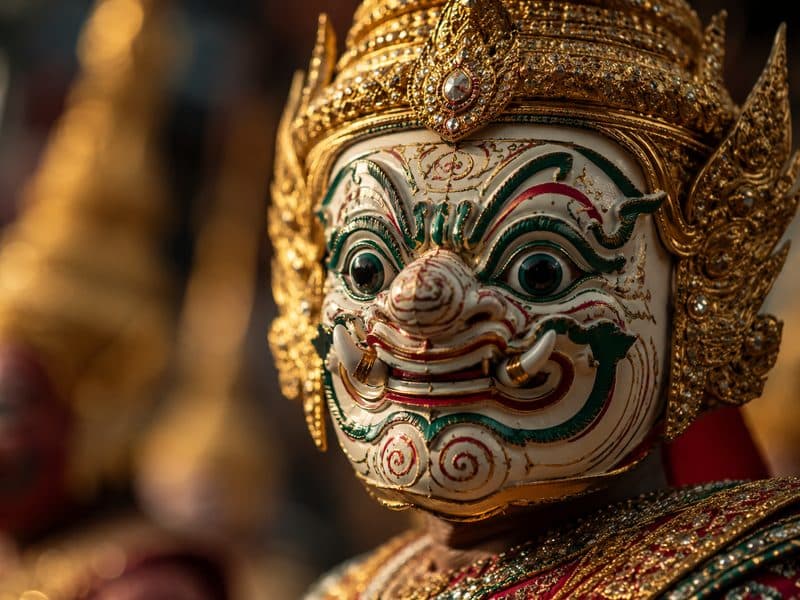
Khon — Masked Dance-Drama
A masked dance-drama narrating episodes from the Ramakien, Thailand's version of the Ramayana. Khon was inscribed on UNESCO's Intangible Cultural Heritage list in 2018.
Nora — Southern Thai Dance-Drama
A dance-drama tradition from southern Thailand, inscribed on UNESCO's Intangible Cultural Heritage list in 2021, known for its distinctive movement and storytelling style.
Classical Music and Regional Folk Traditions
Traditional Thai classical music and regional folk traditions such as mor lam in the Northeast form an additional pillar of the country's performing arts heritage.
Architecture and Design Heritage
From royal and religious landmarks to vernacular stilt-house traditions and a growing contemporary design movement, Thai architecture reflects centuries of continuity and adaptation. For Thailand's royal and dynastic history specifically, see our Kingdom of Thailand page.
Food Culture as Soft Power
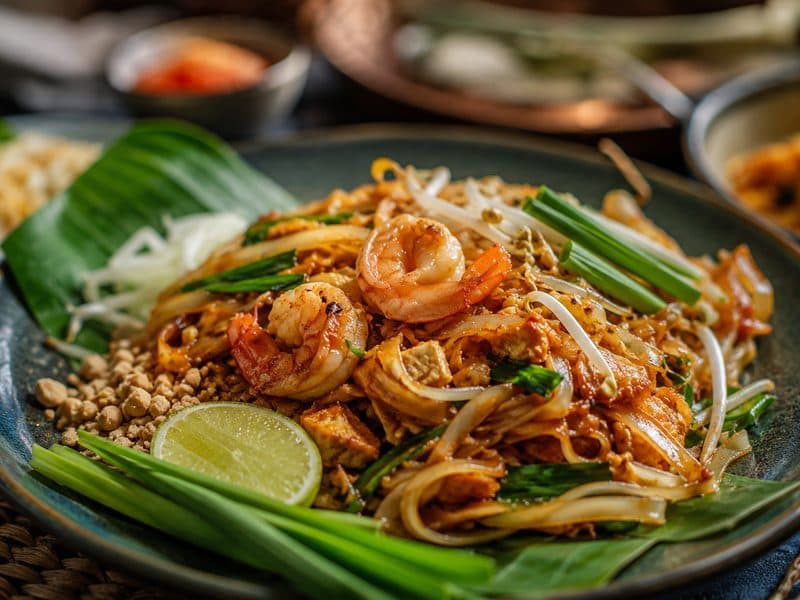
Thai cuisine is one of Thailand's most globally recognized cultural exports — most recently reflected in Tom Yum Kung's 2024 UNESCO Intangible Cultural Heritage inscription. For practical, consumer-facing food and dining content, see our Food and Halal category.
Local Wisdom and Community Identity
Community-sustained traditions — from local craft cooperatives to regional culinary knowledge — represent a "local wisdom" layer distinct from national-level heritage. Nuad Thai (traditional Thai massage), inscribed on UNESCO's Intangible Cultural Heritage list in 2019, is one widely-recognized example of this tradition of practical, community-held knowledge.
Culture on the World Stage
Thailand's six confirmed UNESCO Intangible Cultural Heritage recognitions, presented here with their inscription years.
Khon — Masked Dance Drama
Inscribed on the Representative List of the Intangible Cultural Heritage of Humanity.
Nuad Thai — Traditional Thai Massage
Recognized for its role in Thailand's holistic approach to health and well-being.
Nora — Southern Thai Dance-Drama
Recognized for its distinctive performance tradition from southern Thailand.
Songkran — Thai New Year
Recognized as a nationally celebrated New Year tradition.
Tom Yum Kung
Thai culinary tradition recognized at an international level.
Kebaya — Knowledge, Skills, Traditions and Practices
A joint multinational inscription shared with Brunei Darussalam, Indonesia, Malaysia, and Singapore — not a Thailand-only recognition.
Cultural Resources
Named here for reference only — T3 does not represent or speak on behalf of any organization below. Live links will be added once each official URL has been verified.
UNESCO Intangible Cultural Heritage Lists
The official international reference for Thailand's recognized intangible cultural heritage elements.
Official link to be verified before publishing
Tourism Authority of Thailand (TAT)
An official source for regional craft, textile, and festival information referenced on this page.
Official link to be verified before publishing
Thailand's Cultural and Heritage Institutions
General reference point for readers seeking deeper cultural and historical context beyond this page.
Official link to be verified before publishing

Explore More of Thailand with T3
Culture & Heritage Directory
Explore the organizations, guilds, and operators keeping Thailand's cultural heritage alive — from historic sites to festivals and traditional crafts.
Temples & Heritage Sites
Historic temples, palaces, and heritage sites, and the organizations that manage and interpret them for visitors.
Browse →
Festivals & Event Organizers
Organizers and producers behind Thailand's festivals, cultural celebrations, and heritage events.
Browse →
Traditional Arts & Crafts Guilds
Guilds, cooperatives, and workshops preserving traditional Thai crafts such as lacquerware, ceramics, and woodcarving.
Browse →
Textile & Craftsmanship Studios
Weaving houses, silk producers, and artisan studios keeping Thailand's textile and craftsmanship traditions alive.
Browse →
Performing Arts Companies
Dance, music, and theatre companies performing classical and contemporary Thai performing arts.
Browse →
Heritage Conservation Bodies
Organizations and agencies working to conserve and restore Thailand's historic sites, buildings, and cultural assets.
Browse →
Cultural Tour Operators
Tour operators and guides specializing in cultural, heritage, and historical experiences across Thailand.
Browse →
Jim Thompson House Museum
A silk entrepreneur's teakwood house and Southeast Asian art collection, now one of Bangkok's best-known heritage museums
- Location:
- 6 Soi Kasemsan 2, Rama I Road, Wang Mai, Pathumwan, Bangkok 10330, Thailand
Test Company ABC2
- Location:
- 131 Asoke Montri Road, Sukhumvit 21, Bangkok 10110, Thailand
Test Company DEF3
Thailand's oldest cultural institution, promoting the study of Thai and Southeast Asian arts, history, and heritage since 1904
Test Company GHI4
Test Company XYZ
The Siam Society Under Royal Patronage
Thailand's oldest learned society preserving and promoting Thai and regional arts, culture, and natural history since 1904
- Location:
- 131 Asoke Montri Road (Sukhumvit 21), Bangkok 10110, Thailand