
T3 Food and Halal
Thailand's Food Culture and Halal Opportunity
Kitchen of the World, and a rising halal hub for ASEAN — presented with care by T3.
A Global Food Reputation, Built on Balance
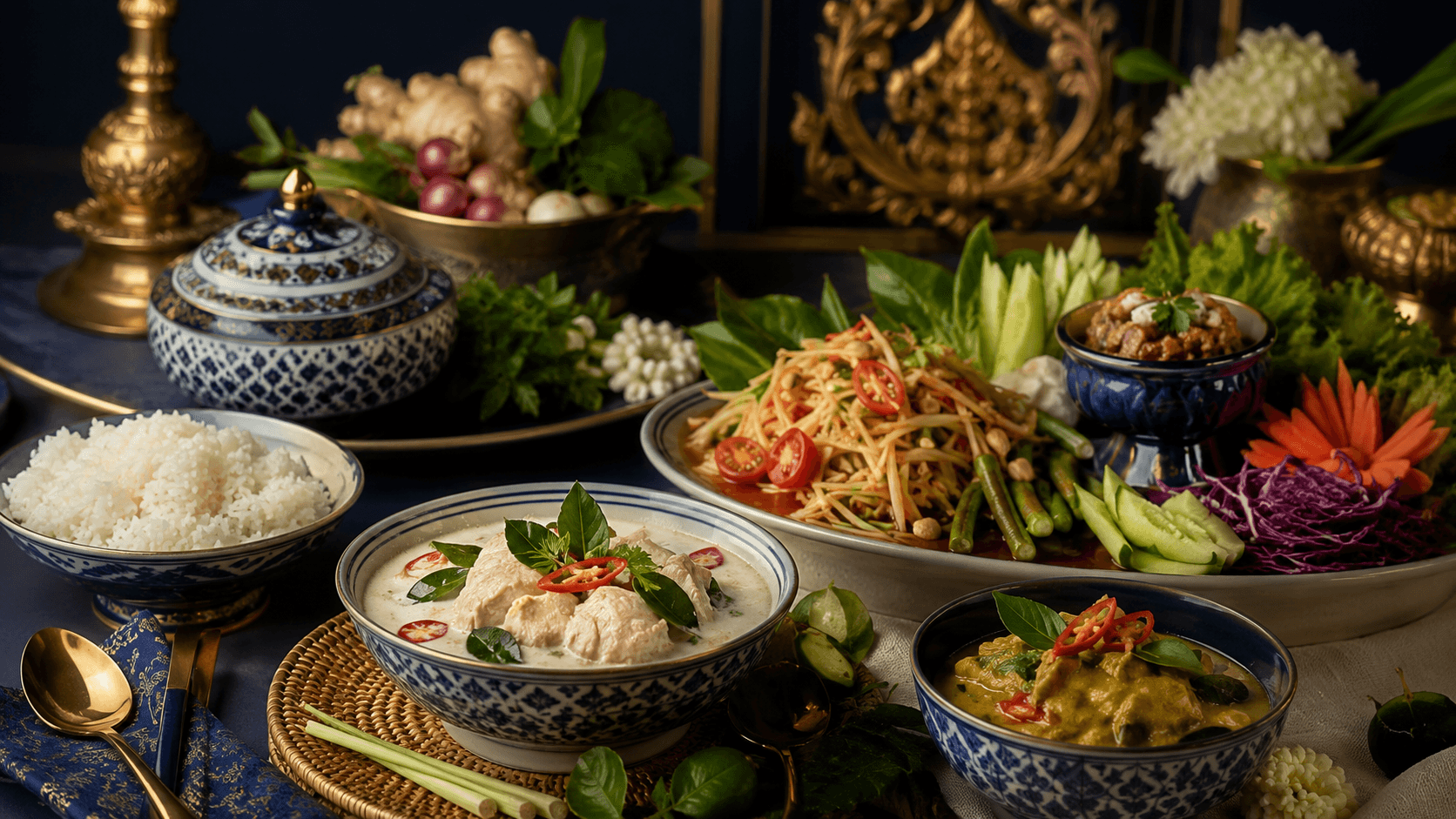
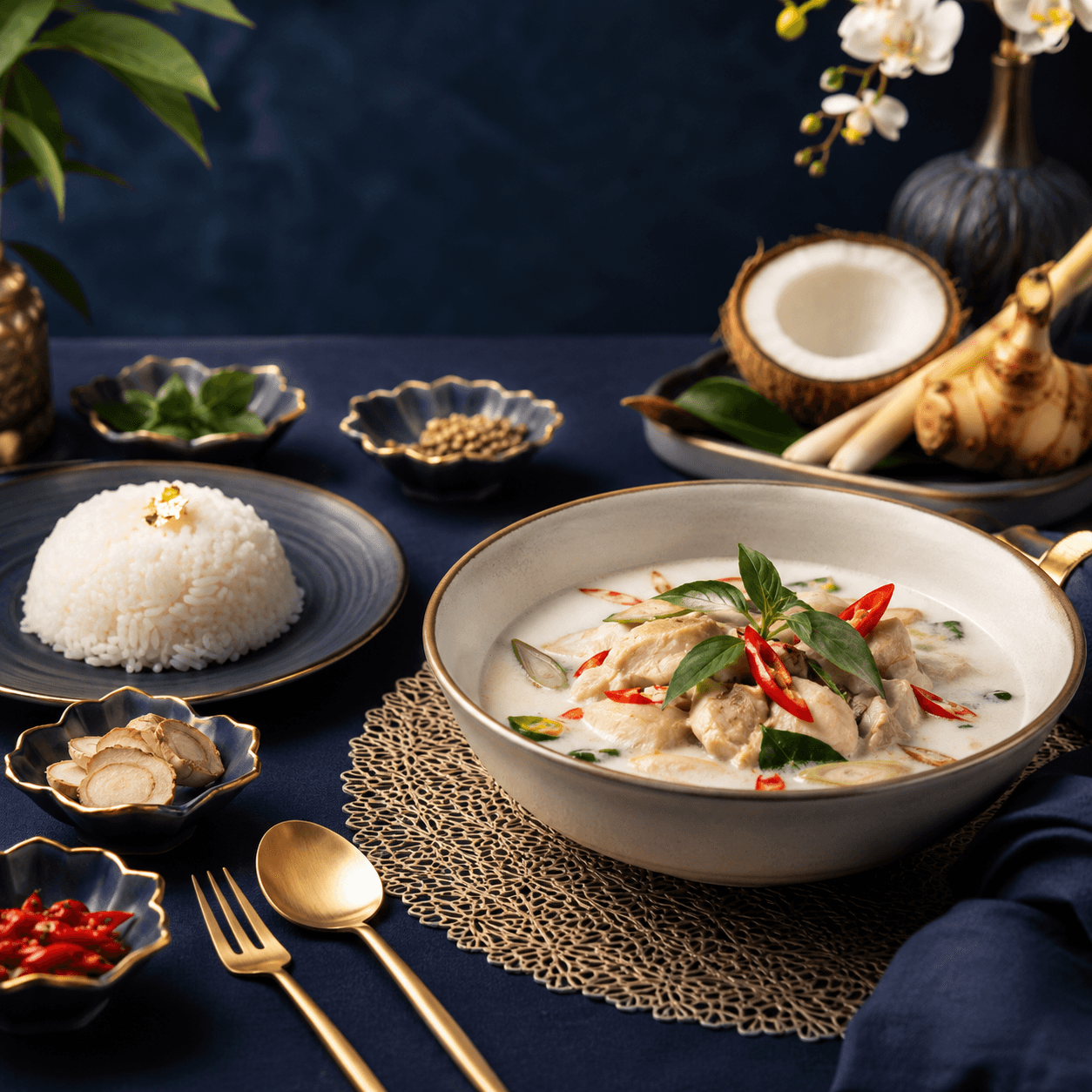
Thai cuisine is one of Thailand's most internationally recognized cultural assets — built on fresh ingredients and a careful balance of sweet, sour, salty, spicy, and umami used together, with a strong regional identity that varies considerably across the country. That reputation has been reinforced by international recognition of specific dishes, including Tom Yum Kung's 2024 inscription on UNESCO's Representative List of the Intangible Cultural Heritage of Humanity (see T3's Culture and Heritage page), and by a sustained, government-led promotion strategy running since the early 2000s.
Thai Cuisine as Soft Power
Thailand's use of food as soft power is a deliberate, long-running government strategy, not an informal phenomenon.
Global Thai — Launched 2002
A state-led culinary diplomacy program aiming to grow authentic Thai restaurants worldwide, with an initial goal of roughly 5,500 to 8,000 restaurants by 2003.
Past 10,000 by 2011
Within a decade of launch, the number of Thai restaurants worldwide had grown past 10,000 — a program with real, sustained international reach.
17,478 Restaurants Today
Thailand's Department of International Trade Promotion (DITP) reports 17,478 Thai restaurants worldwide currently — roughly a 218% increase from the 2002 baseline of about 5,500, evolving into the broader "Kitchen of the World" campaign.
Regional Food Diversity
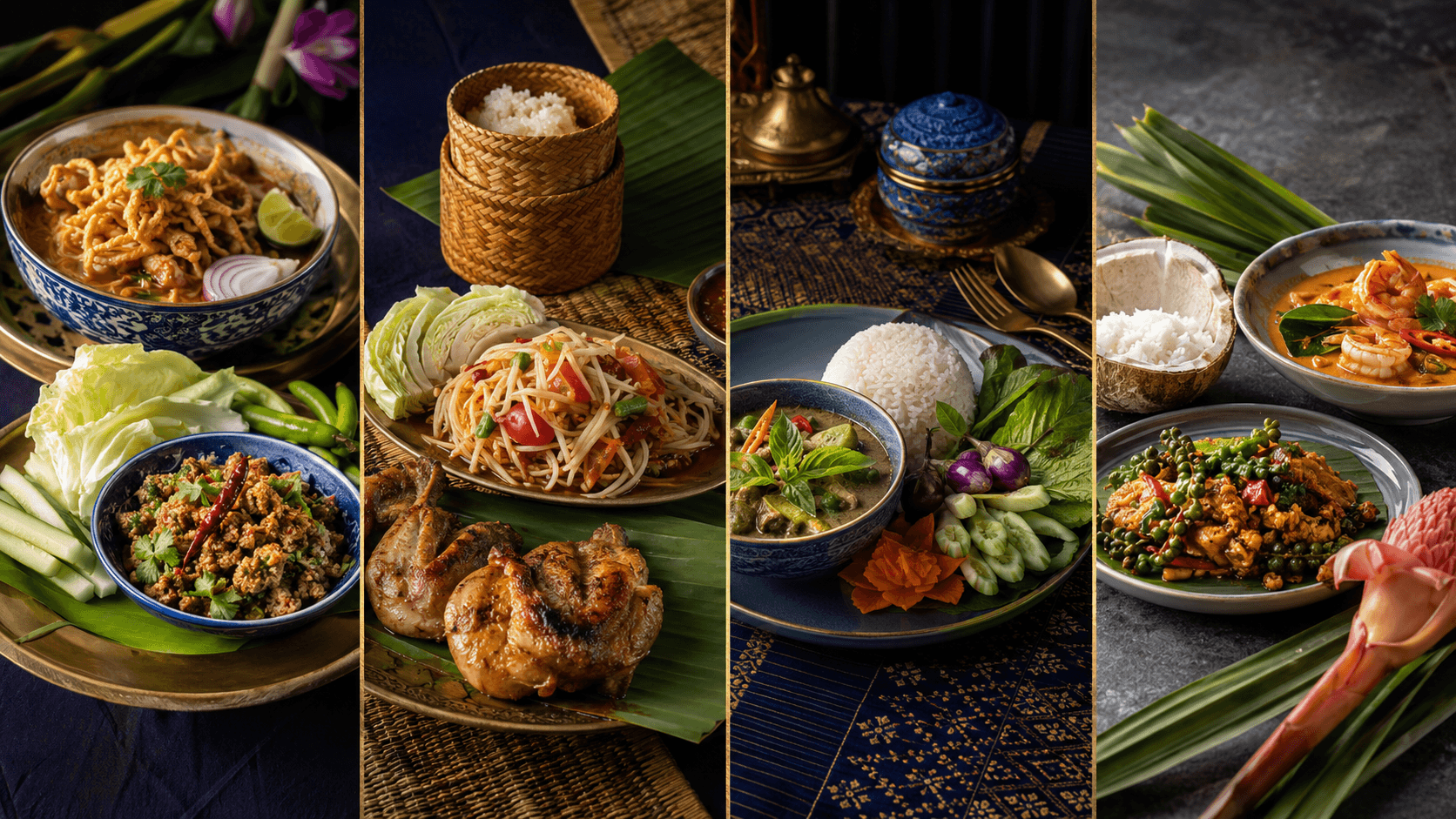
Thai cuisine is not a single tradition but a set of related regional cuisines — presented here as documented culinary facts, not generalizations about the people of any region.
Central Thailand
Balanced, coconut-milk-forward curries with royal-influenced refinement — the cuisine most internationally associated with "Thai food."
Northern Thailand
Milder and herb-forward, shaped by neighboring Lanna and Burmese culinary traditions.
Northeastern Thailand (Isan)
Bold, fermented, and chili-forward, closely tied to Laotian culinary tradition.
Southern Thailand
Intensely spiced and seafood-forward, influenced by Malay and Muslim culinary traditions.
Street Food and Premium Dining
Bangkok and other Thai cities are widely recognized for both ends of the dining spectrum — from celebrated everyday food culture to a fast-growing fine-dining sector. Thailand has an active, current Michelin Guide presence, presented here as one complementary part of Thailand's food identity.
468 Dining Venues
The Michelin Guide Thailand 2026 edition (announced November 2025, its ninth edition) recognizes 468 dining venues across the country.
2 Three-Star Restaurants
Sorn and Sühring — the first time Thailand has held two Three-Star restaurants simultaneously.
8 Two-Star, 33 One-Star
A deep and growing bench of internationally recognized fine dining across Bangkok and other Thai cities.
137 Bib Gourmand, 288 Selected
Michelin's Bib Gourmand and Selected categories recognize exceptional everyday dining — Thailand's celebrated food culture, at every level, in one guide.
Michelin Guide Thailand 2026 edition, announced November 2025. Figures update annually.

One of the World's Leading Food Exporters
Thailand's food exports were valued at approximately US$39.8 billion (around 1.37 trillion baht) in 2023, with 2024 exports projected at approximately US$40.6 billion (around 1.4 trillion baht), per Thailand's Department of International Trade Promotion (DITP). Thailand's official Thai SELECT certification for authentic Thai restaurants overseas currently covers 1,419 certified restaurants across 70 countries, as of May 2026.
Halal Food in Thailand
Despite being a Buddhist-majority country, Thailand has built a substantial halal food production and export sector. Thailand's 2024 halal food exports reached approximately 335 billion baht (about US$10.27 billion), and Thailand ranks as the world's 11th-largest halal exporter and 5th-largest halal producer. Thailand's halal exports represent only about 1.6% of the global halal market today — real room for growth, framed here as an opportunity rather than an overstated claim.
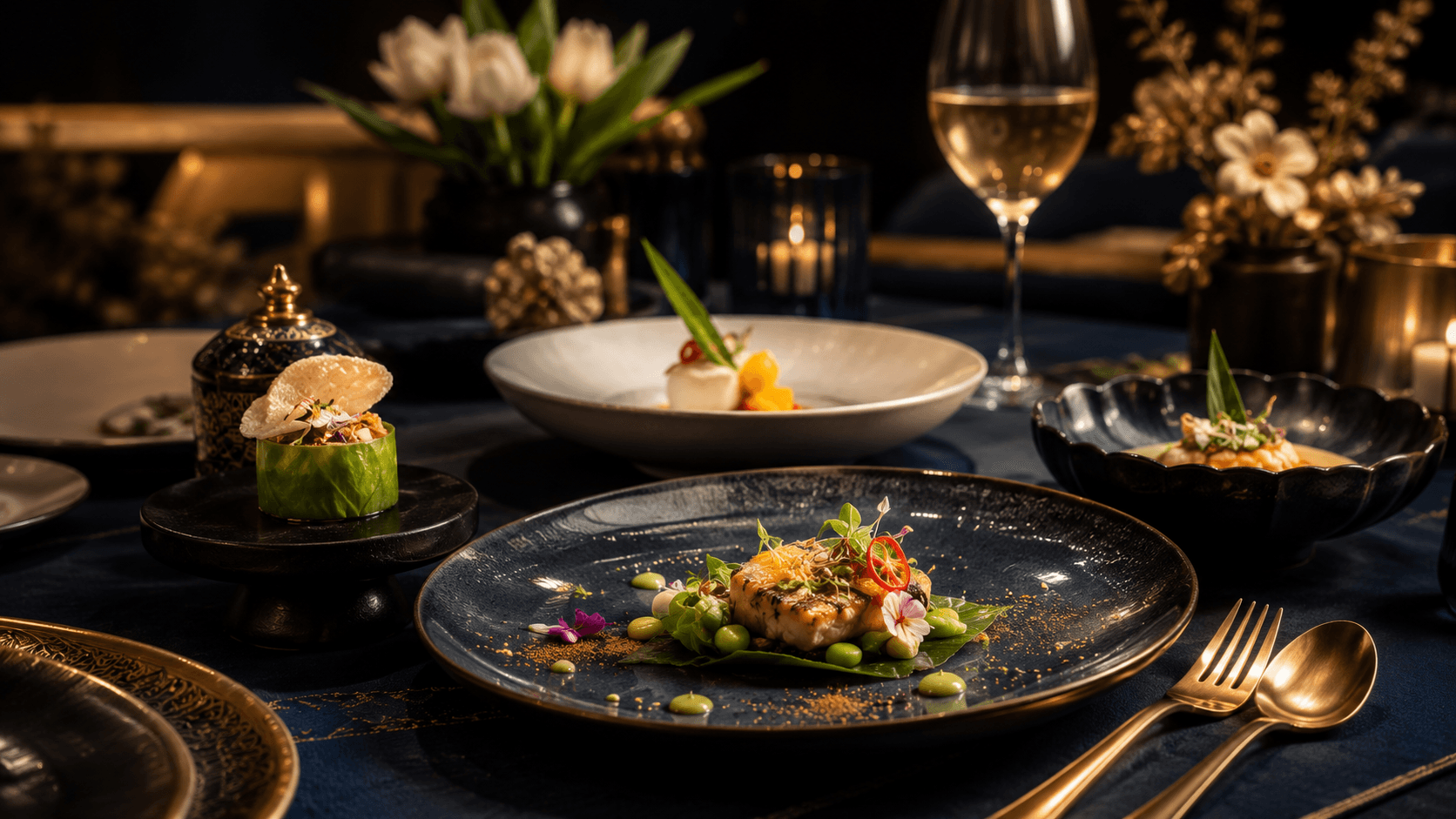
Muslim-Friendly Thailand
Thailand has actively positioned itself as a Muslim-friendly travel destination, distinct from — and complementary to — its broader tourism identity.
5th Among Non-OIC Destinations
Thailand ranked 5th among non-OIC (Organisation of Islamic Cooperation) destinations in the 2025 Global Muslim Travel Index (GMTI), per Mastercard-CrescentRating — its most recent confirmed ranking.
Led by the Tourism Authority of Thailand
Thailand's Muslim-friendly positioning is an active, TAT-led strategy — including halal-oriented travel routes and cultural-site itineraries developed specifically for Muslim travelers.
A Growing Hospitality Network
A growing network of halal-certified dining and prayer facilities across the country, distinct from Thailand's broader tourism identity.
Halal Certification Ecosystem
Thailand's halal certification system is anchored by the Central Islamic Council of Thailand (CICOT), the body responsible for certifying, monitoring, and supervising halal products nationwide. CICOT's national halal certification framework dates to 2001, building on the Ministry of Industry's 1998 adoption of Codex Halal standards. The Halal Standard Institute of Thailand (HSIT) supports CICOT on halal standards and guidelines, aligned with international standards set by the Standards and Metrology Institute for Islamic Countries (SMIIC/OIC).
T3 is not a certification body. This is a factual description of Thailand's halal certification ecosystem only — it is not a certification, endorsement, or guarantee of halal status for any product, business, or service.
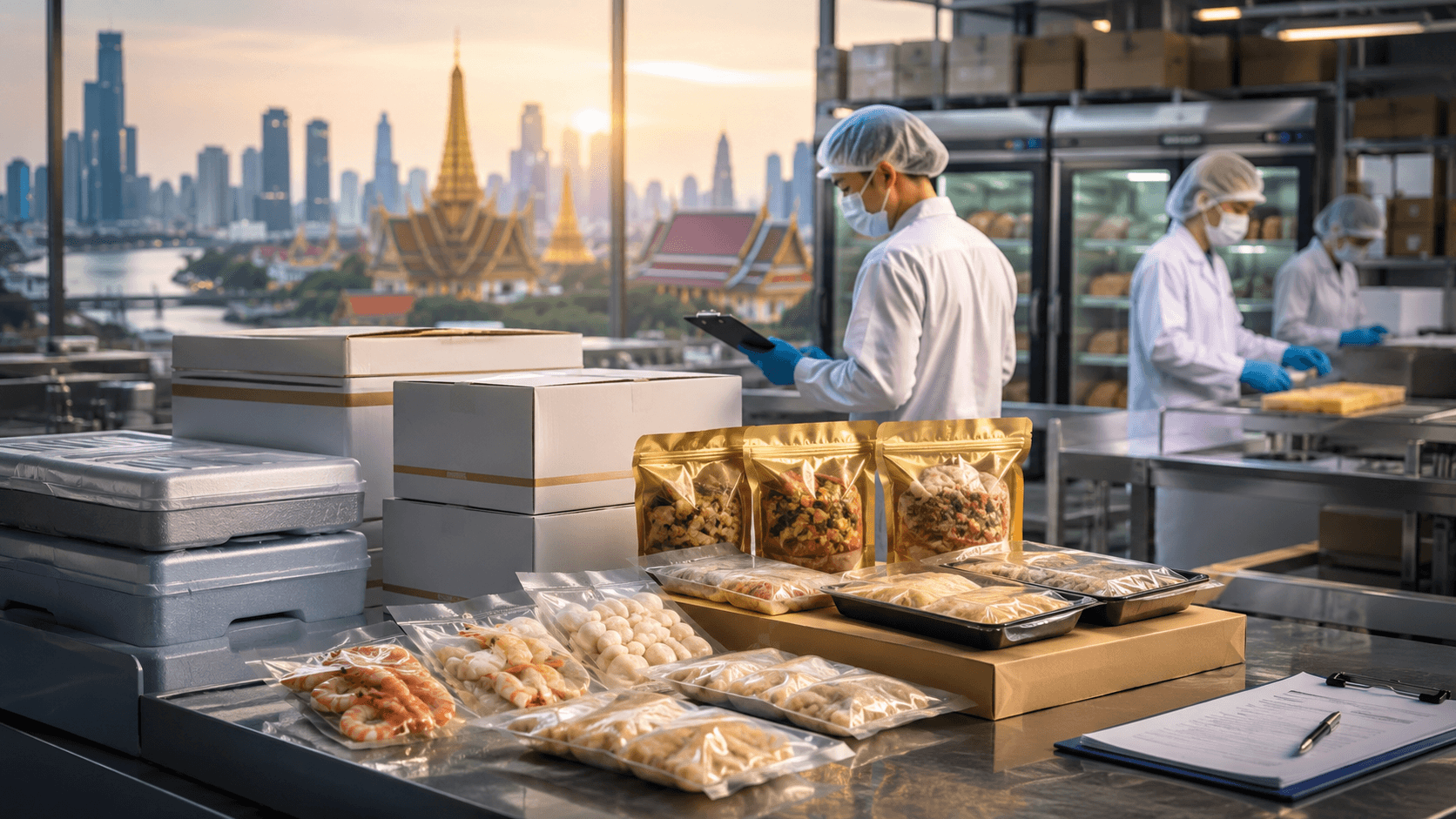
A Growing Halal Production and Export Opportunity
US$1.53 Trillion Global Market (2024)
The global halal food market was valued at US$1.53 trillion in 2024, projected to reach US$2.06 trillion by 2029, per DinarStandard's State of the Global Islamic Economy Report (SGIE), 2025/26 edition.
A Stated Ambition, Not Yet Dominance
Thailand's halal exports represent only about 1.6% of the global halal market today — real room for growth, not an overstated claim of market leadership.
ASEAN "Hub of Halal Excellence"
Thailand's government has stated an ambition to become a regional hub of halal excellence within ASEAN, supported by a multi-year industry growth plan.
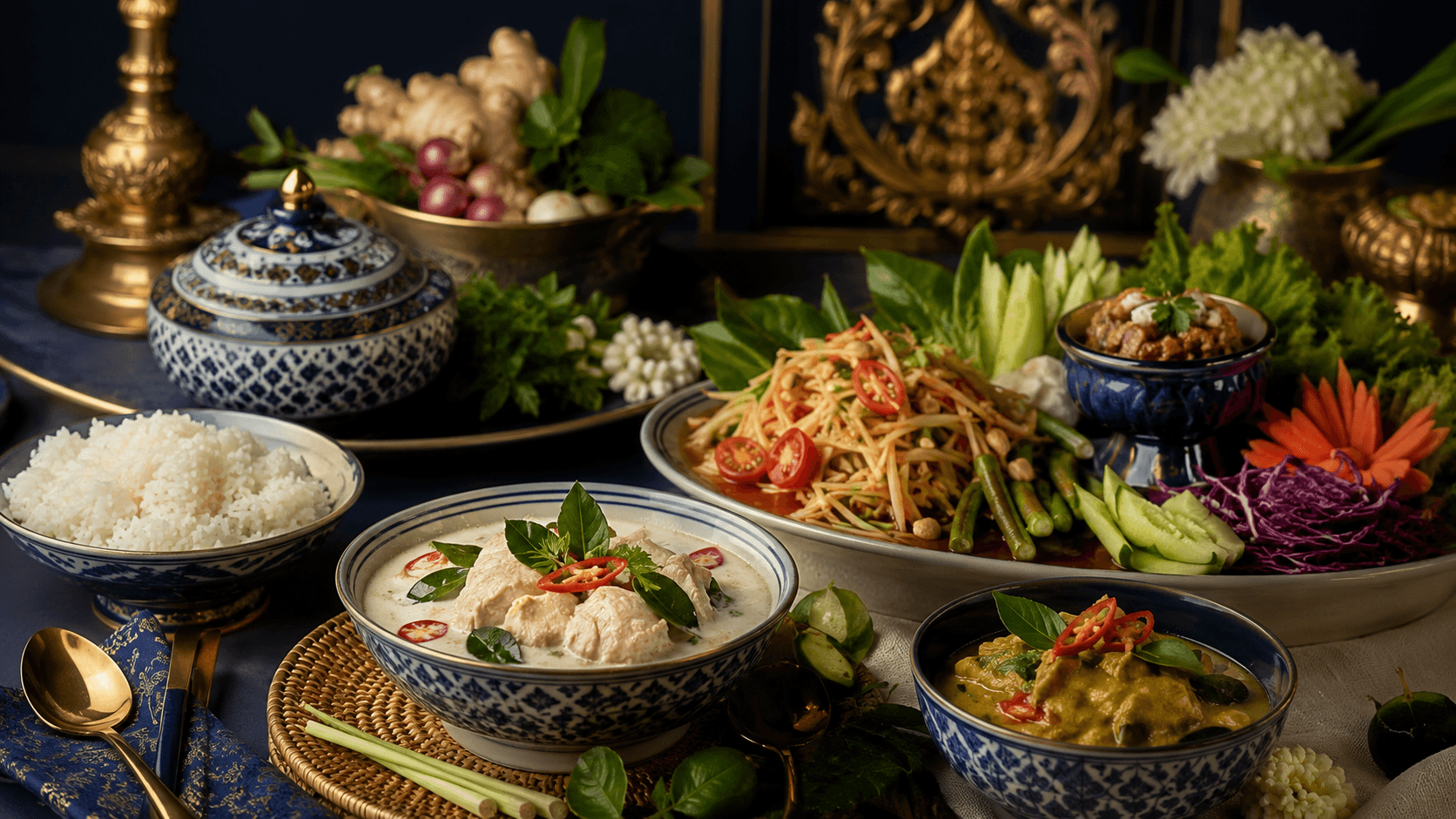
A Genuine Food and Halal Business Opportunity
Thailand's food-export strength, halal-industry growth strategy, and culinary soft-power platform support real trade and hospitality-sector opportunity — explore Thailand's broader investment landscape with T3.
Official and Trade Resources
Named here for reference only — T3 does not represent or speak on behalf of any organization below. Live links will be added once each official URL has been verified.
Department of International Trade Promotion (DITP)
Ministry of Commerce body overseeing Thai SELECT certification and Thailand's food-export trade data.
Official link to be verified before publishing
Central Islamic Council of Thailand (CICOT)
Thailand's national halal certification and regulatory body for halal products.
Official link to be verified before publishing
Halal Standard Institute of Thailand (HSIT)
Supports CICOT on halal standards and guidelines, aligned with SMIIC/OIC international frameworks.
Official link to be verified before publishing
Tourism Authority of Thailand (TAT)
Leads Thailand's Muslim-friendly travel positioning and halal-oriented tourism routes.
Official link to be verified before publishing
Continue Exploring Thailand with T3
Food & Halal Directory
Discover Thailand's food and halal ecosystem — certification bodies, exporters, restaurants, and manufacturers serving local and international markets.
Halal Certification Bodies
Authorities and agencies issuing halal certification and standards guidance for Thai food producers and exporters.
Browse →
Food & Agri Exporters
Exporters and trading companies moving Thai food, agricultural, and seafood products into international markets.
Browse →
Restaurants & Premium Dining
Fine-dining restaurants and premium culinary destinations showcasing Thai and international cuisine.
Browse →
Street Food & Local Eateries
Street food vendors and local eateries representing Thailand's everyday culinary culture.
Browse →
Muslim-Friendly Hospitality
Hotels, restaurants, and hospitality businesses catering specifically to Muslim travelers and halal dietary needs.
Browse →
Food Manufacturing & Processing
Manufacturers and processors turning raw agricultural produce into packaged and export-ready food products.
Browse →