Business • Industry • Materials
Chemicals, Petrochemicals & Plastics in Thailand
An integrated upstream-to-downstream materials ecosystem — from refinery feedstocks and base petrochemicals through commodity and specialty polymers to finished plastics — serving automotive, electronics, packaging, construction, agriculture, healthcare and advanced manufacturing.
Last reviewed 6 September 2026
How to Read This Page
Every statistic below states its publisher, reference period and source link — see Sources & Methodology at the end of this page.
Q2/2025 · OFFICE OF INDUSTRIAL ECONOMICS
Sector Snapshot & Statistics
Single-quarter production and trade indicators for the chemical, plastics and petrochemical industries — never combined with annual or partial-year figures from a different report.
Chemical Industry — Manufacturing Production Index, Q2/2025
-1.11% YoY, +3.72% QoQ
The chemical industry's Manufacturing Production Index contracted 1.11% year-on-year but expanded 3.72% quarter-on-quarter in Q2/2025. Methyl ester (biodiesel) production contracted 33.14% YoY, the main drag, linked to slower demand from internal-combustion-engine vehicles and the energy sector.
Source: Office of Industrial Economics (OIE), Report on the Industrial Economics Status Q2/2025 (opens in a new tab) · Accessed 6 September 2026
Chemical Industry — Export & Import Value, Q2/2025
Exports US$2,611.85m (+6.30% YoY) · Imports US$4,854.84m (-3.02% YoY)
Chemical-industry export value grew on stronger miscellaneous-chemical and fertilizer demand from Asian agricultural markets; import value contracted, led by lower cosmetics and miscellaneous-chemical-product imports amid geopolitical uncertainty and high logistics costs.
Source: OIE, Report on the Industrial Economics Status Q2/2025 (Ministry of Commerce / Customs Department trade data) (opens in a new tab) · Accessed 6 September 2026
Plastics Industry — Manufacturing Production Index, Q2/2025
-3.63% YoY, -3.63% QoQ
The plastics industry's production index contracted on both a yearly and quarterly basis in Q2/2025, led by declines in tableware/kitchenware/household articles (-13.49%) and tubes, pipes, hoses and fittings (-10.66%), amid rising import competition.
Source: Office of Industrial Economics (OIE), Report on the Industrial Economics Status Q2/2025 (opens in a new tab) · Accessed 6 September 2026
Plastics Industry — Export & Import Value, Q2/2025
Exports US$1,290.64m (+24.80% YoY) · Imports US$1,584.85m (+25.05% YoY)
Plastics exports grew on stronger orders from India and ASEAN plus accelerated shipments to the U.S. ahead of anticipated tariff changes; imports grew faster than exports, driven by floor coverings and kitchen/toilet articles from China.
Source: OIE, Report on the Industrial Economics Status Q2/2025 (Ministry of Commerce / Customs Department trade data) (opens in a new tab) · Accessed 6 September 2026
Petrochemical Industry — Production & Shipment Index, Q2/2025
MPI 93.6 (+0.03% YoY) · Shipment Index 90.85 (+4.25% YoY)
Growth was driven by toluene in basic petrochemicals and PE/PP resin in downstream petrochemicals, partly reflecting the prior year's upstream-plant maintenance shutdowns creating a lower base for comparison.
Source: Office of Industrial Economics (OIE), Report on the Industrial Economics Status Q2/2025 (opens in a new tab) · Accessed 6 September 2026
Petrochemical Industry — Export & Import Value, Q2/2025
Exports US$2,415.32m (-5.77% YoY) · Imports US$1,667.98m (+2.33% YoY)
Export declines were led by PS and PET resin (downstream) and terephthalic acid and toluene (basic petrochemicals); import growth was led by terephthalic acid and ethylene glycol (basic) and PS/PC resin (downstream). Major petrochemical trading partners cited include China, Vietnam and Japan.
Source: OIE, Report on the Industrial Economics Status Q2/2025 (Customs Department, Ministry of Finance) (opens in a new tab) · Accessed 6 September 2026
Period & Methodology Notice
These are single-quarter (Q2/2025) production and trade figures from Thailand's Office of Industrial Economics — they are not annual totals, market-size estimates or company revenue, and are not combined with figures from other reporting periods. Full-year 2025 outlooks (also published by OIE) are directional only and are shown separately, never merged into the quarterly figures above.
How the Value Chain Works
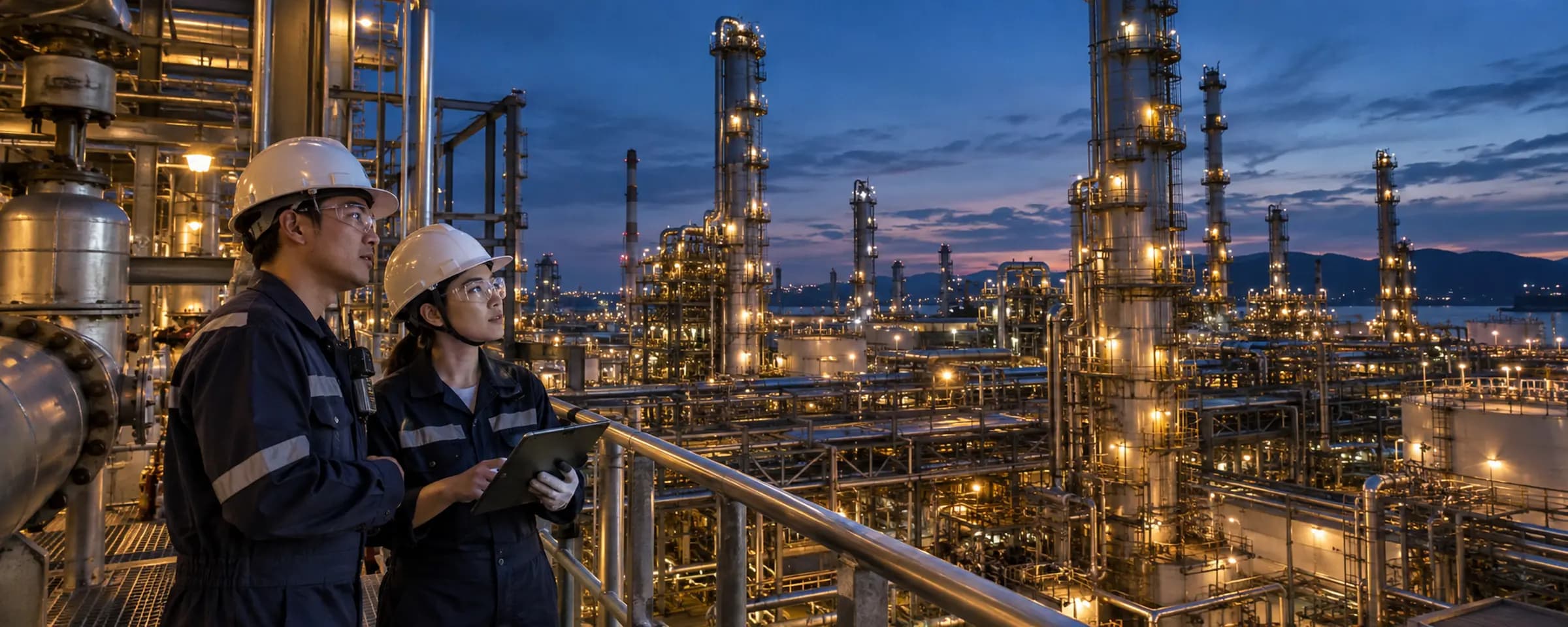
Materials move through a sequence of distinct stages — feedstocks, base petrochemicals, intermediates, polymers and specialty chemicals, compounds and conversion, and finally finished applications, with collection and recovery closing the loop for some material streams. Not every stage is produced domestically for every material — imported inputs and data gaps are marked explicitly rather than assumed away.
Feedstocks
Natural gas and natural-gas liquids, refinery streams (naphtha), biomass/agricultural inputs and imported crude or intermediate feedstocks — the raw inputs that begin the chain.
Base Petrochemicals
Olefins (ethylene, propylene) and aromatics (benzene, toluene, xylene) produced by cracking or reforming feedstocks — the foundational building blocks for almost everything downstream.
Intermediates
Chemicals derived from olefins/aromatics (e.g. ethylene glycol, terephthalic acid, styrene) that are not end products themselves but feed the next stage.
Polymers & Specialty Chemicals
Commodity polymers (PE, PP, PVC, PET) produced at large scale, alongside engineering/specialty polymers and specialty or formulated chemicals produced in smaller volumes for specific technical requirements.
Compounding & Conversion
Resin compounding (adding additives, colorants, reinforcements) and conversion processes — injection molding, extrusion, blow molding, film/sheet production — that turn polymer resin into intermediate or near-finished material forms.
Finished Applications
Industrial and consumer end products across packaging, automotive, electronics, construction, agriculture, healthcare and advanced-manufacturing applications.
Collection, Recovery & Recycling
Post-consumer and post-industrial collection, sorting, mechanical recycling, chemical recycling (where operating at commercial scale) and energy recovery — closing the loop for some, not all, material streams today.
Terms That Are Easy to Conflate
Refinery products vs. Petrochemical feedstocks
A refinery primarily produces fuels (gasoline, diesel, jet fuel); a naphtha or gas stream diverted to a petrochemical cracker is a feedstock for chemicals, not a fuel product — the same refinery can supply both.
Olefins vs. Aromatics
Olefins (ethylene, propylene) and aromatics (benzene, toluene, xylene) are chemically distinct base-petrochemical families produced by different processes (steam cracking vs. catalytic reforming), feeding different downstream product families.
Intermediates vs. Derivatives
An intermediate (e.g. ethylene glycol) sits between a base petrochemical and a finished polymer or product; a derivative is any chemical produced from a base petrochemical, a broader term that includes intermediates among other outputs.
Commodity polymers vs. Engineering / specialty polymers
Commodity polymers (PE, PP, PVC, PS) are produced at large scale for general-purpose applications; engineering and specialty polymers (e.g. engineering plastics, high-performance compounds) are produced in smaller volumes for specific mechanical, thermal or chemical-resistance requirements.
Industrial chemicals vs. Specialty chemicals & formulated products
Industrial chemicals are typically produced to a general specification for broad industrial use; specialty chemicals are produced for a specific technical function; formulated products (e.g. coatings, adhesives) combine multiple chemical inputs into a product with its own end-use specification.
Resin production vs. Compounding, converting & finished-product manufacturing
Resin production makes the base polymer; compounding modifies it with additives; converting (molding, extrusion, forming) shapes it; finished-product manufacturing assembles or finishes it into a sellable product — four distinct manufacturing steps, not one.
Mechanical recycling vs. Chemical recycling & energy recovery
Mechanical recycling physically reprocesses plastic into new material without changing its chemical structure; chemical recycling breaks the polymer down to a molecular or monomer level for reprocessing; energy recovery recovers embodied energy through combustion rather than recovering the material itself — three distinct end-of-life pathways with different maturity levels in Thailand today.
Not Every Stage Is Domestic
Thailand does not produce every material in this chain domestically — several intermediates, specialty polymers and specialty-chemical inputs are imported. Where this page cannot verify current domestic production status for a specific material, it says so rather than assuming domestic supply.
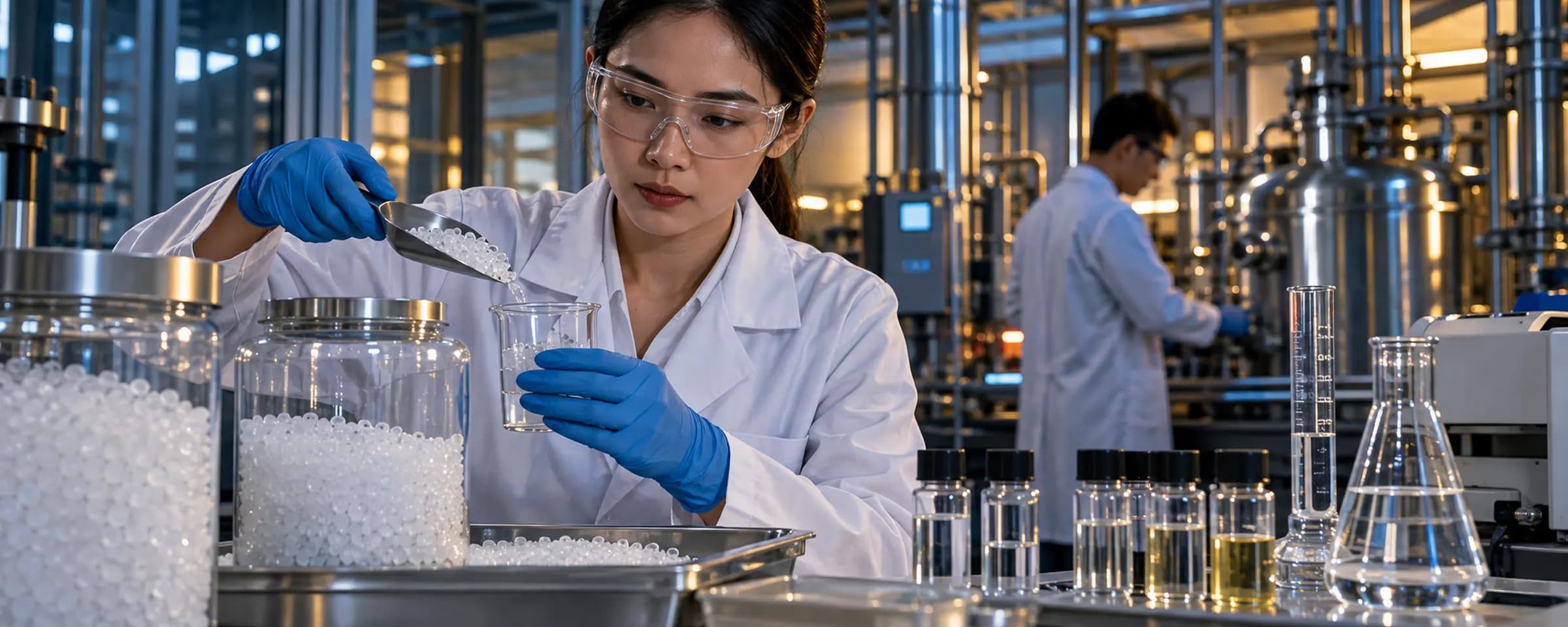
National Resources, Feedstocks & Raw Materials
Thailand's petrochemical feedstock base draws on domestic natural gas (mainly from the Gulf of Thailand) and refinery streams, supplemented by imported feedstocks and intermediates. Oil-and-gas reserves, oil-and-gas production, refinery capacity and petrochemical feedstock availability are four separate facts and are not conflated here — a resource being present does not by itself mean it is abundant, cheap, or fully sufficient for the petrochemical sector's needs.
Natural Gas & Natural Gas Liquids
- Domestic status:
- Thailand produces natural gas domestically, chiefly from Gulf of Thailand fields, historically a primary feedstock source for the Map Ta Phut petrochemical complex.
- Import dependence:
- Thailand also imports natural gas (including LNG) to meet total demand — domestic gas production alone does not cover the country's combined power-generation and industrial feedstock needs. Exact current feedstock-mix shares should be confirmed against the Department of Mineral Fuels' or PTT's current published data before being cited precisely.
- Uses:
- Primary feedstock for gas-based olefins (ethylene) production at Map Ta Phut.
Refinery Naphtha & Condensate
- Domestic status:
- Thailand's domestic oil refineries (several located on the eastern seaboard) produce naphtha streams that can be diverted to naphtha-cracking petrochemical units as an alternative feedstock route to gas-based cracking.
- Import dependence:
- Thailand imports crude oil and condensate to supply its refineries, since domestic crude production does not meet total refining demand.
- Uses:
- Naphtha-based olefins and aromatics production, an alternative route to gas-based cracking used by some Map Ta Phut operators.
Biomass & Agricultural Feedstocks
- Domestic status:
- Thailand's large agricultural base (sugarcane, cassava, palm oil) supports a developing bio-based chemicals and bioplastics industry, including bio-based polymer production capacity.
- Import dependence:
- Bio-based feedstock availability depends on agricultural output and competing food/feed/fuel uses — this page does not state a specific bio-feedstock volume without a current, sourced figure.
- Uses:
- Bio-based plastics (e.g. PLA), biodiesel and other bio-based chemical products.
Recycled Plastic Feedstock
- Domestic status:
- Mechanical recycling of post-consumer and post-industrial plastic operates at meaningful but not yet comprehensive scale in Thailand; chemical-recycling feedstock supply is at an earlier stage of commercial development.
- Import dependence:
- Some recyclers also process imported recyclable plastic scrap, subject to Thailand's waste-import controls.
- Uses:
- Recycled-content plastic products, particularly in packaging.
Imported Intermediates & Specialty Chemical Inputs
- Domestic status:
- A meaningful share of intermediate chemicals, specialty monomers, catalysts and specialty-polymer inputs are not produced domestically at all.
- Import dependence:
- These inputs are imported, exposing downstream Thai manufacturers to global supply, price and logistics conditions for those specific materials — the exact import-dependence share varies by material and is not generalized into one number on this page.
- Uses:
- Specialty compounds, engineering plastics, coatings, adhesives and other formulated products requiring inputs not produced in Thailand.
No Unmeasured "Abundance" Claims
This page does not describe any feedstock as "abundant" without a measurable, sourced figure. Supply-risk and infrastructure needs (pipeline capacity, storage, import-terminal capacity) vary by feedstock and are not detailed here beyond this general orientation — verify current supply conditions with the Department of Mineral Fuels, PTT or the relevant feedstock supplier before making a sourcing decision.
Resource & Infrastructure Categories

Natural Gas & Gas Separation
Domestic natural-gas production and gas-separation infrastructure supplying olefins feedstock — illustrative of the process category, not a specific facility or reserve figure.
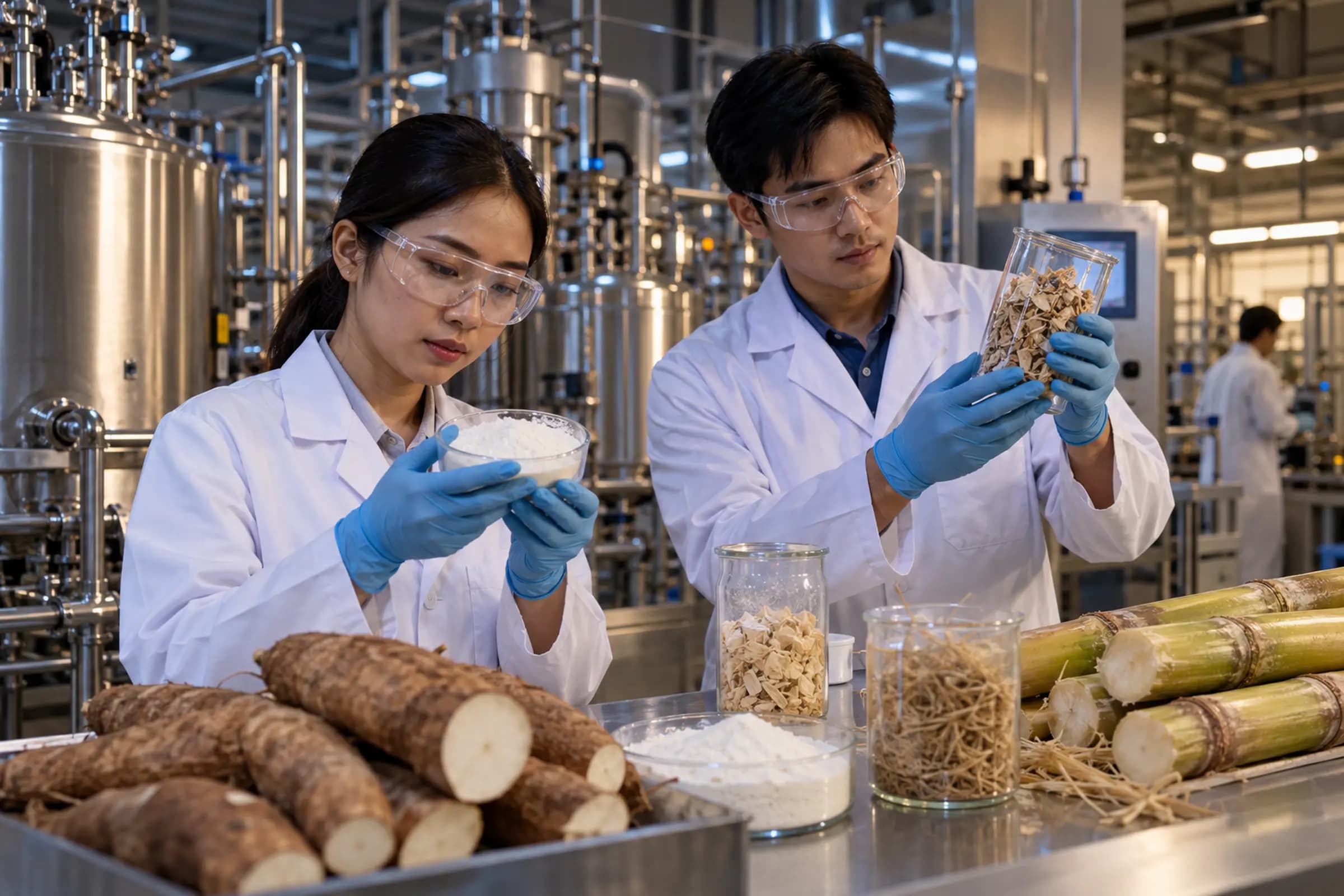
Biomass & Agricultural Feedstock Routes
Cassava, sugarcane and other agricultural biomass as a route to bio-based materials such as PLA — illustrative of the input category, not a claimed production volume.
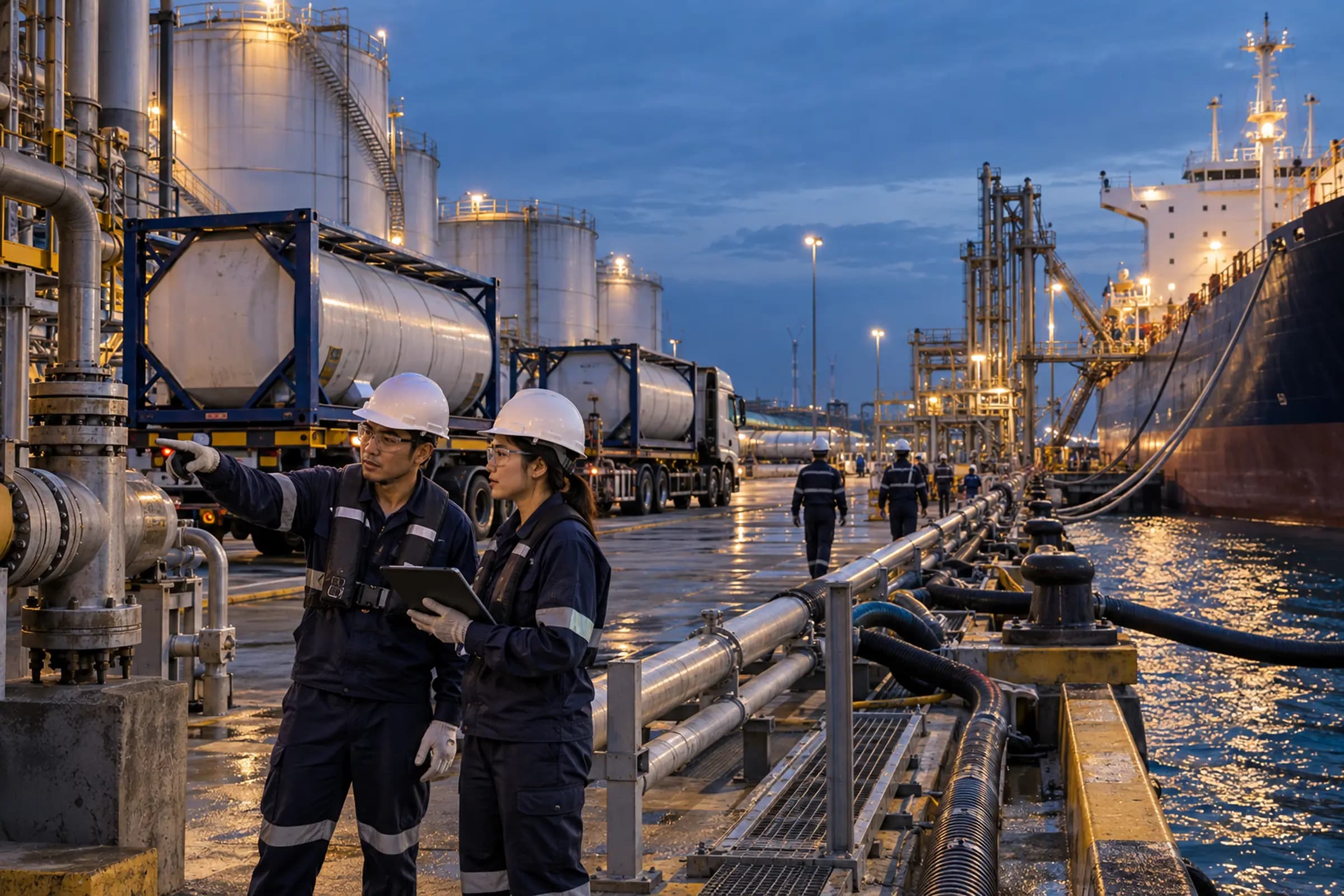
Imported Feedstocks & Bulk Terminals
Bulk import-terminal infrastructure supporting imported crude, naphtha and intermediate feedstocks — illustrative of the logistics category, not a specific terminal's throughput.

Industrial Utilities — Water, Steam & Power
Process water, treatment/reuse systems, steam and power infrastructure required to operate a chemical or petrochemical facility — illustrative, not a specific site's utility capacity.
Domestic, Imported & Circular Inputs
| Category | Resource Origin | Conversion Stage | Domestic Status | Import Dependence | Indicative HS Scope | Major Users | Infrastructure | Risk Exposure |
|---|---|---|---|---|---|---|---|---|
| Natural Gas & Natural Gas Liquids | Domestic (chiefly Gulf of Thailand) plus imported LNG | Feedstock (pre-cracking) | Produced domestically at meaningful scale, historically a primary Map Ta Phut feedstock source | Imports (including LNG) supplement domestic supply for combined power-generation and industrial demand | Indicative HS Chapter 27 (mineral fuels, mineral oils, gaseous hydrocarbons) — confirm the exact HS/AHTN heading with Customs for any specific shipment; this is not a precise tariff classification. | Gas-based olefins (ethylene) crackers | Pipeline connection, gas-separation plant capacity, LNG import/regasification terminal access | Global gas-price volatility; domestic gas-field production/depletion profile |
| Refinery Naphtha & Condensate | Domestic refining (eastern-seaboard refineries) plus imported crude/condensate | Feedstock (naphtha-cracking route, alternative to gas-based cracking) | Refined domestically; refinery crude input itself depends heavily on imports | High — Thailand imports the large majority of the crude oil its refineries process | Indicative HS Chapter 27 (petroleum oils and products) — confirm the exact heading with Customs; naphtha classification can vary by grade and intended use. | Naphtha-cracking olefins and aromatics units | Refinery-to-cracker pipeline or logistics link, crude-import terminal capacity | Crude-oil price volatility; refinery margin/utilization cycles |
| Biomass & Agricultural Feedstocks | Domestic agriculture (sugarcane, cassava, palm oil and related crops) | Feedstock for bio-based polymer and biodiesel production | A developing bio-based chemicals and bioplastics capability draws on Thailand's agricultural base | Primarily domestic feedstock, but availability competes with existing food, feed and biofuel uses | HS scope varies by specific bio-based product (e.g. Chapter 39 for the finished bio-based polymer versus the agricultural-commodity chapters for the raw crop) — not a single HS heading. | Bio-based polymer (e.g. PLA) and biodiesel producers | Agricultural supply-chain logistics, fermentation/processing capacity | Crop-yield variability; competing food/feed/fuel demand for the same feedstock |
| Recycled Plastic Feedstock | Domestic post-consumer/post-industrial collection, plus some imported recyclable scrap | Feedstock for recycled-content resin (mechanical recycling) or monomer recovery (chemical recycling) | Mechanical recycling operates at meaningful but not comprehensive scale; chemical recycling is earlier-stage | Some recyclers process imported recyclable plastic scrap, subject to Thailand's waste-import controls | Indicative HS Chapter 39 (plastics and articles thereof) for recycled resin output; waste-plastic scrap imports fall under separate waste-control classifications, not the same heading. | Recycled-content packaging and consumer-product manufacturers | Collection and sorting infrastructure, mechanical-recycling or chemical-recycling processing capacity | Feedstock-quality variability; collection-rate and sorting-infrastructure gaps |
| Imported Intermediates, Catalysts & Specialty Inputs | Imported — not produced domestically at meaningful scale | Intermediate/specialty inputs feeding compounding and specialty-chemical production | Not domestically produced for a meaningful share of specialty monomers, catalysts and specialty-polymer inputs | High — these inputs are sourced internationally, exposing downstream manufacturers to global supply and price conditions | HS scope varies widely by specific chemical (organic chemicals typically Chapters 28-29, catalysts and specialty preparations elsewhere) — not summarized as one heading. | Specialty-compound, engineering-plastics and formulated-product manufacturers | Import logistics, bonded-warehouse or BOI raw-material duty arrangements where applicable | Global supply-chain and single-supplier concentration risk for niche inputs |
| Salt, Minerals & Inorganic Inputs | Potentially domestic (Thailand has known salt/potash deposits) for some inorganic chemical inputs | Feedstock for selected inorganic chemicals (e.g. chlor-alkali inputs) | Verification required — T3 could not independently confirm current petrochemical-specific domestic mineral-input production during this research pass | Verification required — not independently confirmed | Not stated — HS scope depends on the specific mineral/inorganic product, which has not been verified for this page. | Not stated pending verification | Not stated pending verification | Not stated pending verification |
Natural Gas & Natural Gas Liquids: Qualitative summary — confirm current reserve, production and feedstock-allocation figures directly with the Department of Mineral Fuels or PTT.
Refinery Naphtha & Condensate: Qualitative summary — confirm current refinery throughput and naphtha-allocation figures directly with the relevant refiner or the Department of Mineral Fuels.
Biomass & Agricultural Feedstocks: Qualitative summary — this page does not state a specific bio-feedstock volume without a current, sourced figure.
Recycled Plastic Feedstock: Qualitative summary — this page does not state a national collection or recycling-rate figure without a current, sourced statistic.
Imported Intermediates, Catalysts & Specialty Inputs: Qualitative summary — the exact import-dependence share varies by material and is not generalized into one figure here.
Salt, Minerals & Inorganic Inputs: This entire row is flagged for T3 editorial research rather than populated with an assumed status — do not treat any cell above as confirmed.
Table Is Qualitative, Not Statistical
This table describes qualitative resource categories, not point statistics — HS scope notes are indicative only and must be confirmed against the exact HS/AHTN heading for a specific shipment with the Thai Customs Department. Resource availability described above does not automatically mean commercial suitability, competitive pricing, permitted extraction, or BOI eligibility for any specific project.

What Thailand Produces
A representative, non-exhaustive set of product categories across Thailand's chemicals, petrochemicals and plastics base.
Basic & Industrial Chemicals
General-purpose industrial chemicals including industrial gases (e.g. nitrogen, hydrogen), acids, alkalis and other bulk chemical inputs used across manufacturing.
Broad industrial use across chemical, metal, electronics and other manufacturing processes.
Fertilizers & Agricultural Inputs
Chemical and blended fertilizers and other agricultural chemical inputs, a long-established segment of Thailand's chemical industry serving its agricultural base.
Domestic agriculture and regional fertilizer export markets.
Olefins, Aromatics & Intermediates
Base petrochemicals (ethylene, propylene, benzene, toluene, xylene) and derived intermediates (e.g. ethylene glycol, terephthalic acid) produced at the Map Ta Phut integrated complex.
Feedstock for downstream polymer, fiber and specialty-chemical production.
Commodity Polymers
Polyethylene (PE), polypropylene (PP), polyvinyl chloride (PVC) and PET resin — Thailand's largest-volume polymer products by production and trade activity per OIE's own reporting.
Packaging, construction pipes and fittings, automotive components, consumer products.
Engineering Plastics & Specialty Compounds
Higher-performance polymer compounds engineered for specific mechanical, thermal or chemical-resistance requirements, produced at smaller volumes than commodity polymers.
Automotive under-hood components, electronics housings, industrial equipment parts.
Elastomers & Rubber Compounds
Synthetic and compounded rubber materials, distinct from natural rubber processing (covered on T3's Rubber & Raw Materials chapter).
Tyres, seals, gaskets and industrial rubber components — see the Rubber & Raw Materials chapter for natural-rubber-specific detail.
Coatings, Adhesives, Sealants & Formulated Products
Formulated chemical products combining multiple inputs into a product with its own end-use specification.
Construction, automotive assembly, packaging, general industrial and consumer use.
Packaging Films & Containers
Flexible films, rigid containers, bottles and packaging components converted from commodity polymer resin.
Food and beverage packaging, consumer-goods packaging, industrial packaging.
Automotive & Mobility Components
Plastic and polymer-based automotive components, connecting to Thailand's established automotive manufacturing base.
Interior trim, under-hood components, bumpers and other vehicle plastic parts — see the Automotive Thailand chapter.
Electrical & Electronics Materials
Polymer materials and components used in electrical and electronic products, including housings and insulation materials.
Electronics housings, cable insulation, electrical component parts — see the Electrical, Electronics & Semiconductors chapter.
Construction Products & Pipes
PVC and other polymer pipes, fittings and construction-related plastic products.
Water supply, drainage, electrical conduit and general construction use — see the Construction Thailand chapter.
Medical & Healthcare-Related Polymers
Medical-grade polymers and plastic components manufactured under applicable regulatory requirements for medical-device or healthcare use.
Single-use medical devices, diagnostic consumables and related products — see the Healthcare Thailand chapter; regulatory status depends on the specific product's classification, not assumed from the material alone.
Bio-Based, Recycled & Advanced Materials
Bio-based polymers (e.g. PLA from agricultural feedstock), recycled-content plastics and other advanced or emerging materials.
Sustainable packaging, compostable products where certified, and other applications specified by the end customer's requirements.
Not All BOI-Promoted
Not every example product listed above is BOI-promoted, and BOI eligibility is assessed activity-by-activity — see the BOI Incentives section below. This is a representative, non-exhaustive list of product categories, not a claim that Thailand produces every material within each category at every performance grade.
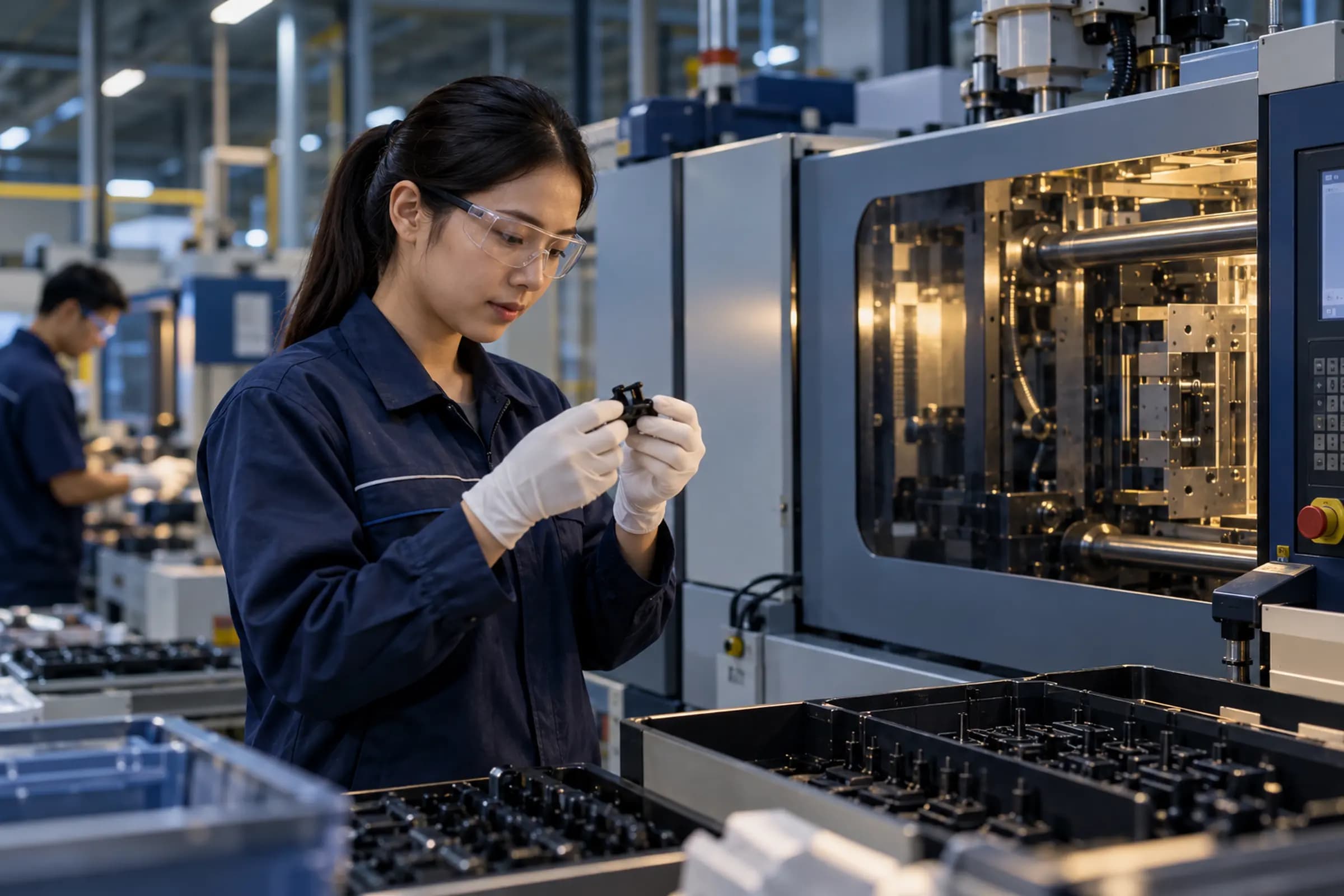
Downstream Demand Industries
Chemicals, petrochemicals and plastics feed directly into Thailand's other major manufacturing sectors — the connections below link to T3's dedicated chapters for each downstream industry rather than duplicating their content here.
Automotive & EV
Plastic components, elastomers and specialty compounds for vehicle interiors, under-hood parts and EV battery/component packaging.
See the full chapter →Electronics & Semiconductors
Polymer housings, cable insulation and specialty materials for electronic components and devices.
See the full chapter →Food & Beverage Packaging
Flexible and rigid packaging films and containers for food and beverage products.
See the full chapter →Healthcare & Medical Devices
Medical-grade polymers and plastic components for single-use devices and diagnostic consumables, subject to applicable medical-device regulation.
See the full chapter →Construction
Pipes, fittings, insulation and other polymer-based construction products.
See the full chapter →Appliances
Plastic housings and components for household and industrial appliances.
Agriculture
Fertilizers, agricultural films and irrigation-related plastic products.
See the full chapter →Logistics & Packaging Materials
Industrial packaging, pallets and materials-handling products supporting Thailand's logistics sector.
See the full chapter →Textiles
Synthetic fibers derived from petrochemical intermediates feeding Thailand's textile and apparel manufacturing.
See the full chapter →Consumer Goods
A broad range of plastic and chemical inputs into household and consumer products.
Renewable-Energy Components
Specialty polymers and composite materials used in solar and other renewable-energy equipment.
See the full chapter →Major Supply Industries
A closer look at six major downstream buyers — supplied material categories, typical applications, buyer requirements, standards and procurement considerations for each.
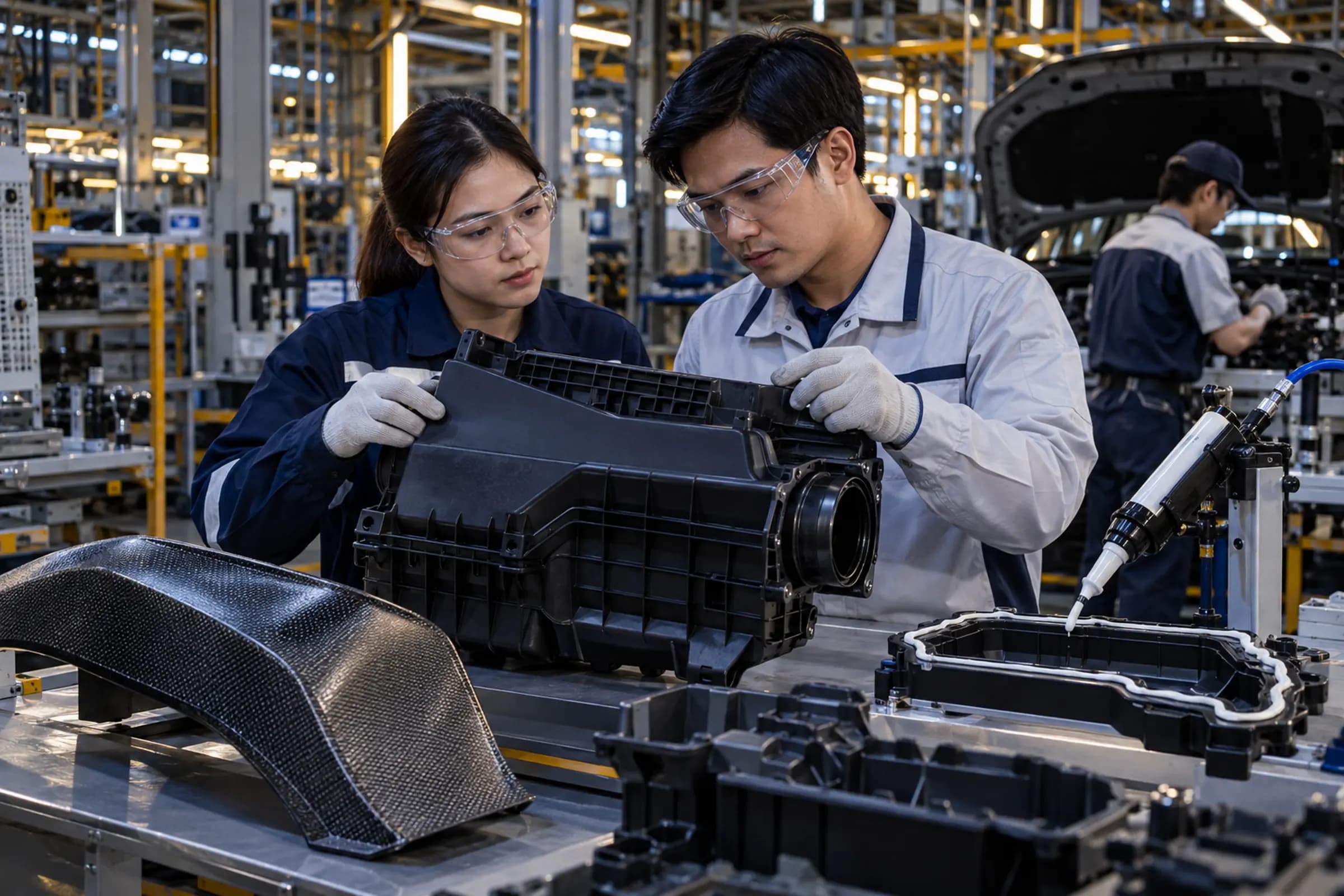
Automotive & Mobility
- Supplied materials:
- Engineering polymers, elastomers and rubber compounds, coatings, adhesives and sealants; lightweight composites and, where verified for a specific program, battery-related materials.
- Applications:
- Interior trim, under-hood components, gaskets and seals, structural adhesives, and lightweight body/composite parts feeding Thailand's automotive and EV manufacturing base.
- Buyer requirements:
- Automotive buyers typically require IATF 16949 quality-system certification, documented material traceability and change-control processes, plus program-specific engineering approval (PPAP-style sign-off) before production release.
- Standards:
- IATF 16949 (automotive quality management), material-specific OEM engineering specifications, and applicable flammability/safety standards for the vehicle program.
- Procurement considerations:
- Long qualification lead times, tooling-ownership terms tied to the vehicle program's lifecycle, and volume commitments synchronized to the automaker's production schedule.
See the Automotive Thailand chapter for vehicle- and parts-manufacturing detail; this page covers only the materials-supply side.
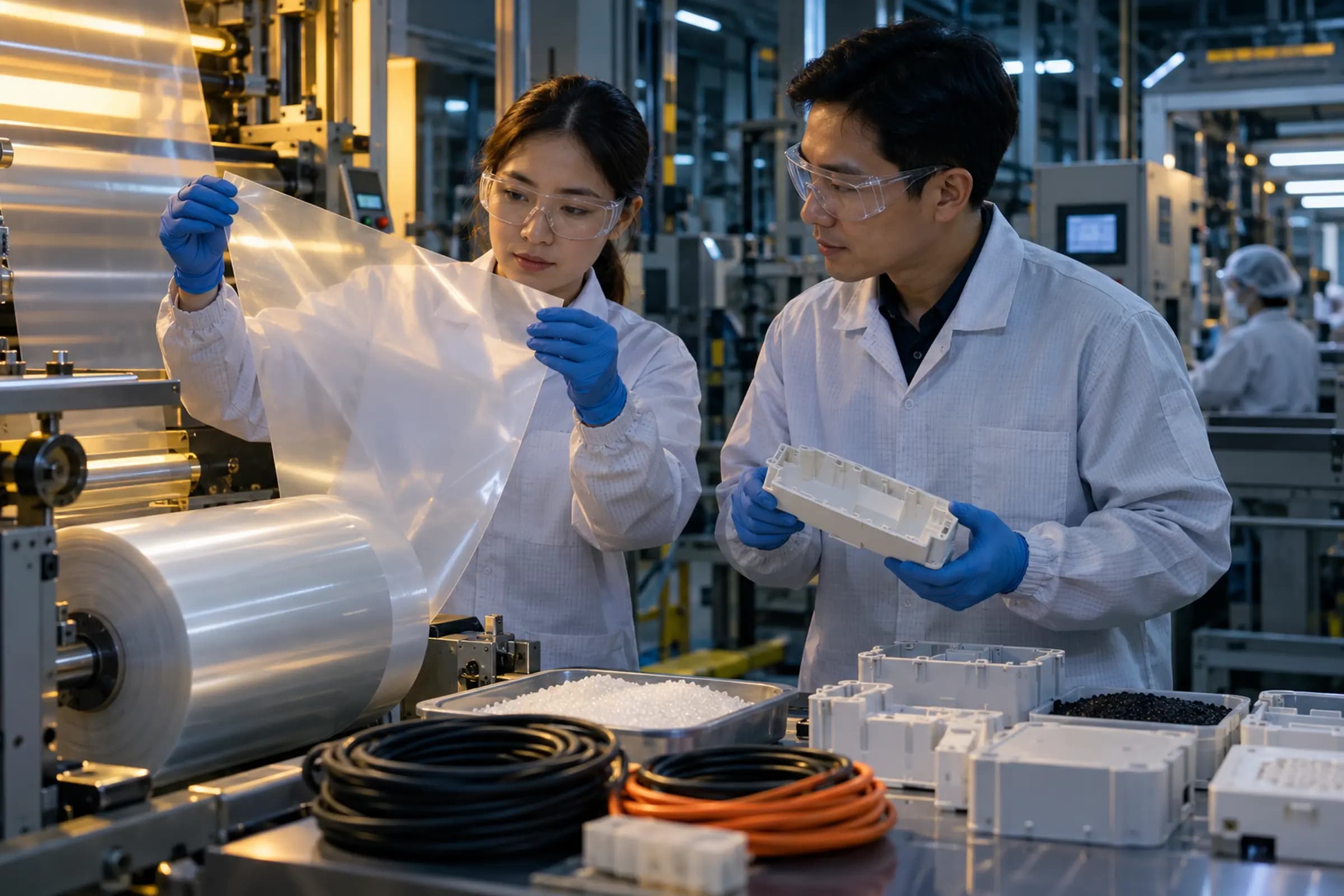
Electronics & Electrical
- Supplied materials:
- Insulating films, engineering-plastic housings, cable-insulation compounds, encapsulants, and process/cleaning chemicals used in electronics manufacturing.
- Applications:
- Component housings, cable and wire insulation, potting/encapsulation of electronic assemblies, and process chemicals used in PCB/PCBA manufacturing.
- Buyer requirements:
- Electronics buyers typically require material data on flammability rating (e.g. UL 94), dielectric properties, and RoHS/REACH compliance documentation for the destination market.
- Standards:
- UL flammability ratings, RoHS/REACH (export-market obligations, not Thai domestic law — see the Standards & Safety section), and customer-specific material specifications.
- Procurement considerations:
- Material substitution requires re-qualification against the same electrical/thermal specification; supply continuity for specialty resins is a common single-source risk in this segment.
See the Electrical, Electronics & Semiconductors chapter for device- and component-manufacturing detail; this page covers only the materials-supply side.
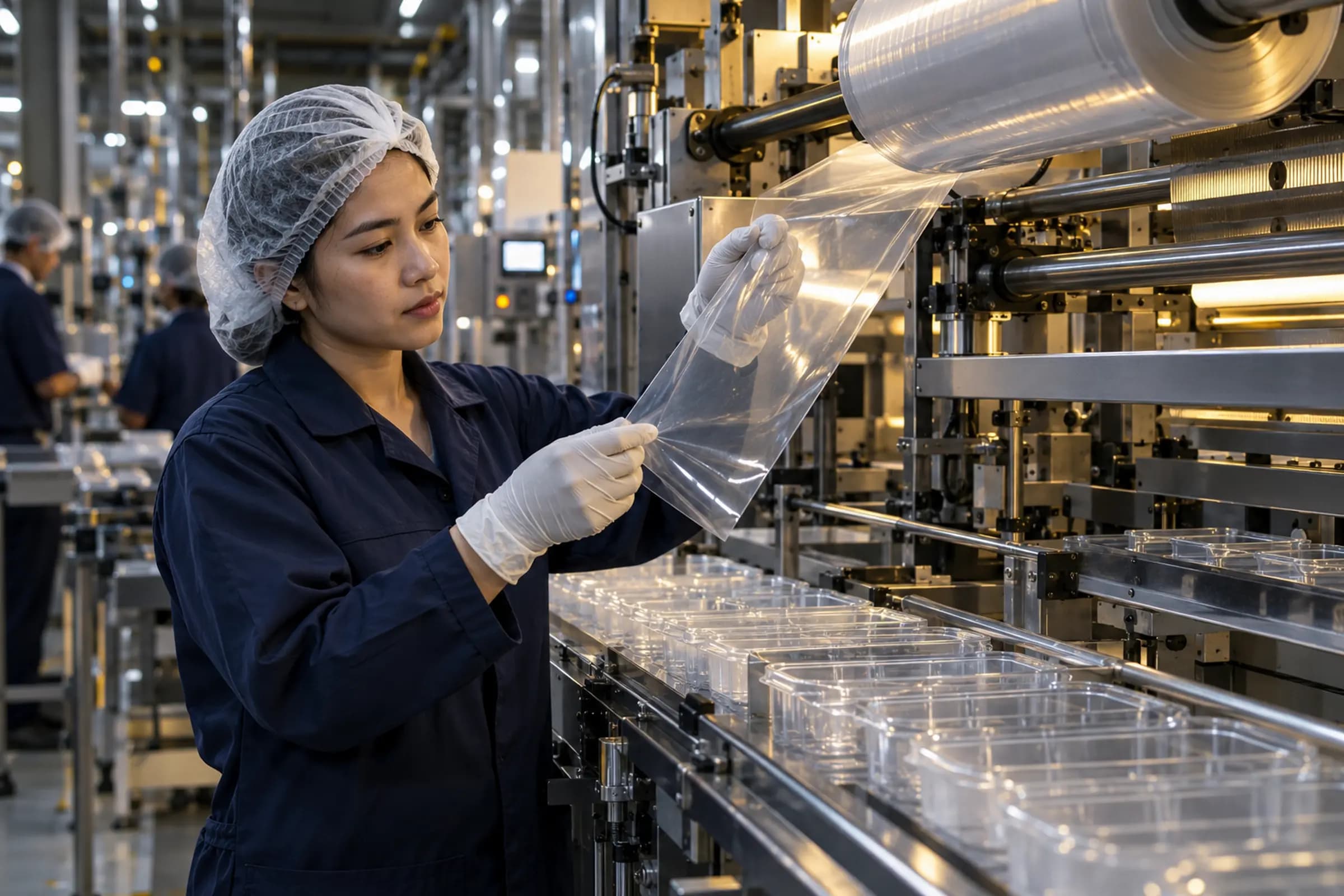
Packaging & Food Supply Chains
- Supplied materials:
- Flexible films, rigid containers and bottles, barrier-layer structures, closures and caps, converted from commodity polymer resin.
- Applications:
- Food and beverage primary/secondary packaging, consumer-goods packaging, and industrial packaging.
- Buyer requirements:
- Food-contact packaging requires compliance with applicable food-contact material regulations; buyers commonly require migration-testing documentation and batch traceability.
- Standards:
- Food-contact material regulations (verify current requirements with the Thai FDA for the specific packaging/food combination), plus buyer-specific barrier-performance specifications.
- Procurement considerations:
- Design-for-recyclability requirements are increasingly specified by brand-owner customers — see the Sustainability section for how a recycled-content or recyclability claim must be evidenced, not assumed.
Food-contact regulatory status depends on the specific material and food-contact application — this page does not state blanket food-contact approval for any material category.
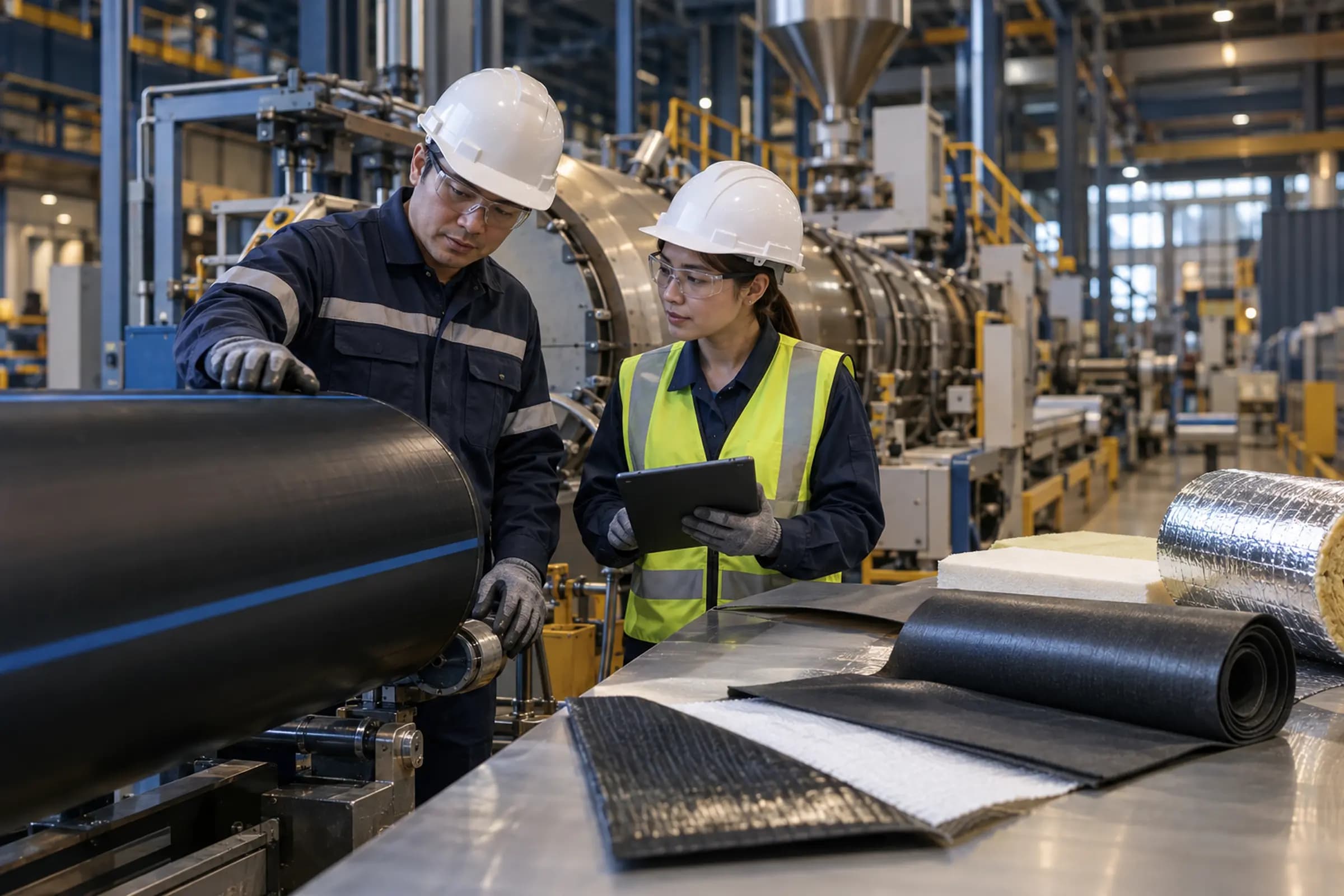
Construction & Infrastructure
- Supplied materials:
- PVC and other polymer pipes and fittings, waterproofing membranes, insulation, coatings and sealants, and geosynthetic materials.
- Applications:
- Water supply and drainage pipework, electrical conduit, building insulation and waterproofing, and geosynthetics for civil-engineering applications.
- Buyer requirements:
- Construction buyers typically require TIS certification for mandatory-listed product categories (e.g. certain PVC pipe standards) and documented pressure/durability ratings.
- Standards:
- Thai Industrial Standards (TIS) for applicable pipe and building-material categories, plus project-specific engineering specifications.
- Procurement considerations:
- Long product-service-life expectations (multi-decade for buried pipe) make documented material-grade consistency and batch traceability particularly important.
See the Construction Thailand chapter for the broader construction-materials sector; this page covers only the polymer-based materials-supply side.
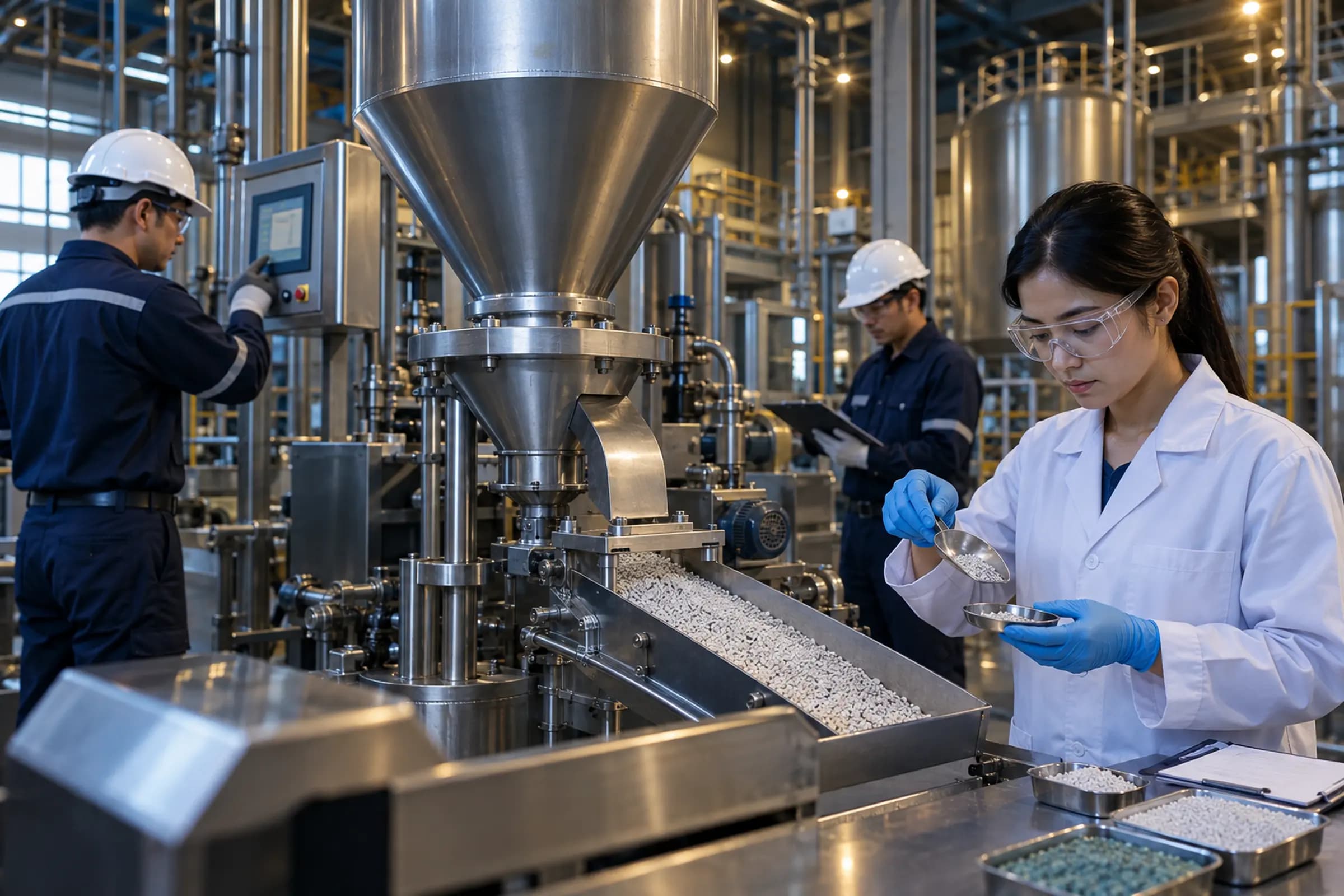
Agriculture
- Supplied materials:
- Chemical and blended fertilizers, crop-input formulations, greenhouse and mulch films, irrigation piping, and agricultural packaging.
- Applications:
- Crop nutrition, greenhouse and irrigation infrastructure, and packaging for agricultural inputs and outputs.
- Buyer requirements:
- Agricultural-chemical products fall under the Department of Agriculture's or other designated agency's registration requirements depending on the specific product and use — not Thai FDA, which does not regulate agricultural chemicals generally.
- Standards:
- Product registration under the applicable agricultural-chemical framework; this page keeps fertilizer/crop-input regulation strictly separate from food-contact or industrial-chemical regulation.
- Procurement considerations:
- Regional and seasonal demand concentration; product registration and labeling requirements are specific to the formulation and intended crop use.
See the Agriculture Thailand chapter for the broader agricultural sector; this page covers only chemical and plastic material inputs to it.

Healthcare & Medical Manufacturing
- Supplied materials:
- Medical-grade polymers, precision tubing, molded components and sterile-packaging materials.
- Applications:
- Single-use devices, diagnostic consumables, and sterile-packaging systems for finished medical devices.
- Buyer requirements:
- Material supply alone is distinct from a regulated finished medical device — a material supplier's own quality system (commonly ISO 13485-aligned) is separate from the finished device's own regulatory clearance.
- Standards:
- ISO 13485 (medical-device quality management) at the component/material-supply level; the finished device's own regulatory classification and clearance is governed separately by the Thai FDA's medical-device framework.
- Procurement considerations:
- Material traceability, biocompatibility documentation, and change-control discipline are particularly strict in this segment given downstream regulatory dependency.
See the Healthcare Thailand chapter for clinical and device-regulation detail; this page covers only the material-supply side, and material supply is not the same as finished-device regulatory clearance.
Not a Ranking
These six industries are a curated, non-exhaustive illustration of major downstream buyers, not a ranking of Thailand's most important demand industries. Appliances, renewable energy, textiles, consumer goods, aerospace and logistics are real, meaningful demand industries too — see the broader Downstream Demand Industries list above, which covers them without a dedicated image.
Industrial Geography & Infrastructure
Thailand's chemicals and petrochemicals industry is concentrated on the eastern seaboard, anchored by the Map Ta Phut Industrial Estate in Rayong province — reported as the country's largest industrial estate. Location suitability for any specific chemical project depends on zoning, utilities, EIA/EHIA outcomes, safety buffers, logistics and community-impact assessment, not on any single location being generically "best."
Map Ta Phut Industrial Estate (Rayong)
Thailand's largest industrial estate, opened in 1990 and managed by the Industrial Estate Authority of Thailand (IEAT) — the core site of Thailand's integrated petrochemical and refining complex, combining base-petrochemical production, refining, port facilities and downstream chemical plants on the eastern seaboard.
Eastern Economic Corridor (EEC) Policy Area
A designated policy area spanning Rayong, Chonburi and Chachoengsao provinces, coordinated by the Eastern Economic Corridor Office (EECO) — a land-use and investment-incentive framework layered on top of, not a replacement for, IEAT zoning, BOI promotion and customs structures. Map Ta Phut sits within the broader EEC area geographically, but EEC status and IEAT industrial-estate status are distinct designations.
IEAT Industrial Estates (General)
Beyond Map Ta Phut, IEAT directly operates or jointly develops industrial estates across multiple provinces under its regulatory framework — not every IEAT estate is configured for heavy chemical/petrochemical operations, and utility, safety-buffer and permitting requirements vary by estate and by activity.
Privately Operated Industrial Estates
Private industrial-estate developers (e.g. WHA Group, Amata Corporation, Frasers Property) operate estates under IEAT's licensing and regulatory framework, without being IEAT itself — some serve general manufacturing tenants rather than heavy chemical processing specifically.
Ports & Terminals
Map Ta Phut Port serves the petrochemical complex directly for bulk liquid and gas cargo; Laem Chabang, Thailand's principal deep-sea container port (Chonburi), handles containerized chemical and plastics-product trade. These are distinct port facilities serving different cargo types.
Customs Free Zones / Free Trade Zones
A specific customs designation (distinct from EEC or general IEAT-estate status) allowing time-limited duty/tax-free storage of goods — see the Trade & Export section below for how this differs from an IEAT free zone.
Environmental-Control / Special Regulatory Areas
Map Ta Phut and the surrounding Rayong area have historically been subject to heightened environmental monitoring and, at points, additional regulatory measures given the concentration of heavy industry — current requirements should be confirmed directly with the Pollution Control Department (PCD) and the Office of Natural Resources and Environmental Policy and Planning (ONEP) rather than assumed from historical reporting.
No Location Fits Every Project
No location on this page is described as suitable for every chemical project. Site selection depends on zoning, utility capacity (water, power, steam), bulk-storage and hazardous-goods-logistics infrastructure, EIA/EHIA outcomes, safety-buffer requirements, community-impact considerations and the specific licensing pathway for the substance and process involved.

NON-RANKED · NON-EXHAUSTIVE
Manufacturers, Suppliers & Key Players
A transparent ecosystem directory organized by role, not a ranking of top companies.
Feedstock, Refining & Base Petrochemicals
IRPC Public Company Limited
SET-listed (IRPC.BK) · PTT GroupAn integrated petroleum-refining and petrochemical company operating at the Map Ta Phut/Rayong industrial complex, producing both petroleum products and petrochemical feedstocks and polymers, and a subsidiary of PTT Public Company Limited.
Diversified Petrochemical & Chemical Groups
PTT Global Chemical Public Company Limited (PTTGC)
SET-listed (PTTGC.BK) · PTT GroupThailand's largest integrated petrochemical and refining business, formed in 2011 as a PTT Group subsidiary, spanning upstream olefins/aromatics production through downstream polymers and high-value chemical products.
Polymer / Resin Producers
SCG Chemicals (SCGC)
Siam Cement Group (SCG) subsidiaryThe petrochemicals arm of Siam Cement Group, one of Thailand's three major petrochemical producers, spanning olefins production and a broad polyolefins (PE, PP) product portfolio for domestic and export markets.
Polymer / Resin Producers
Indorama Ventures Public Company Limited
SET-listed (IVL.BK)A Thailand-headquartered global chemical company with a major global PET resin and fibers manufacturing footprint, operating production facilities in Thailand alongside an international manufacturing network.
Directory Disclosure
This directory is organized by role, not ranked by size or performance — order within each category is alphabetical and carries no significance, and inclusion is not an endorsement or certification by T3. Ownership, listing status and product scope are stated only where confirmed via the organization's own materials, official stock-exchange filings or a reputable primary source, and should be independently re-verified before use in a sourcing decision.
Scope of This Seed List
This seed list intentionally covers only large, independently verifiable, publicly listed or well-documented producers as a starting orientation. Converters, compounders, additive/masterbatch/tooling suppliers, testing/EHS/certification service providers, logistics/storage providers and recycling operators are real, active categories in Thailand's ecosystem but are not populated here with specific company names pending further T3 editorial verification — see the Sources & Methodology section for how to flag additions.
Suppliers, Sourcing & Procurement
Qualifying a chemicals, petrochemicals or plastics supplier involves more than a price and lead-time comparison — buyers typically confirm the following before committing to a supply relationship. T3 does not certify, audit or endorse any specific supplier.
Supplier Due-Diligence Checklist
- Technical specification match — does the material's actual specification sheet match the buyer's requirement, not just its general product-family name?
- Safety Data Sheet (SDS) review — is the current SDS available, complete and consistent with GHS classification and labeling requirements?
- Regulatory status — is the product registered/notified where required (e.g. under the Hazardous Substance Act, or with the Thai FDA for a food-contact or medical application)?
- Lot traceability — can the specific batch/lot be traced back to its production record?
- Quality systems — does the supplier hold relevant, current quality certifications (e.g. ISO 9001), and do they actually cover the product line being sourced?
- Production capacity — does the supplier's real production capacity, not nameplate capacity alone, support the buyer's required volume and ramp-up schedule?
- Change control — what is the supplier's process for notifying and approving any change to formulation, process or sub-suppliers?
- Audit rights — can the buyer conduct or commission an on-site audit before and during the relationship?
- Testing — what in-line and final testing does the supplier perform, and is independent third-party testing available?
- Sample approval — is a formal sample-approval and first-article-inspection process in place before full production begins?
- Tooling ownership — for compounded or converted products, who owns any tooling, and what happens to it if the relationship ends?
- Minimum order quantity & lead time — do these match the buyer's realistic volume and timeline, including during peak demand?
- Incoterms — which delivery term applies, and who carries risk and cost at each stage of transport?
- Hazardous-goods logistics — does the supplier and its logistics partners hold the correct classification, packaging and transport authorization for hazardous materials?
- Business-continuity planning — what single points of failure exist (single production line, single site, single key raw-material supplier), and what contingency plan is in place?
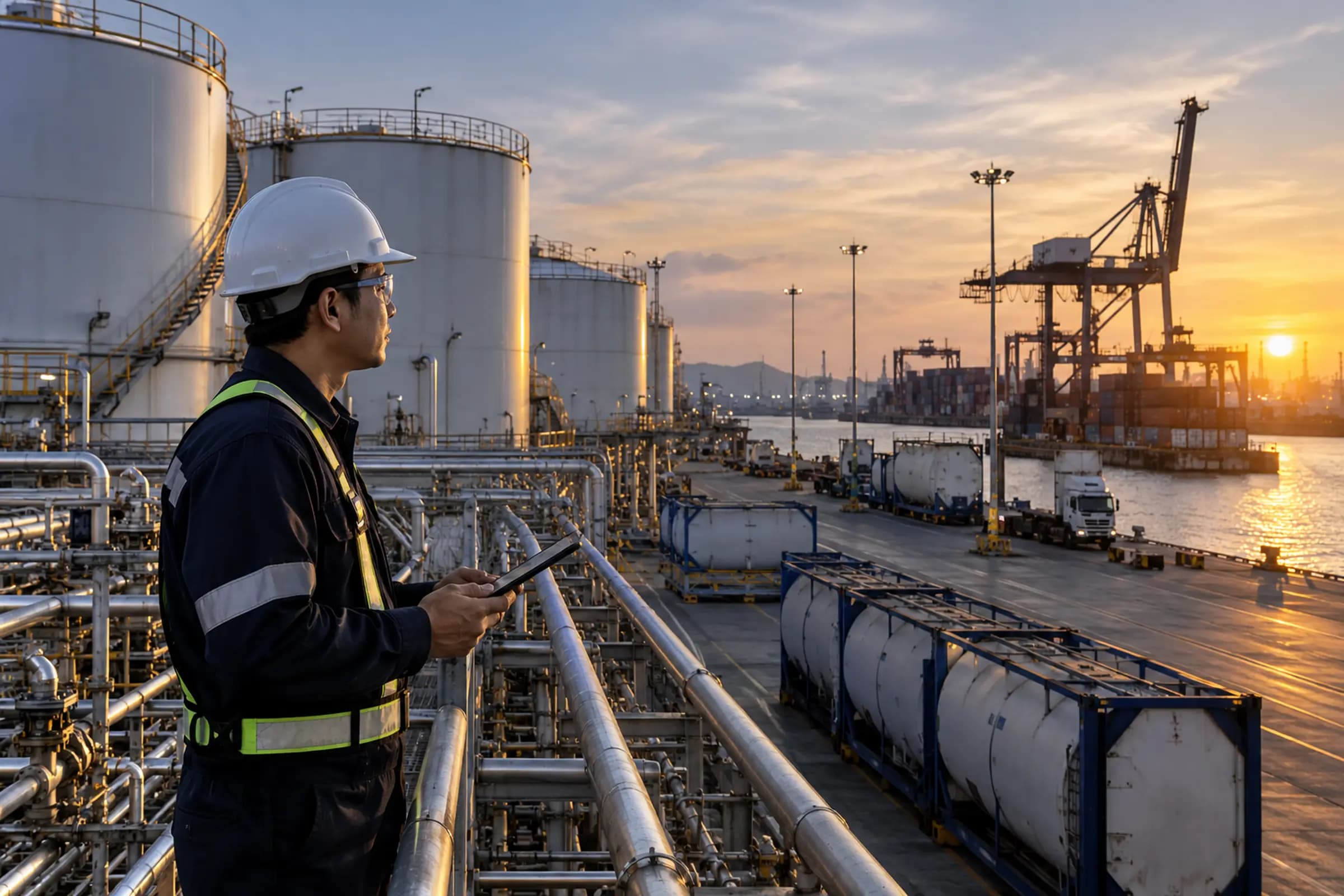
Trade, Export Markets & Important Ports
Export and import figures below are drawn from the same OIE Q2/2025 report as the sector snapshot above, covering the chemical, plastics and petrochemical industry categories as OIE itself defines and groups them. This page does not assert full alignment to specific HS chapters/codes beyond what OIE's own report states, since HS-level trade breakdowns require a separate Customs Department or Ministry of Commerce dataset that was not independently re-verified in this research pass.
Per the OIE Q2/2025 report, petrochemical exports went to major markets including China, Vietnam and Japan, while petrochemical imports came chiefly from Japan, China and the U.S. Chemical- and plastics-specific partner breakdowns were not separately reported at the same level of detail in the same source.
Map Ta Phut Port serves the petrochemical complex directly for bulk liquid and gas cargo. Laem Chabang, Thailand's principal deep-sea container port in Chonburi province, handles containerized chemical and plastics-product trade alongside other sectors' export/import volumes.
- Customs classification and advance tariff rulings — the correct HS/AHTN classification should be confirmed with the Thai Customs Department or a licensed customs broker before shipment, since classification determines both duty rate and any rules-of-origin test.
- Rules of origin and product-specific rules — an FTA's preferential tariff is never automatic; it depends on the product meeting that specific agreement's origin rule (a tariff-classification change, regional value content, or a specified process), not simply on where the goods were shipped from.
- Certificates of origin — qualifying goods generally need a Certificate of Origin, or for some agreements a self-declaration, issued or authorized through Thailand's Department of Foreign Trade (DFT) before shipment.
- Controlled or hazardous-goods permits — chemicals classified as hazardous substances or controlled goods require the applicable import/export/possession permit from the responsible agency before shipment, in addition to standard customs clearance.
- Anti-dumping / safeguard measures — specific chemical and plastics product lines have been subject to anti-dumping or safeguard measures in various markets at various times; current measures should be confirmed with the Department of Foreign Trade or the destination market's trade authority for the specific product and market.
- International dangerous-goods transport requirements — hazardous chemical shipments must comply with applicable international transport regulations (e.g. IMDG for sea freight) in addition to Thai domestic transport rules.
- Incoterms and insurance — these are commercial risk-allocation terms, not legal or regulatory requirements; the correct term for a shipment should be agreed contractually, not assumed from custom or habit.
No FTA Gives Automatic Zero Duty
No FTA gives an automatic zero-duty outcome. Eligibility depends on the product's correct HS classification, the specific agreement's rule of origin, complete supporting documentation, and the actual facts of the shipment — verify each shipment individually rather than assuming an entire product category qualifies.
How to Invest & Establish Operations
Orientation, Not Legal or EHS Advice
This sequence is general orientation, not legal, tax, environmental or safety advice. Requirements depend heavily on the specific substance, quantity, process, and location involved — always confirm current requirements with the named competent authorities and a qualified Thai legal/EHS adviser before proceeding.
- 1
Define product, chemistry, process, capacity and target market
Scope the specific chemical product, production process, planned capacity and customer market before approaching any institution.
Internal / advisors
- 2
Classify substances/products and identify applicable laws
Determine which chemicals involved are classified as hazardous substances, and under which law(s) and responsible agency(ies) they fall — this varies by substance and end use, not by industry alone.
Department of Industrial Works (DIW) and other designated agencies, depending on substance/use
- 3
Assess ownership, company structure and restricted-business issues
Determine the applicable corporate structure and whether the activity is affected by Foreign Business Act restrictions, BOI promotion routes, or other ownership considerations.
Legal advisor / BOI
- 4
Evaluate BOI eligibility using the current Investment Promotion Guide
Check whether the specific chemical, petrochemical or plastics activity appears on BOI's current promoted-activity list and which incentive tier may apply.
Thailand Board of Investment (BOI)
- 5
Screen location, utilities, logistics and community/environment constraints
Evaluate candidate sites (Map Ta Phut, other IEAT estates, privately operated estates) against utility capacity, bulk-storage and hazardous-logistics needs, and community/environmental sensitivity.
IEAT / private estate developers / EECO
- 6
Complete land/estate and zoning due diligence
Confirm zoning permissions and any estate-specific restrictions for the intended chemical activity before committing to a site.
IEAT / estate developer / local authority
- 7
Conduct EIA/EHIA and other required assessments where applicable
Certain chemical and petrochemical projects require an Environmental Impact Assessment (EIA) or, for higher-risk projects, an Environmental and Health Impact Assessment (EHIA), before construction can proceed.
Office of Natural Resources and Environmental Policy and Planning (ONEP)
- 8
Obtain factory, hazardous-substance, building, environmental and sector permits
Apply for the factory operating licence, any required hazardous-substance registration/notification, building permits, and other sector-specific permits applicable to the substance and process.
Department of Industrial Works (DIW) / local municipal authority / other designated agencies
- 9
Plan machinery/input imports and customs treatment
Determine which imports qualify for BOI machinery/raw-material duty privileges versus standard customs treatment, and plan hazardous-goods import logistics accordingly.
BOI / Thai Customs Department
- 10
Recruit qualified EHS, process, maintenance and quality personnel
Build the team responsible for process safety, environmental compliance, quality systems and ongoing regulatory reporting before commissioning.
Internal / workforce institutions (see Talent & Skills Supply below)
- 11
Commission, validate and begin operations
Complete commissioning, process validation and any required pre-operation inspections before starting commercial production.
DIW / internal QA-EHS team
- 12
Maintain reporting, monitoring, emergency planning and compliance
Sustain ongoing environmental monitoring, emissions/effluent reporting, hazardous-substance record-keeping, emergency-response planning and BOI/TISI compliance obligations.
DIW / PCD / TISI / BOI

BOI Incentives & Investment Support
BOI's published activity list includes manufacturing of industrial and eco-friendly chemicals, petrochemicals, specialty polymers or chemicals, plastic products for industrial goods, plastic packaging, plastic products from recycled plastic, chemical fertilizers, and oil refinery projects — among BOI's broader "Chemicals and Plastics" sector category. Eligibility is assessed activity-by-activity against BOI's current published list, not assumed from a product's general category.
| Tier | CIT Exemption | CIT Cap | Notes |
|---|---|---|---|
| A1+ | 10-13 years | Uncapped | Highest tier — upstream, advanced-technology and high-R&D activities. |
| A1 | Up to 8 years | Uncapped | Maximum incentives for high-priority activities, plus an additional 50% CIT reduction for 5 years in some cases. |
| A2 | Up to 8 years | Capped at 100% of qualifying investment (excluding land and working capital) | High-value activities with strong economic impact. |
| A3 | 5 years | Capped at 100% of qualifying investment | Medium-level incentives for established industries. |
| A4 | 3 years | Capped at 100% of qualifying investment | Standard industrial activities with more limited strategic priority. |
BOI materials describe an 8-year CIT exemption for projects using Carbon Capture, Utilization and Storage (CCUS) technology (versus 5 years for general cases) — relevant to some petrochemical and refining projects specifically. Confirm current conditions directly with BOI, since CCUS-linked incentives are a newer, evolving category.
BOI Investment Promotion Guide (official, PDF)Confirm Directly With BOI
BOI incentive tiers, eligibility conditions and privilege scopes are assessed project-by-project and change between guide editions and policy updates. BOI announced a refreshed package of investment-promotion measures on 15 January 2026, with applications open from the first working day of 2026 through the last working day of 2027, replacing programs that expired in 2025. The framework above is illustrative of currently promoted activity types, not a guarantee of eligibility for any specific project — confirm the current tier, conditions and privileges directly with BOI or a qualified investment-promotion adviser. BOI eligibility, application timing and an issued promotion certificate are three distinct stages, not interchangeable.

Regulation & Competent Authorities
A responsibility matrix of the bodies most relevant to chemicals, petrochemicals and plastics operations in Thailand.
No Single Regulator Covers "All Chemicals"
Thailand's Hazardous Substance Act (B.E. 2535 / 1992, as amended) assigns responsibility across multiple designated agencies depending on the specific substance and its intended use — there is no single regulator for "all chemicals" in Thailand. Thai FDA's authority covers only product categories within its own remit (e.g. cosmetics, food-contact materials, medical devices, pharmaceuticals) — it is not the regulator for industrial chemicals generally. The Department of Agriculture, Department of Livestock Development and other designated agencies hold authority for hazardous substances tied to their own sector's end use. Always confirm which specific agency is the "responsible agency" for a given substance and use under the Hazardous Substance Act before assuming jurisdiction.
Government & Regulatory
Ministry of Industry
Sets Thailand's industrial policy and oversees the country's manufacturing, standards and industrial-estate agencies, including TISI, IEAT, DIW and the Office of Industrial Economics (OIE).
Government & Regulatory
Department of Industrial Works (DIW)
A designated responsible agency under the Hazardous Substance Act for hazardous substances within its remit, and the issuing authority for factory operating licences and industrial-facility safety/environmental compliance.
Government & Regulatory
Industrial Estate Authority of Thailand (IEAT)
Operates and regulates industrial estates including Map Ta Phut, and administers IEAT free-zone customs status within qualifying estates.
Government & Regulatory
Pollution Control Department (PCD)
Sets and monitors pollution-control standards (air emissions, wastewater, industrial waste) and is a key authority for environmental compliance in chemical and petrochemical operations.
Government & Regulatory
Office of Natural Resources and Environmental Policy and Planning (ONEP)
Administers Thailand's Environmental Impact Assessment (EIA) and Environmental and Health Impact Assessment (EHIA) frameworks under the Ministry of Natural Resources and Environment.
Government & Regulatory
Thai Industrial Standards Institute (TISI)
Thailand's national standards body — administers mandatory and voluntary Thai Industrial Standards (TIS) certification for applicable chemical and plastics product categories.
Government & Regulatory
Thailand Board of Investment (BOI)
Administers investment-promotion incentives for eligible chemicals, petrochemicals and plastics activities under BOI's published eligible-activities list.
Government & Regulatory
Thai Customs Department
Administers import/export customs clearance, tariff classification, valuation and customs free-zone status for chemical and plastics trade.
Government & Regulatory
Department of Foreign Trade (DFT)
Issues or authorizes Certificates of Origin and administers FTA-related trade privileges for eligible chemical and plastics exports.
Government & Regulatory
Department of International Trade Promotion (DITP)
Promotes Thai chemical, petrochemical and plastics exports through trade events, buyer-matching programs and market intelligence.
Government & Regulatory
Department of Business Development (DBD)
The statutory registrar for company registration and business information for any Thai company, including chemical and petrochemical manufacturers.
Government & Regulatory
Eastern Economic Corridor Office (EECO)
Coordinates investment promotion, land-use planning and one-stop investor facilitation within the EEC policy area, which includes the Map Ta Phut/Rayong petrochemical cluster.
Government & Regulatory
Thai Food and Drug Administration (Thai FDA)
Regulates only the specific product categories within its own authority — cosmetics, food-contact materials, medical devices, pharmaceuticals and certain foods — not industrial chemicals generally. See the critical note above.
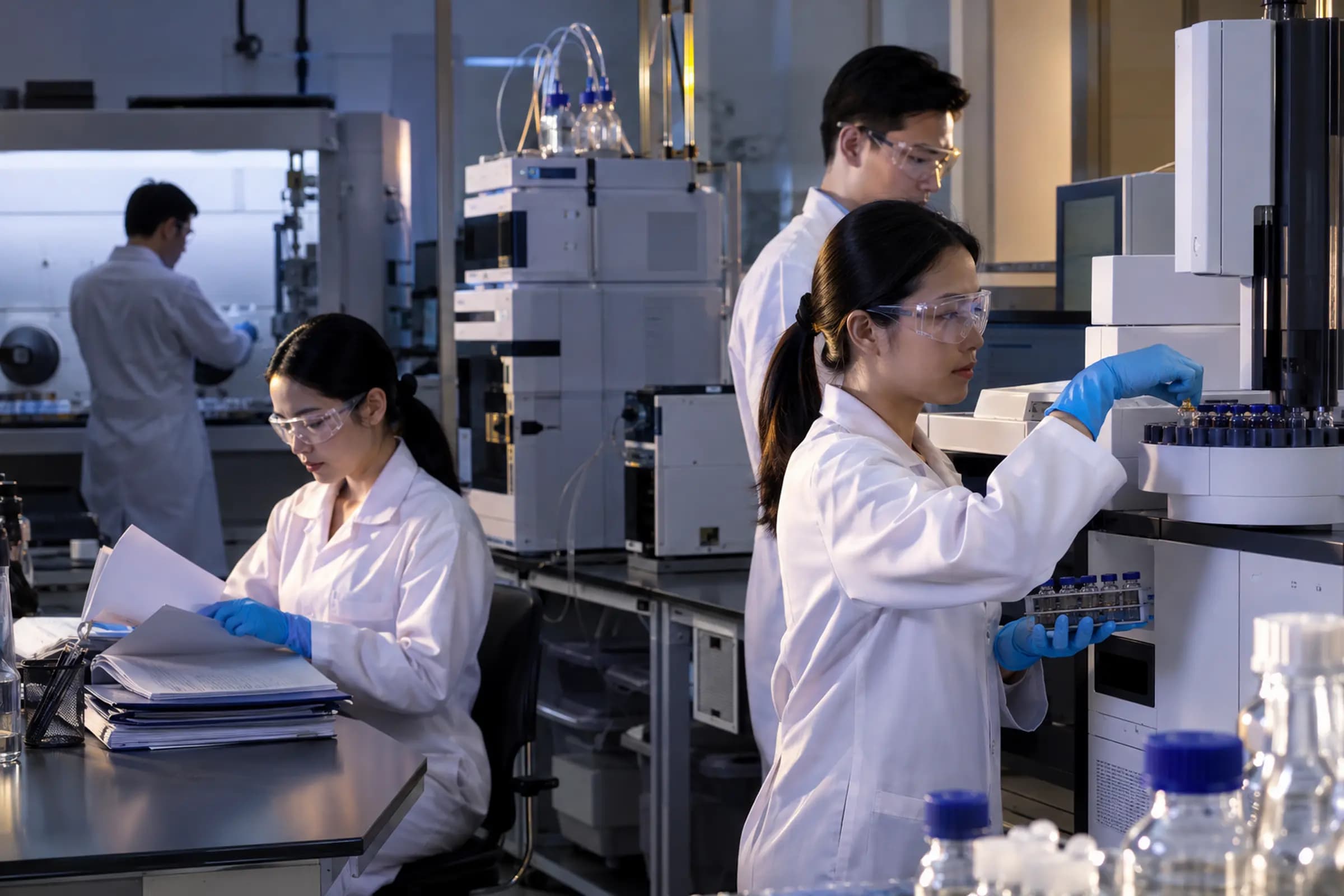
Standards, Testing, Safety & Responsible Production
Applicable standards vary by product category and target market — no single standard applies universally to every chemical or plastics product made in Thailand.
- TIS (Thai Industrial Standards) — mandatory for specific product categories on TISI's mandatory list, voluntary for others.
- ISO 9001 (Quality Management Systems) — a voluntary, widely adopted quality-system certification, not a Thai legal requirement by itself.
- ISO 14001 (Environmental Management Systems) — a voluntary environmental-management certification.
- ISO 45001 (Occupational Health & Safety Management Systems) — a voluntary workplace-safety management certification.
- ISO/IEC 17025 (Testing & Calibration Laboratories) — relevant to laboratories performing chemical testing and calibration.
- GMP (Good Manufacturing Practice) — relevant to chemical inputs used in regulated end products (e.g. pharmaceutical or food-contact applications) rather than industrial chemicals generally.
- Customer/end-market standards — many buyers, particularly in automotive and electronics supply chains, impose their own specification and qualification standards beyond any regulatory minimum.
Export-Market Obligations, Not Thai Law
REACH (EU), RoHS (EU) and similar overseas regulatory frameworks are export-market obligations for products sold into those markets — they are not Thai domestic law unless a specific requirement has been separately incorporated into Thai regulation. Exporters should confirm current requirements directly with the destination market's regulatory authority or their buyer's compliance team.
Process Safety & Environmental Responsibility
Process safety and environmental risk are substantive, ongoing obligations for chemical and petrochemical operations, not a one-time permitting exercise.
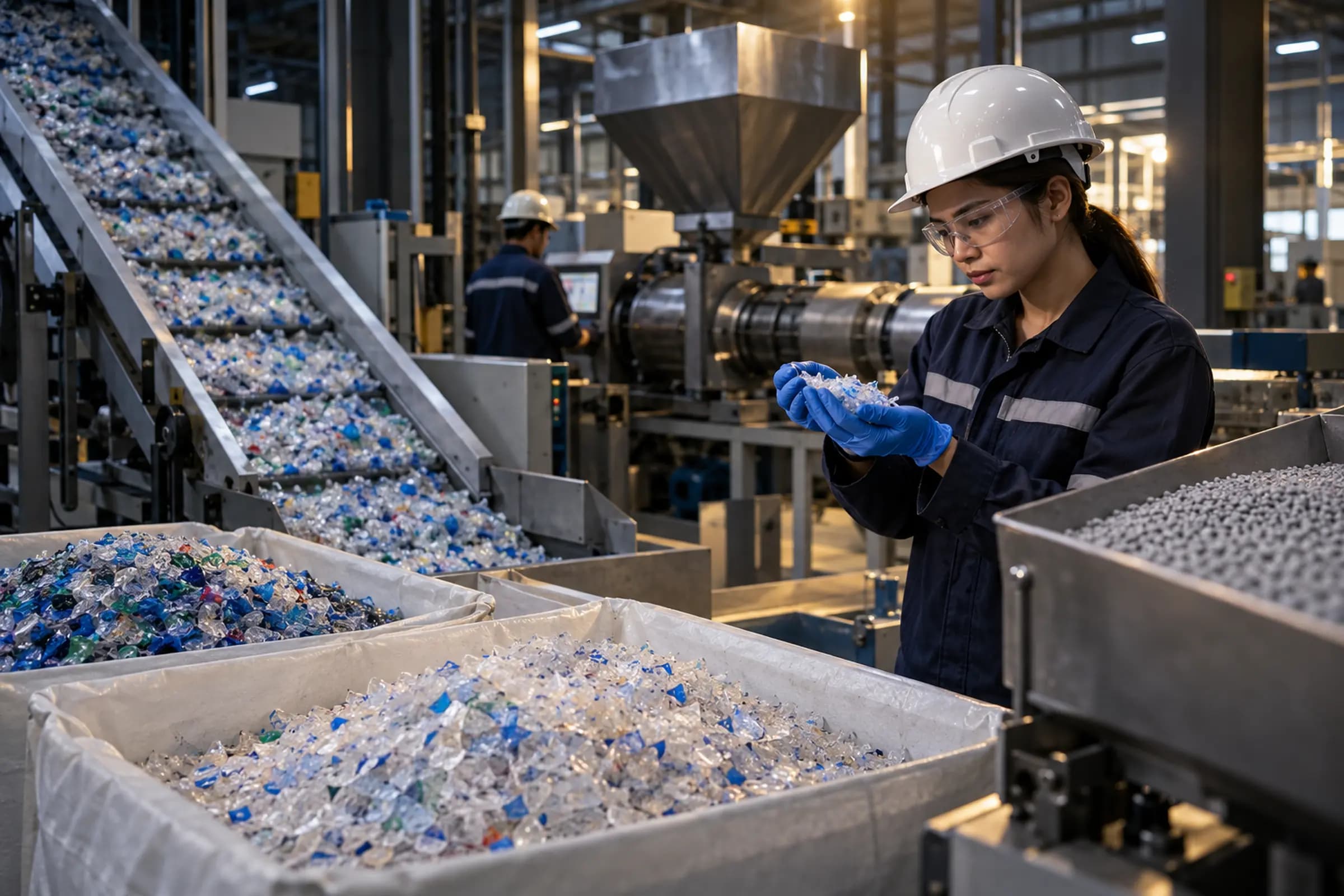
Sustainability, Circular Plastics & Bio-Based Materials
This section separates verified, currently operating outcomes from stated targets, pilot projects and industry announcements — a target is not the same as an achieved result, and this page does not present one as the other.
- Design for recyclability — product and packaging design choices (mono-material structures, avoiding incompatible additive combinations) that affect whether a product can realistically be recycled after use.
- Collection and sorting — municipal and private collection infrastructure and sorting-facility capacity vary significantly by location in Thailand; this page does not state a national collection-rate figure without a current, sourced statistic.
- Recycled content — the actual percentage of recycled material in a specific product should be verified against that product's own certification or supplier declaration, not assumed from general industry claims.
- Mechanical recycling — the most established recycling pathway in Thailand today, reprocessing collected and sorted plastic into new material without altering its chemical structure.
- Chemical recycling — an earlier-stage, less commercially mature pathway in Thailand, breaking polymers down for reprocessing; specific operating-scale claims should be verified with the operator directly.
- Biomass and bio-based feedstocks — bio-based polymer production (e.g. PLA) draws on Thailand's agricultural base, distinct from recycled-content material.
- Compostability standards — a product is only accurately described as compostable if certified against a recognized compostability standard under the specific conditions (industrial vs. home composting) that standard defines.
- Traceability — chain-of-custody documentation supporting any recycled-content or bio-based-content claim.
No Vague Sustainability Claims
This page avoids vague "eco-friendly," "biodegradable," "carbon neutral" or "zero waste" claims. Any sustainability claim requires a stated boundary (what is and isn't included), method, certifying body, base year and supporting evidence before it is presented as verified rather than as a stated target or aspiration.
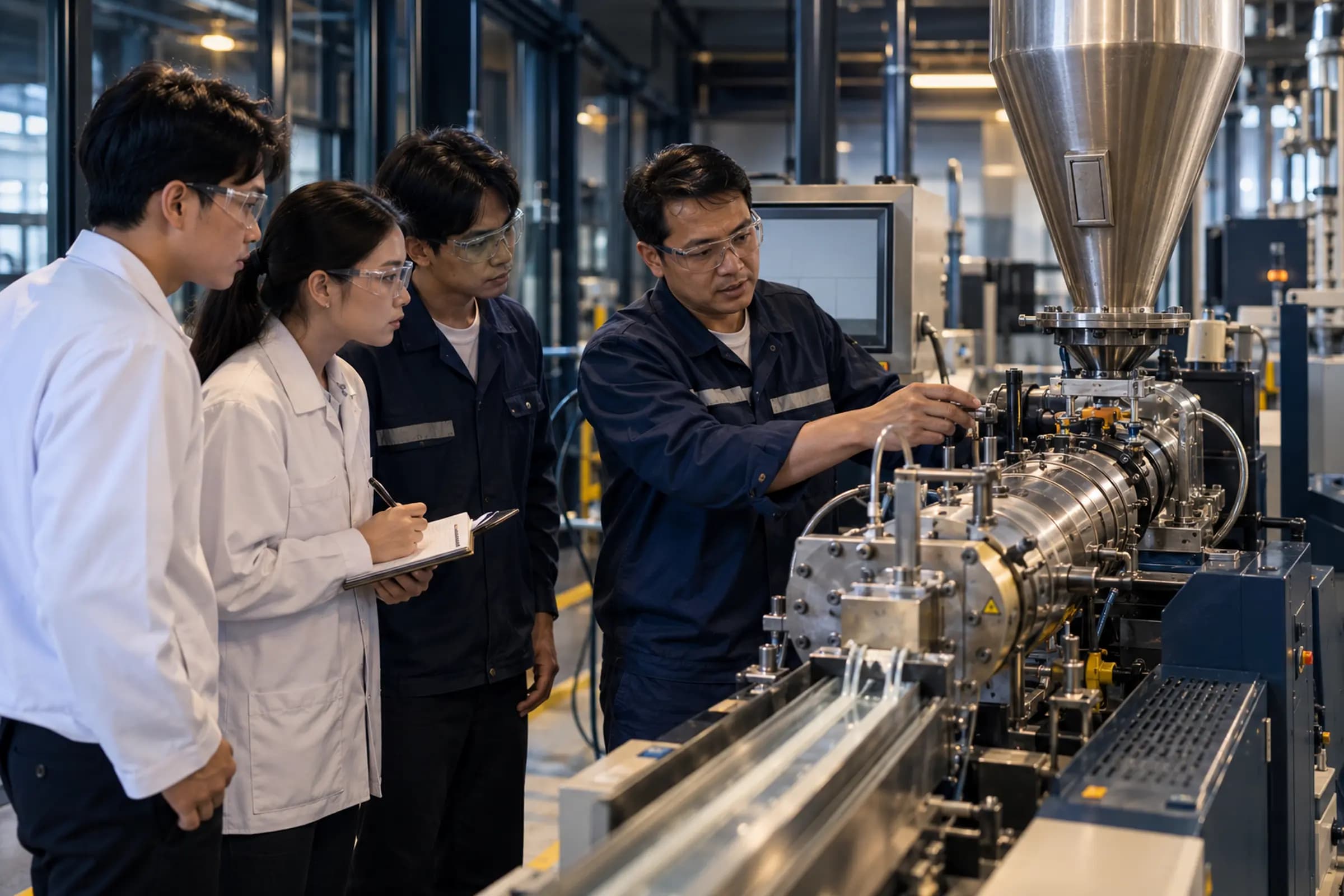
Talent & Skills Supply
Thailand's chemicals and petrochemicals industry draws on a specific mix of technical roles, many trained through dedicated university programs and public workforce-development institutions rather than general engineering degrees alone.
- Chemical and process engineers
- Polymer and materials scientists
- Chemists (analytical, formulation and quality-control)
- EHS (environment, health and safety) specialists
- Instrumentation and control engineers
- Mechanical and electrical maintenance technicians
- Laboratory analysts
- Tool and mold technicians (for compounding/converting operations)
- Production supervisors
- Logistics specialists (including hazardous-goods logistics)
- Regulatory affairs professionals
Enrollment Is Not Workforce Quality
Workforce quality cannot be inferred from enrollment numbers alone — this page does not cite a specific graduate-output or employment figure without a current, sourced statistic. Vocational pathways (via Department of Skill Development-affiliated institutes), continuing professional training and international collaboration all contribute to the talent pipeline alongside university programs, and skill gaps in specific technical roles are a recognized industry concern rather than something this page can quantify without a current dataset.
Department of Skill Development (DSD)
The core public institution for workforce skill training and upgrading, supervising Skill Development Institutes across Thailand, including process and technical-trade training relevant to chemical manufacturing.
Visit official website ↗Thailand Professional Qualification Institute (TPQI)
Links occupational standards to Thailand's National Skill Standards, working alongside DSD to align workforce qualifications with industry-recognized competency frameworks.
Visit official website ↗
Universities, Institutes & Research Collaboration
Verified, non-exhaustive institutions with directly relevant petrochemical, polymer and materials-science programs or laboratories.
University Research Institute
The Petroleum and Petrochemical College (PPC), Chulalongkorn University
Established in 1988 specifically to produce graduates in petroleum, petrochemical technology and polymer science — offers M.S./Ph.D. programs in Petrochemical Technology and Polymer Science, plus analytical and testing services to industry.
National Research Institute
National Metal and Materials Technology Center (MTEC), NSTDA
A national research centre under Thailand's National Science and Technology Development Agency (NSTDA), promoting and coordinating research and development in polymers, metals, ceramics and related materials since 1986.
Industry Institute
Plastics Institute of Thailand (PITH)
A not-for-profit institute under the Foundation for Industrial Development (Ministry of Industry), founded in 2010 to support the plastics industry's technical development, testing and workforce training.
Directory Disclosure
This is a small, independently verified seed list, not an exhaustive survey of every Thai institution with relevant chemical, petrochemical or materials-science capability. Each entry links to the specific faculty, centre or program confirming relevance — inclusion does not imply the institution endorses T3.
Government Programs, Associations & Events
Government policy/programs, regulators and service bodies are covered in the Regulation section above. This section covers industry and research associations specifically.
Industry Institute & Association
Plastics Institute of Thailand (PITH)
A not-for-profit institute under the Foundation for Industrial Development, Ministry of Industry, founded 16 November 2010, supporting the long-term development of Thailand's plastics industry with government, education and private-sector partners.
Trade Association Coverage
A dedicated petrochemical or chemical industry trade association/club (e.g. under the Federation of Thai Industries) may exist with current, verifiable contact details, but was not independently confirmed with a stable, direct official URL during this research pass — flagged for T3's editorial team to add once verified, rather than listed here on an unconfirmed basis.
Events Calendar
T3 could not confirm a currently scheduled, dated future edition of a chemicals/petrochemicals/plastics-specific exhibition or conference in Thailand during this research pass. Rather than publish an estimated or historical date as if current, this section is marked schedule not yet verified pending direct confirmation from an event organizer's official website.
Case Studies & Sample Presentations
A published case study on this page requires a named real organization or project, a date and location, a starting challenge, the intervention or investment made, a measurable result with its metric clearly defined, a direct primary source (plus independent corroboration where feasible), and disclosure of any incentive or commercial relationship involved.
Verified case study in preparation
No case study meeting this evidence bar has been independently verified and populated on this page yet. Rather than invent a plausible-sounding success story, this section displays a transparent "Verified case study in preparation" state pending T3 editorial research.
Reusable Presentation Outlines
Thailand Chemicals & Materials Investment Brief
Prospective investors and project developers evaluating a Thailand chemicals/petrochemicals/plastics investment.
- Sector snapshot and current OIE production/trade indicators
- Value-chain position and feedstock availability
- Map Ta Phut / EEC industrial geography and site-selection factors
- BOI eligible activities and incentive tiers (with current-guide disclaimer)
- Regulatory pathway overview (DIW, ONEP, PCD, TISI)
- Workforce and talent availability
- Key risks (feedstock volatility, trade measures, permitting timeline)
- T3 business-inquiry next step
Supplier Qualification & Market Entry Brief
International buyers evaluating Thai chemical, resin or plastics-product suppliers.
- Value-chain position of the target product category
- Manufacturer/supplier directory orientation (non-ranked, non-exhaustive)
- Supplier due-diligence checklist walkthrough
- Regulatory/standards requirements relevant to the product
- Logistics, ports and hazardous-goods transport considerations
- Trade compliance — HS classification, origin, certificates
- Incoterms and commercial risk allocation
- T3 business-inquiry next step
Circular Plastics and R&D Partnership Brief
Research institutions, recyclers and companies exploring circular-materials or R&D collaboration in Thailand.
- Circularity pathways — mechanical recycling, chemical recycling, energy recovery (current maturity levels)
- Bio-based materials and Thailand's agricultural feedstock base
- Verified vs. target sustainability claims — evidence standard
- University and institute research capability (PPC Chula, MTEC, PITH)
- Applicable standards and certification pathways
- Government initiative/program status (verified only)
- T3 business-inquiry next step
Risks & Decision Checklist
Chemicals, petrochemicals and plastics is a cyclical, capital-intensive, globally traded industry — the risks below are given the same substantive weight as the opportunity described elsewhere on this page.
- Feedstock price volatility — oil, gas and naphtha price swings directly affect petrochemical production economics.
- Energy cost — an energy-intensive industry exposed to domestic energy-price and supply conditions.
- Foreign-exchange exposure — export revenue and imported-feedstock costs both carry FX risk.
- Global overcapacity — global petrochemical capacity additions (particularly in the Middle East and China) affect Thai producers' margins and export competitiveness.
- Trade remedies — anti-dumping, safeguard and tariff measures in export markets can materially affect specific product lines.
- Technology change — shifts toward bio-based materials, chemical recycling and alternative chemistries can affect the competitiveness of existing assets over time.
- Demand cycles — downstream demand (automotive, construction, packaging, electronics) is itself cyclical, transmitting volatility upstream.
- Environmental liabilities — legacy and ongoing environmental compliance obligations, particularly in established industrial areas like Map Ta Phut.
- Climate transition — evolving carbon-pricing, emissions-reduction and buyer sustainability requirements affect longer-term asset planning.
- Water and utilities — process water availability and utility infrastructure capacity are site-specific constraints, not guaranteed at every location.
- Permitting timeline — EIA/EHIA and hazardous-substance permitting can materially affect project timelines and should be planned for realistically, not optimistically.
- Community relations — community engagement and trust, particularly in established heavy-industry areas, affect a project's social license to operate.
- Logistics — bulk-storage, hazardous-goods transport and port capacity are specific infrastructure requirements, not generic logistics.
- Supplier concentration — reliance on a small number of feedstock or intermediate suppliers is a specific supply-chain risk to evaluate.
- Skills availability — technical-role availability (process engineers, EHS specialists) varies by location and should be assessed for the specific site chosen.
Investor: Verify Before Decision
- Verify BOI eligibility and current incentive tier directly with BOI before finalizing an investment case — do not rely on this page's summary alone.
- Confirm feedstock supply arrangement and pricing basis before committing to a production-capacity assumption.
- Complete independent EIA/EHIA and permitting-timeline diligence for the specific site and process, not a generic estimate.
- Confirm utility capacity (water, power, steam) directly with the site's estate operator.
- Assess workforce availability for the specific technical roles required at the chosen location.
Buyer: Verify Before Decision
- Verify the supplier's regulatory status and current certifications directly, not from marketing materials alone.
- Confirm HS classification and rules-of-origin eligibility for the specific product and shipment before assuming preferential tariff treatment.
- Request and review the current Safety Data Sheet (SDS) for any chemical product before first shipment.
- Conduct a supplier audit or commission one, particularly for a new or first-time supply relationship.
- Confirm Incoterms, hazardous-goods logistics arrangements and insurance coverage before shipment.
Sources & Methodology
This page separates verified facts from interpretation throughout: every statistic names its publisher, reference period, source URL and access date; directories are explicit, small, non-ranked, non-exhaustive seed lists rather than comprehensive surveys; BOI, regulatory and establishment-pathway content is framed as orientation, not legal, tax, environmental or investment advice; and no company capability, statistic, government contact, initiative status, event date or case study has been invented. Where evidence could not be independently verified during this research pass (a dedicated chemicals/petrochemicals trade association's current URL, HS-code-level trade breakdowns, specific recycling-rate statistics, and any case study), this page states that gap explicitly rather than filling it with plausible-sounding detail. Generic investment-framework content (BOI tiers, free-zone structures, workforce institutions) is reused from T3's Manufacturing Thailand chapter, which independently verified the same facts on 5-6 September 2026 — see that chapter for the original verification pass.
Looking to Invest, Source or Partner?
T3 can point you to sector-specific directories, official government bodies, and the right BOI pathway for your chemicals, petrochemicals or plastics activity — this page is a starting map, not a substitute for direct verification with the named institutions.
T3 Business Inquiry
No Guaranteed Outcomes
This form is for chemicals, petrochemicals and plastics business, sourcing and investment inquiries only. T3 does not promise government approval, an introduction, an incentive outcome, an investment return, supplier certification, or a response deadline unless operationally guaranteed.