
T3 INDUSTRY GATEWAY
Manufacturing Thailand
A production base built over five decades — from contract electronics and automotive assembly to food processing, plastics, machinery and precision components — now positioning for higher-value, higher-automation manufacturing across the ASEAN region.
Manufacturing Executive Overview
Thailand's manufacturing base is not one industry but a network of them — automotive and electronics anchoring the largest export volumes, alongside food processing, plastics, machinery, furniture, textiles and metal fabrication supplying both regional and global buyers. This page is the cross-industry entry point: it summarizes the whole base, cross-links to T3's existing deep-dive chapters on individual sectors (Automotive, EV & Future Mobility, Electrical/Electronics/Semiconductors, Food & Beverage, Textiles, Furniture, Packaging, and others), and builds out, in full, the topics that sit above any single sector — industrial estates and free zones, BOI investment pathways, machinery and raw-material importing, and Thailand's FTA network for manufacturers.
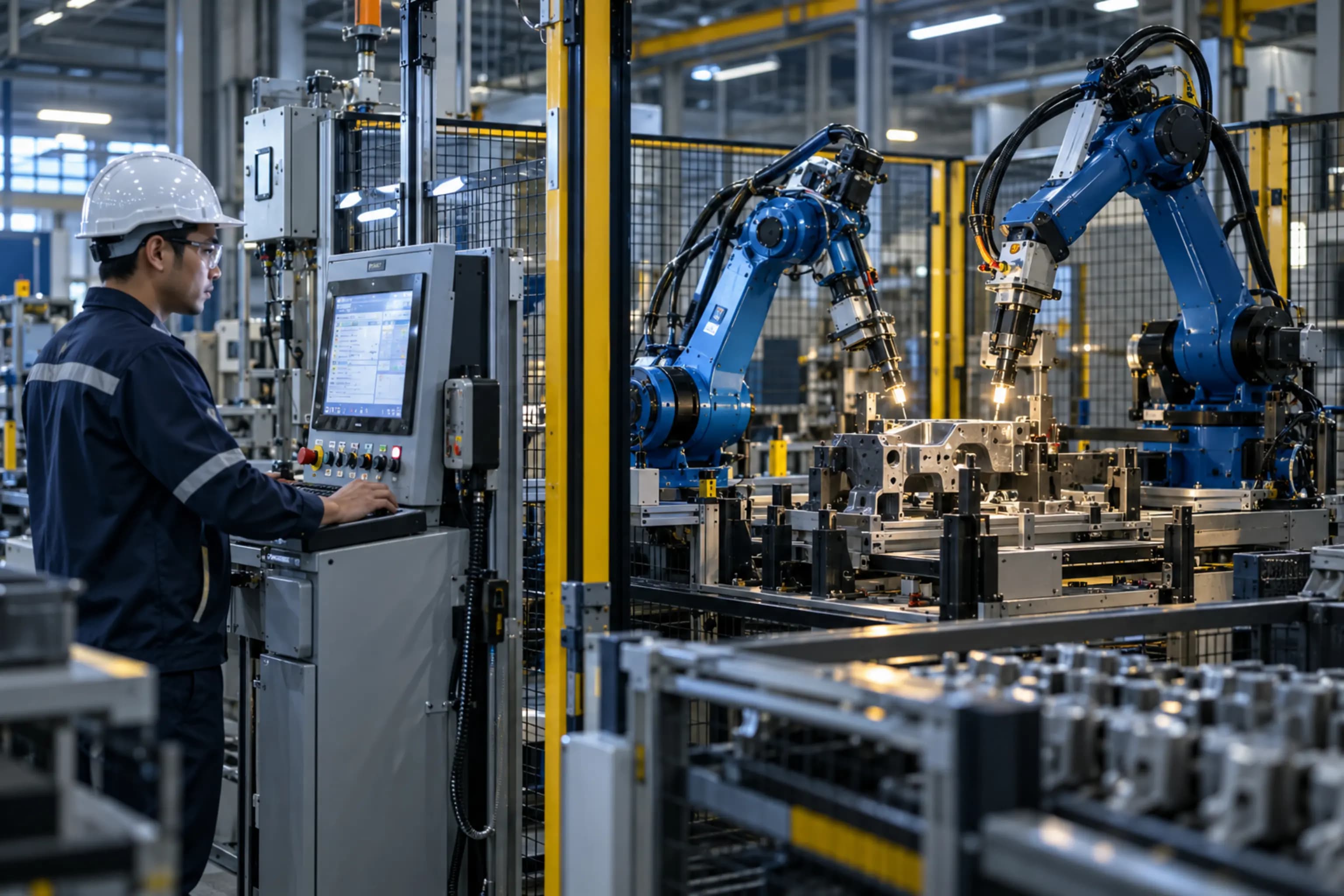
A Base Modernising Through Automation
BOI's Smart and Sustainable Industry measure — 132 applications worth US$507.6 million to upgrade machinery, adopt digital technology and integrate automation and robotics — signals that Thai manufacturers are investing in raising productivity at existing factories, not only building new ones. This complements the 2026 incentive refresh covering advanced manufacturing, automation and high-value R&D.
Thailand Manufacturing in Numbers
Manufacturing's share of GDP
24.2% of GDP (2024)
Manufacturing value added was 24.2% of Thailand's GDP in 2024, down from 27.4% in 2015 — still the single largest sector of the Thai economy by output share.
Source: World Bank, World Development Indicators (Table 4.2: Structure of Value Added) (opens in a new tab) · Accessed 6 September 2026
2025 investment-promotion applications (BOI)
3,370 projects, THB 1.876653 trillion (~US$60.23bn)
Total BOI investment-promotion applications across all sectors in full-year 2025 — value up 67% and project count up 11% from 2024. This is applications received, not approved or realized investment, and spans all BOI-promoted activities (including digital infrastructure and data centres), not manufacturing alone.
Source: Thailand Board of Investment, press release: "Thailand's Investment Applications Reach New Highs in 2025" (opens in a new tab) · Accessed 6 September 2026
Semiconductor & advanced-electronics applications
517 applications, January 2022 - June 2025
BOI investment-promotion applications submitted for semiconductor and advanced-electronics activities — chip design/assembly, wafer fabrication/testing, PCB manufacturing/assembly and smart electronic products — representing a combined value of over THB 700 billion. A multi-year cumulative figure, not a single-year or approved-investment number. T3 could not locate a direct BOI press-release URL for this figure; it is corroborated here via BOI's own THECA 2025 launch briefing and should be swapped for a primary boi.go.th link if T3's editorial team can source one.
Source: Thailand Board of Investment (BOI Secretary-General, THECA 2025 launch briefing) (opens in a new tab) · Accessed 6 September 2026
National exports, January-October 2025
US$282.98 billion (+13.12% YoY)
Thailand's total exports for the first ten months of 2025 — this is national export value, not manufacturing exports specifically, and not a full-year total (shown here only as broad market-access context, per this page's policy on FTA/trade figures).
Source: Office of Industrial Economics (OIE), Thai Economic Performance in Q4 2025 and the Outlook for 2026 (opens in a new tab) · Accessed 6 September 2026
Industrial machinery & parts imports
US$1.7171 billion, April 2025 (+14.8% YoY)
A single-month import flow, not an annualized or cumulative figure — growth was driven by increased imports of wood-processing, metalworking, construction and textile machinery and components.
Source: Office of Industrial Economics (OIE), Report on the Industrial Economics Status, April 2025 (opens in a new tab) · Accessed 6 September 2026
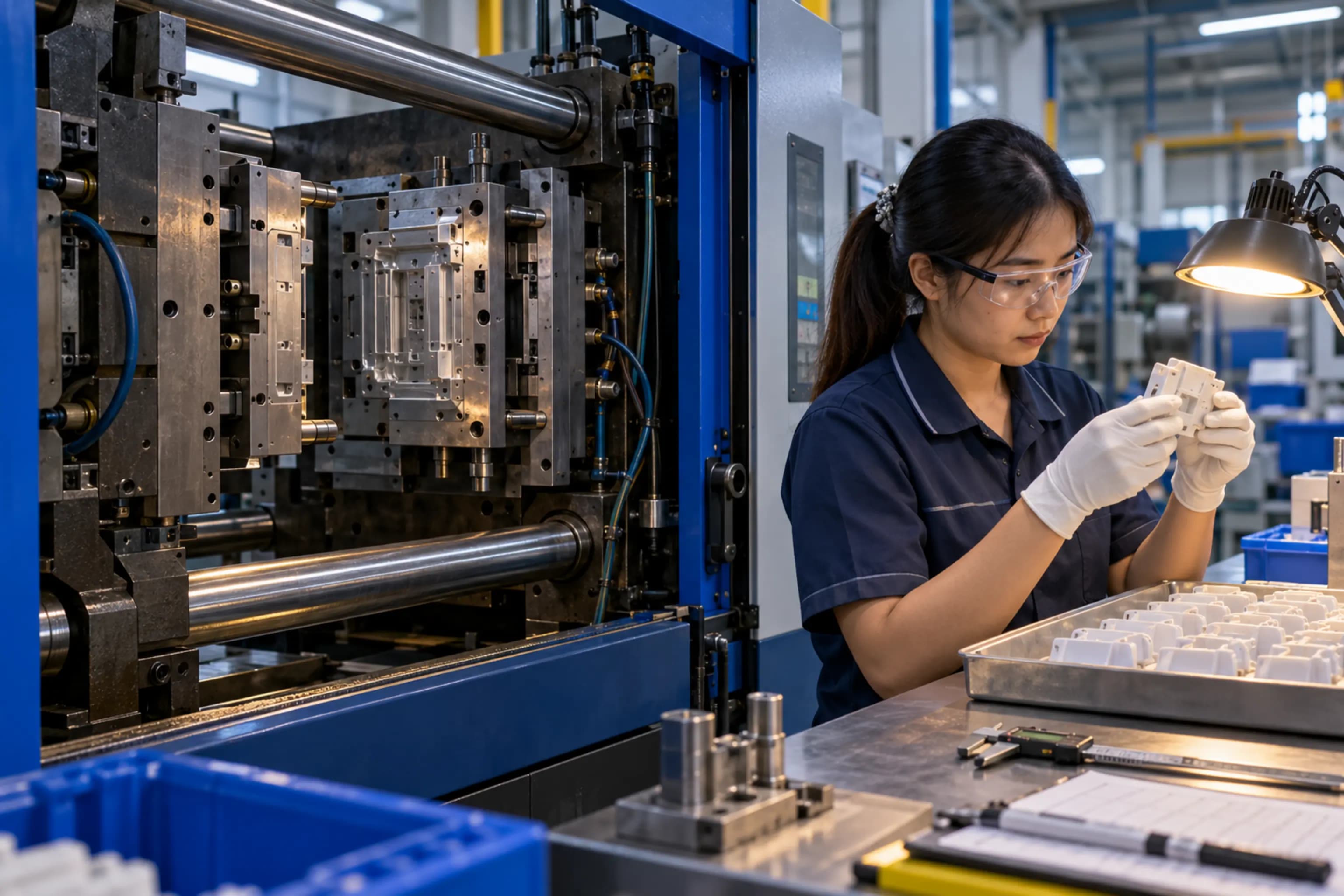
What Thailand Can Manufacture
Thailand's industrial base spans 22 broad manufacturing categories below. Categories with an existing T3 sector chapter link through to that chapter's full research rather than repeating it here; categories without a dedicated chapter yet are covered in more depth on this page.
Automotive & Auto Parts
Vehicle assembly and a deep Tier 1-3 component supply chain — one of Thailand's two largest manufacturing export categories.
Electric Vehicles & Future Mobility
EV assembly, battery packs and the emerging power-electronics supply chain, supported by dedicated BOI EV incentive programs.
Electrical, Electronics & Semiconductors
Thailand's largest export category — PCB/PCBA, electronics manufacturing services, hard-disk drives, and a developing semiconductor back-end (OSAT) base.
Machinery & Industrial Equipment
Industrial machinery, production-line equipment and mechanical systems, produced both for the domestic manufacturing base and for export.
Thailand manufactures and assembles a range of industrial machinery — from agricultural and food-processing machinery to general mechanical equipment — much of it supplying the country's own automotive, electronics, food and plastics industries. BOI's Smart and Sustainable Industry measure (132 applications, US$507.6 million) specifically targets machinery upgrading, automation and robotics adoption inside existing factories, reflecting rising domestic demand for production-line equipment alongside imports.
Metal Fabrication, Tooling & Precision Engineering
Sheet-metal fabrication, stamping dies, jigs, CNC machining and mould/tool making supporting the automotive, electronics and appliance industries.
A large base of Thai and foreign-invested precision-engineering firms supplies stamping dies, injection-mould tooling, CNC-machined parts and metal fabrication to Thailand's automotive, electronics and appliance manufacturers — largely business-to-business, contract-based work rather than branded end products. See the Manufacturer & OEM Directory below for named examples.
Plastics, Petrochemicals & Polymer Products
An integrated petrochemical-to-plastics value chain, anchored in the Map Ta Phut industrial complex, supplying packaging, automotive, electronics and construction industries.
Thailand operates one of Southeast Asia's largest integrated petrochemical complexes, centred on Map Ta Phut (Rayong), producing base polymers (polyethylene, polypropylene, PVC and related resins) that feed downstream plastics-conversion manufacturers across packaging, automotive components, electronics housings and construction products. This value chain is described in general terms here — company-level and export-figure detail is out of scope for this page pending a dedicated chapter.
Rubber Products
Tyres, gloves, rubber gaskets and industrial rubber components, built on Thailand's position as a leading natural rubber producer.
Food, Beverage & FMCG Manufacturing
Processed food, beverages, ingredients and private-label FMCG production for domestic retail and export.
Seafood Processing
Canning, freezing and value-added seafood processing built on Thailand's established fisheries and aquaculture base.
Textiles & Apparel
Fibre, fabric and garment manufacturing spanning both mass export production and higher-value technical textiles.
Furniture, Wood & Interior Products
Wood, rattan and upholstered furniture manufacturing for domestic and export markets.
Packaging, Printing & Labelling
Rigid and flexible packaging, printing and labelling supplying food, beverage, cosmetics and consumer-goods manufacturers.
Gems, Jewellery & Precious Stones
Gemstone cutting, jewellery manufacturing and precious-metal work, a long-established Thai export specialty.
Cosmetics & Personal Care Manufacturing
Contract and private-label cosmetics, skincare and personal-care product manufacturing.
Construction Materials & Building Products
Cement, steel structural products, glass and other building materials supplying Thailand's construction sector.
Energy & Renewable Energy Equipment
Solar-panel assembly, energy-storage components and power infrastructure equipment supporting Thailand's energy transition.
Medical Devices & Healthcare Products
Single-use medical devices, diagnostic consumables and medical-grade contract manufacturing under ISO 13485 and FDA-aligned quality systems.
Thailand hosts an established base of medical-device contract manufacturers producing single-use and Class II/III devices for global OEM and private-label customers, typically operating under ISO 13485, ISO 14001 and FDA-registered quality systems. This is manufacturing capability — distinct from T3's Healthcare and Medical Wellness chapters, which cover clinical and wellness services rather than device production. See the Manufacturer & OEM Directory below.
Aerospace & Precision Components
Precision-machined and composite components supplying regional aerospace maintenance and component-supply chains.
Aerospace-grade precision manufacturing in Thailand is a smaller, more specialized capability than the country's automotive or electronics base, typically involving precision-machined metal components and composite parts supplied into regional aerospace maintenance, repair and overhaul (MRO) and component supply chains. This page does not name specific aerospace-component manufacturers without a verified, current Thailand facility.
Shipbuilding, Marine & Offshore Fabrication
Vessel construction, ship repair and steel fabrication for marine and offshore applications, concentrated along Thailand's coastal industrial zones.
Thailand's shipbuilding and marine-fabrication capability is concentrated in yards along the Gulf of Thailand coastline, covering vessel construction, ship repair and steel fabrication for marine and offshore applications. This page presents this as an established but comparatively smaller manufacturing category relative to automotive, electronics or food processing, without naming individual yards absent a verified, current source.
Steel, Basic Metals & Metal Products
Steel rolling, basic-metal processing and downstream metal-product manufacturing supplying construction and industrial customers.
Thailand's steel and basic-metals industry spans rolling and processing mills supplying construction-grade steel, alongside downstream metal-product manufacturing (pipes, structural sections, fasteners) for the domestic construction and industrial-equipment markets. This sits upstream of the Construction Materials chapter's finished-building-product focus and the Metal Fabrication & Tooling category above.
Ceramics, Glass & Non-Metallic Minerals
Tableware, sanitaryware, tiles and glass products — a long-established Thai manufacturing specialty, particularly centred on Lampang and Saraburi.
Thailand has a long-established ceramics and glass manufacturing tradition, including tableware and decorative ceramics (notably centred on Lampang province) and sanitaryware, tiles and glass products serving both construction and consumer markets. This page does not cite a separately verified export-value figure for this category.
General Contract Manufacturing (OEM / ODM / EMS)
Cross-industry contract manufacturing services — the business model underpinning much of Thailand's electronics, automotive-parts and consumer-goods production.
Beyond any single product category, a large share of Thailand's manufacturing output is produced under contract-manufacturing arrangements — OEM, ODM and EMS models explained in full in the dedicated section below — spanning electronics, automotive parts, plastics, medical devices and consumer goods for global brand customers.
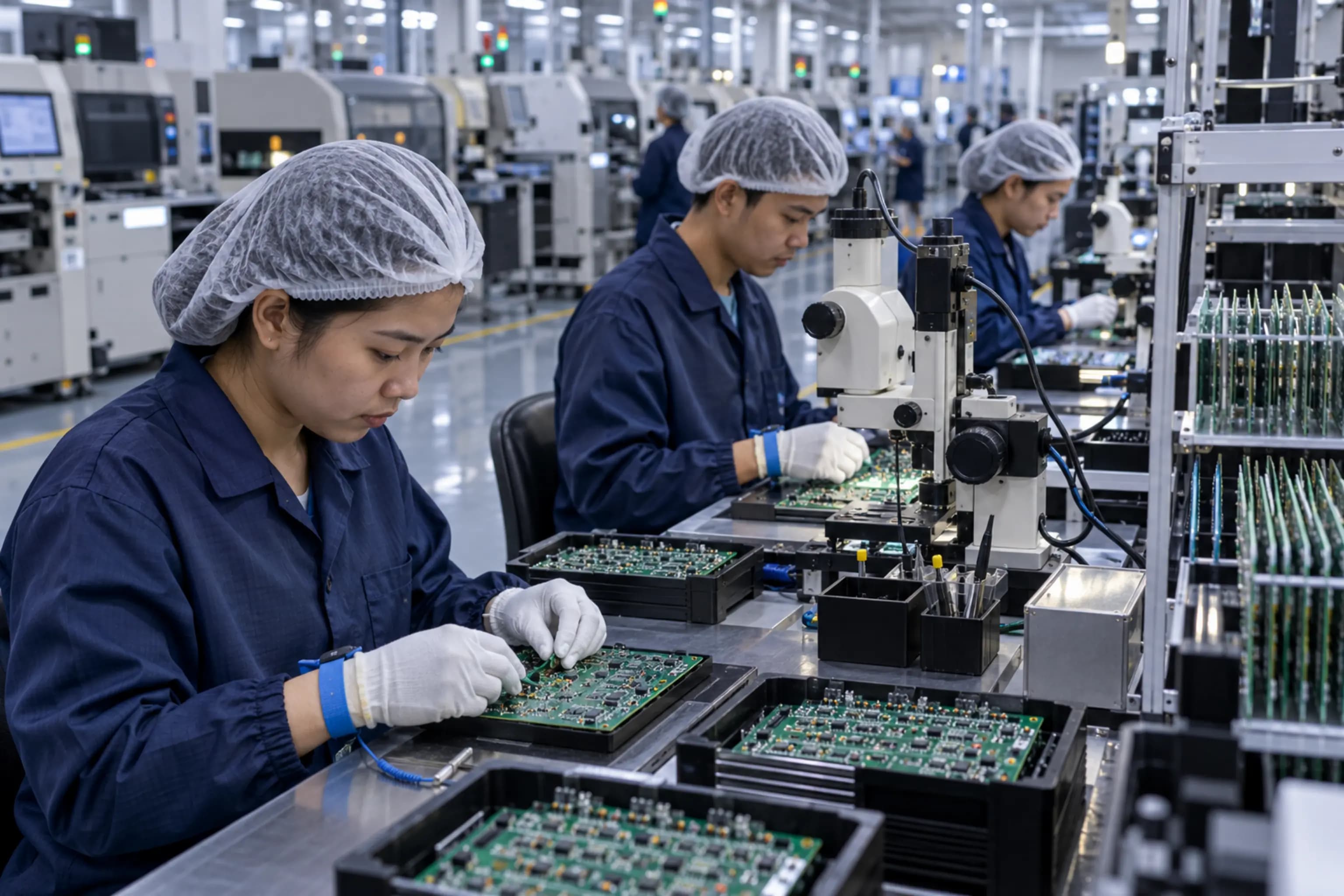
OEM, ODM, EMS & Contract Manufacturing
These terms describe different, non-interchangeable contract-manufacturing relationships. Which one applies to a given factory or product depends on who designs it, whose brand it carries, and how the commercial relationship is structured — not on the product category itself.
OEM — Original Equipment Manufacturer
A manufacturer that produces a product, or components of it, to a customer's own design and specification, for sale under the customer's brand.
- Designed by:
- The customer (brand owner) provides the design/specification
- Branded as:
- The customer's brand
An auto-parts supplier stamping and assembling a component to a vehicle brand's exact drawings, for installation in that brand's vehicle.
ODM — Original Design Manufacturer
A manufacturer that designs and produces a product in-house, which a customer then sells under its own brand with little or no design input from the customer.
- Designed by:
- The manufacturer (the ODM itself)
- Branded as:
- The customer's brand, though the manufacturer created the design
A consumer-electronics factory designing a device end-to-end and offering it to multiple brand customers to badge and sell as their own.
EMS — Electronics Manufacturing Services
A contract manufacturer providing manufacturing services for electronics companies — typically component sourcing, PCB assembly, box build, system integration, testing, fulfilment and after-market support — usually without owning the product design.
- Designed by:
- Typically the customer, though some EMS providers also offer design services
- Branded as:
- The customer's brand
A PCB-assembly and system-integration provider building finished electronic sub-assemblies for a global OEM brand's product line.
Contract Manufacturing (general term)
The umbrella term for any arrangement where one company manufactures a product or component on behalf of another under a commercial agreement — OEM, ODM and EMS are all specific forms of contract manufacturing, not synonyms for it.
- Designed by:
- Varies by the specific arrangement (see OEM/ODM/EMS above)
- Branded as:
- Varies by the specific arrangement
Any factory-for-hire relationship, from a single-part subcontract to a full turnkey production agreement.
Tier 1 / Tier 2 / Tier 3 Supplier
A supply-chain position, not a manufacturing model: Tier 1 suppliers sell directly to a brand/assembler; Tier 2 and Tier 3 suppliers sell components or materials to Tier 1 (or to each other), further upstream in the chain.
- Designed by:
- Varies — a Tier 1 supplier may itself be an OEM, ODM or EMS provider
- Branded as:
- Not brand-specific — describes supply-chain position, not product ownership
A component supplier selling sub-assemblies to a Tier 1 automotive-parts manufacturer, which in turn supplies the vehicle brand directly.
Evaluating an OEM/ODM/EMS Partner
Before committing to any manufacturing partner, buyers typically confirm the following — none of it is specific to any company named on this page, and T3 does not perform this diligence on a buyer's behalf.
- Product and process fit — does the factory already run the relevant process (injection moulding, SMT, stamping, CNC, etc.) at production scale, not just in a sample shop?
- Engineering support — is there in-house design-for-manufacturing (DFM) or design-for-assembly (DFA) capability, or is engineering entirely the buyer's responsibility?
- Minimum order quantity (MOQ) — does it match the buyer's realistic volume, including ramp-up periods?
- Tooling ownership — who owns the moulds, dies or jigs, and what happens to them if the relationship ends?
- Capacity — current utilization and headroom for the buyer's forecasted volume, including peak-season conflicts with other customers.
- Quality systems — certified quality management systems in place (e.g. ISO 9001) and whether they are current, not expired.
- Certification scope — do the factory's certifications actually cover the specific product category and production line being used?
- Traceability — can components and materials be traced back to their source lot, especially for regulated or safety-critical products?
- IP and confidentiality — what contractual protection exists for designs, tooling and proprietary specifications?
- Supplier control — how are the factory's own upstream suppliers qualified and monitored?
- Testing — what in-line and final testing is performed, and by whom (internal QA vs. independent third party)?
- Change control — what is the process for approving any change to materials, process or sub-suppliers after production has started?
- Lead time — quoted lead time under normal conditions versus realistic lead time during peak demand or material shortages.
- Incoterms — which delivery term applies (e.g. FOB, EXW, DDP), and who carries risk and cost at each stage.
- Warranty — what defect and warranty terms apply, and how disputes over defective units are resolved.
- Business continuity — exposure to single points of failure (single production line, single key supplier, single site) and any disaster-recovery plan.
- Audit rights — whether the buyer can conduct, or commission, an on-site factory audit before and during the relationship.
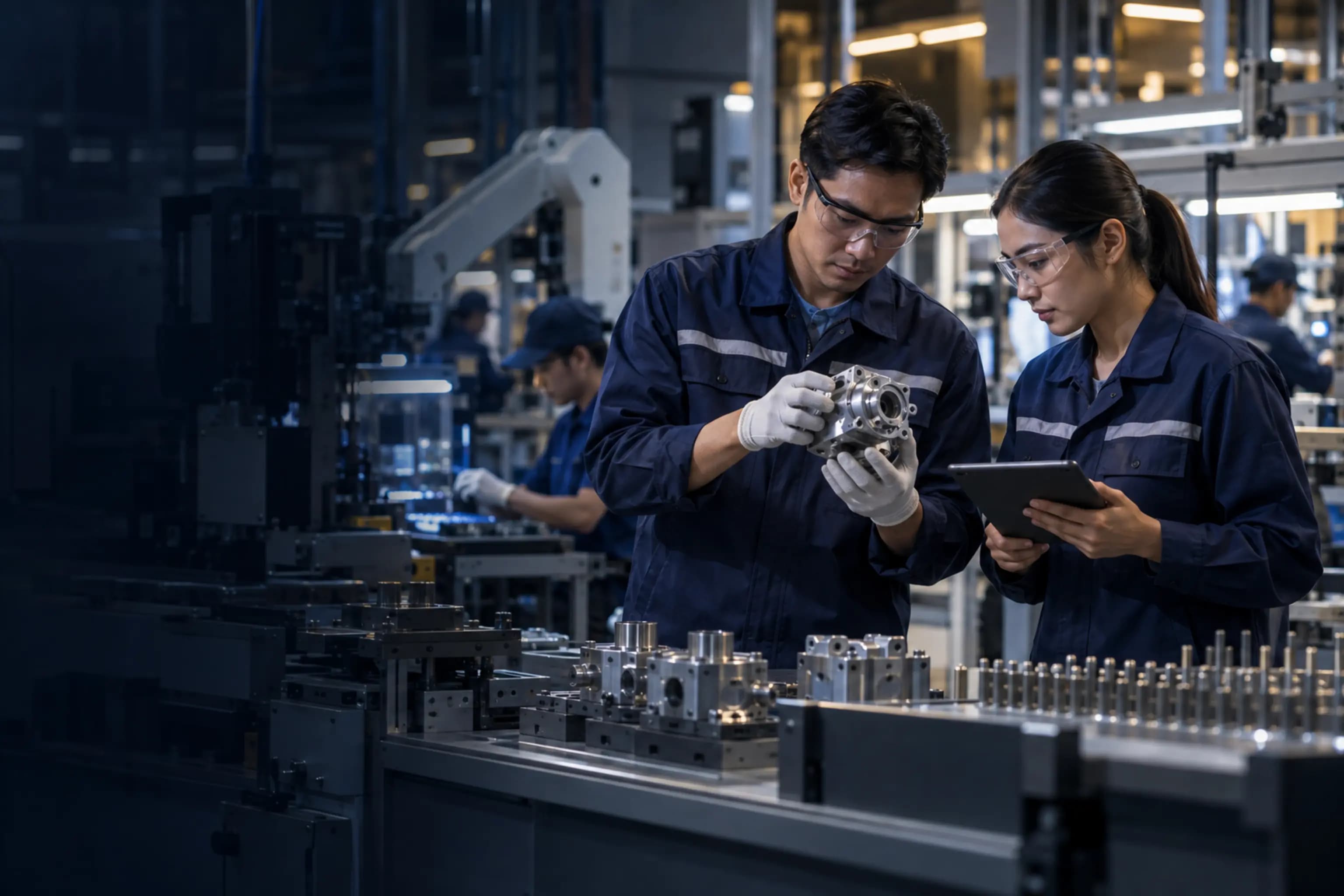
NON-RANKED · NON-EXHAUSTIVE
Manufacturer & OEM/ODM/EMS Directory
A sample of Thailand-based contract manufacturers, classified by capability.
Showing 4 of 4 entries
General Electronics & Diversified EMS
SVI Public Company Limited
SET-listed (SVI.BK) · Thai-foundedAn electronics manufacturing services provider headquartered in Pathum Thani offering PCBA, box build and system integration alongside plastic injection molding, metal stamping and cable-harness assembly — a vertically integrated contract-manufacturing model spanning multiple customer industries.
General Electronics & Diversified EMS
Stars Microelectronics (Thailand) PCL
SET-listedA diversified electronics manufacturing services provider serving semiconductor, optics/telecommunications, automotive, industrial, medical-device and professional audio/video customers, holding ISO 9001, ISO 13485, ISO 14000, ISO 22301 and TL 9000 certifications.
Medical Device Contract Manufacturing
Infus Medical (Thailand) Co., Ltd.
Founded 1990 · FDA-registered facilitiesA full-service contract manufacturer of single-use Class II and III medical devices for global OEM and private-label partners, certified to ISO 13485, ISO 14001 and ISO 45001, with facilities registered with the US FDA and compliant with GMP, ISO 9001 and EN 46001.
Precision Metal Fabrication & Tooling
PASS Engineering
Thailand-based · 25+ yearsA precision metal-fabrication and custom-manufacturing provider offering CNC machining, fabrication and engineering services to industrial customers from its Thailand facility.
Directory Disclosure
This directory is non-ranked and non-exhaustive — order carries no significance, and inclusion is not an endorsement or certification by T3. OEM, ODM or EMS status is stated only where the company's own materials or a reputable industry source describes it; no customer names, certifications, production capacities or revenue figures have been invented for any entry. Company-specific directories for Automotive and Electronics/Semiconductors manufacturers live on their own T3 chapters (linked above) rather than being repeated here.
Machinery & Production Technology
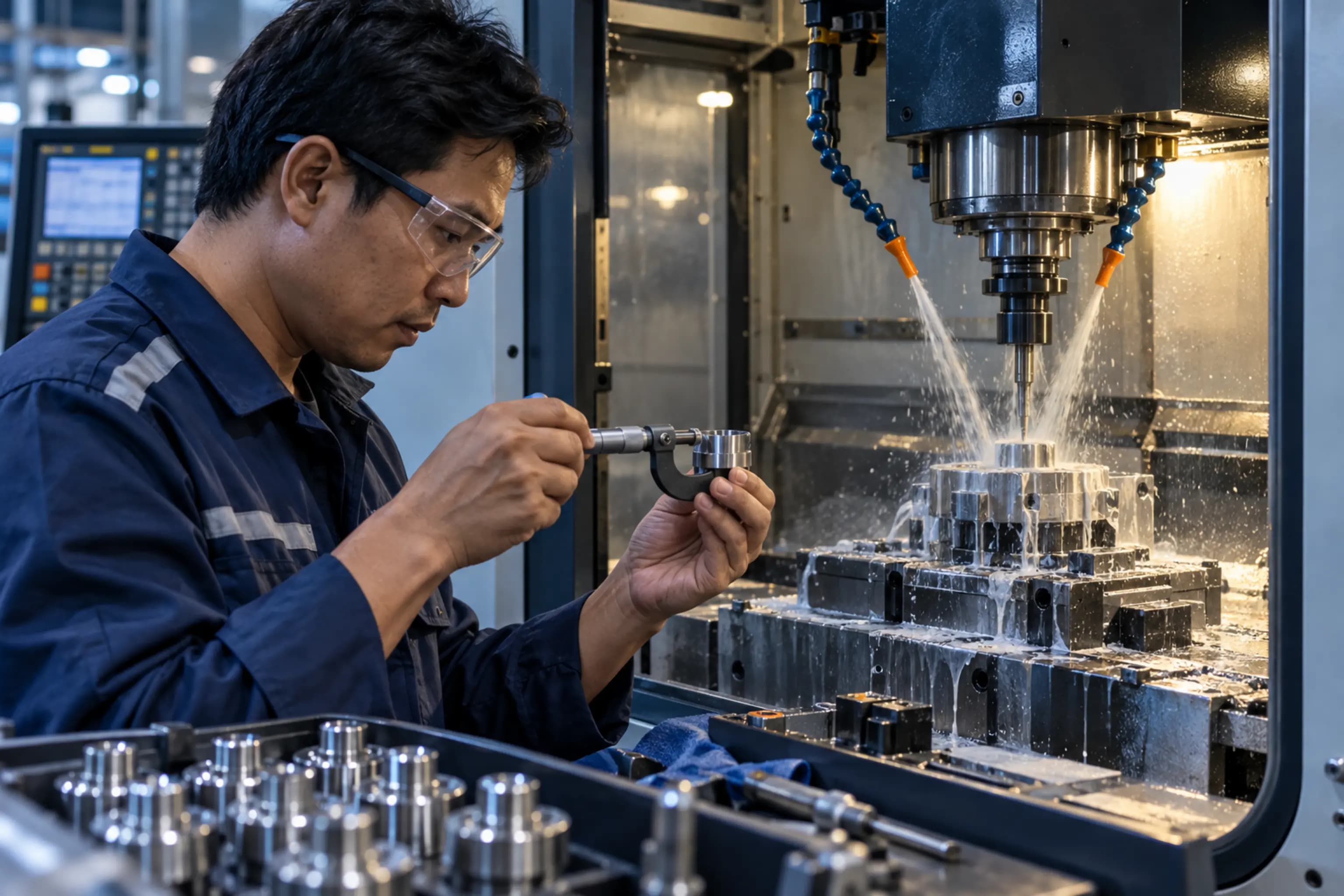
Thai factories operate across a wide span of process technologies — this section lists established categories of machinery and production technology in use across Thai manufacturing without attributing any specific machine model to a named supplier unless independently verified.
Machining
CNC turning and milling · Precision grinding · Wire and sinker EDM (electrical discharge machining) · Multi-axis machining centres
Metal Fabrication
Sheet-metal stamping and press-forming · Laser and plasma cutting · CNC bending and forming · Robotic and manual welding
Tooling
Stamping-die design and manufacture · Injection-mould tooling · Jig and fixture fabrication · Tool maintenance and refurbishment
Plastics Processing
Injection molding · Extrusion · Blow molding · Thermoforming
Electronics Assembly
Surface-mount technology (SMT) placement · Reflow and wave soldering · Automated optical inspection (AOI) · Box build and system integration
Automation & Robotics
Robotic pick-and-place · Automated guided vehicles (AGVs) · Programmable logic controller (PLC)-based process control · Industrial IoT/production-monitoring systems
Quality & Metrology
Coordinate measuring machines (CMM) · Automated optical and X-ray inspection · Statistical process control (SPC) · Environmental and reliability testing
Packaging & Materials Handling
Automated packaging lines · Palletizing and case-packing · Cold-chain packaging (food/pharma) · Warehouse automation and conveyor systems
Industrial Geography & Clusters
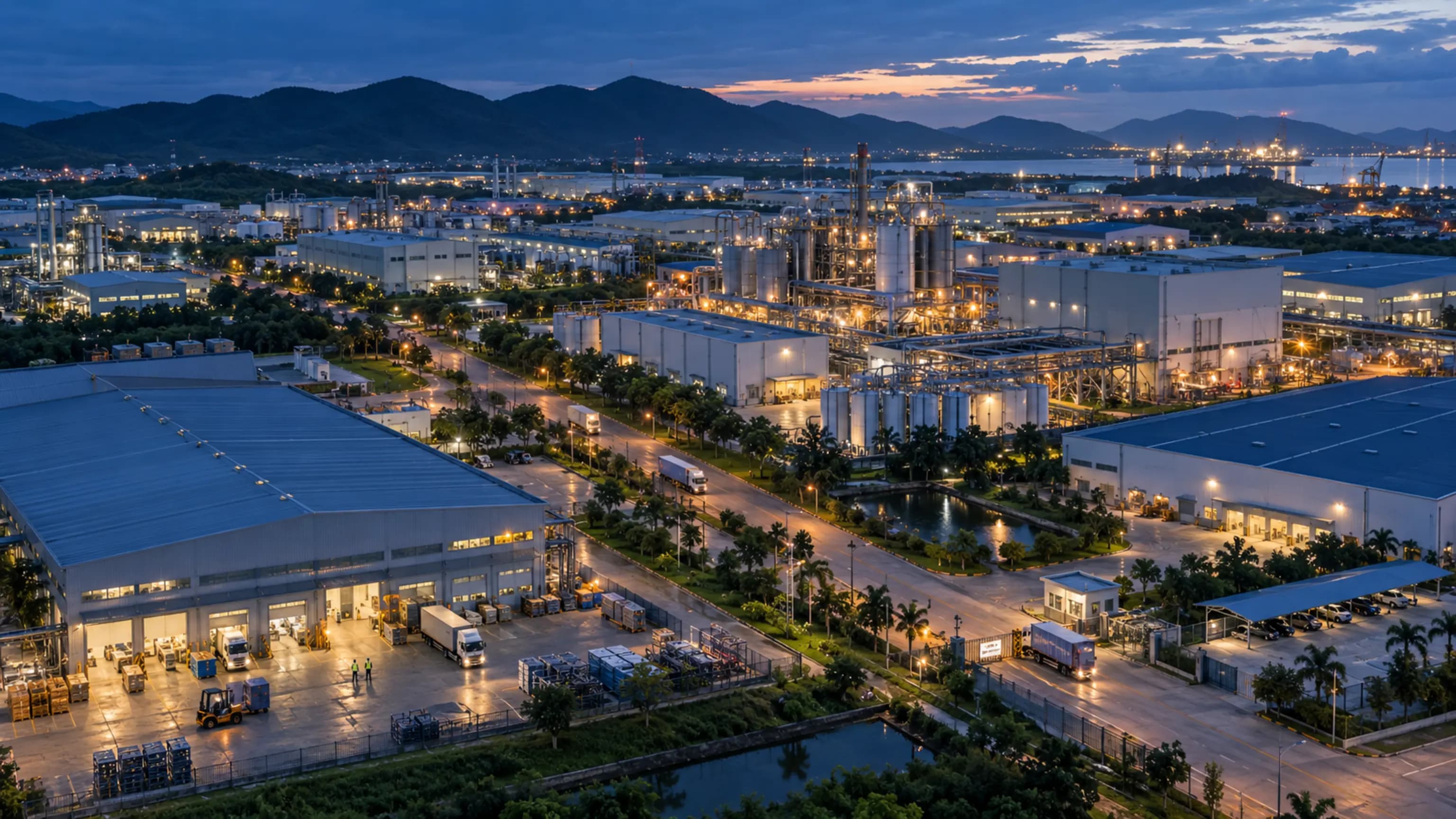
Thai manufacturing is concentrated in a small number of well-established industrial corridors, each with distinct specializations built up over decades. Locations below are drawn from verified company, government and industry-body sources — this page does not make unsupported land-price, ranking or "best location" claims for any cluster.
Eastern Seaboard / Eastern Economic Corridor (Rayong, Chonburi, Chachoengsao)
Thailand's largest and most diversified industrial corridor, coordinated by the Eastern Economic Corridor Office (EECO) — home to petrochemicals and refining at Map Ta Phut, automotive and auto-parts clusters around Pluak Daeng and Laem Chabang, and a broad base of electronics, machinery and logistics investment. A BOI document cited 29 industrial estates across the three provinces; industrial-estate developers separately report dozens of estates and zones across the corridor — figures from different publishers are not reconciled into a single count on this page.
- • Map Ta Phut petrochemical & refining complex (Rayong)
- • Laem Chabang deep-sea port & automotive cluster (Chonburi)
- • Eastern Economic Corridor Office (EECO)-coordinated target-industry zones
Bangkok Metropolitan Area & Samut Prakan
Thailand's corporate-services, R&D and back-end-electronics node, hosting national research infrastructure (NECTEC/NSTDA), the Electrical and Electronics Institute's testing services, and new semiconductor back-end investment in Samut Prakan.
- • NECTEC / NSTDA research infrastructure
- • Electrical and Electronics Institute (EEI) testing & certification
Ayutthaya & Pathum Thani
A long-established electronics, data-storage and general-manufacturing corridor anchored by major hard-disk-drive operations and Thailand Science Park's research and standards institutions.
- • Bang Pa-In Industrial Estate (Ayutthaya)
- • Thailand Science Park (Pathum Thani)
Nakhon Ratchasima (Korat) & the Northeast
An established northeastern manufacturing node combining data-storage manufacturing with agro-industrial and food-processing capacity serving the region's agricultural base.
- • Nakhon Ratchasima industrial zone
Southern Seaboard (Surat Thani, Songkhla)
A rubber-processing and agro-industrial corridor built on southern Thailand's natural-rubber and palm-oil production base, with Songkhla also serving as a logistics gateway toward Malaysia.
- • Rubber and agro-processing facilities, southern provinces
Industrial Estates
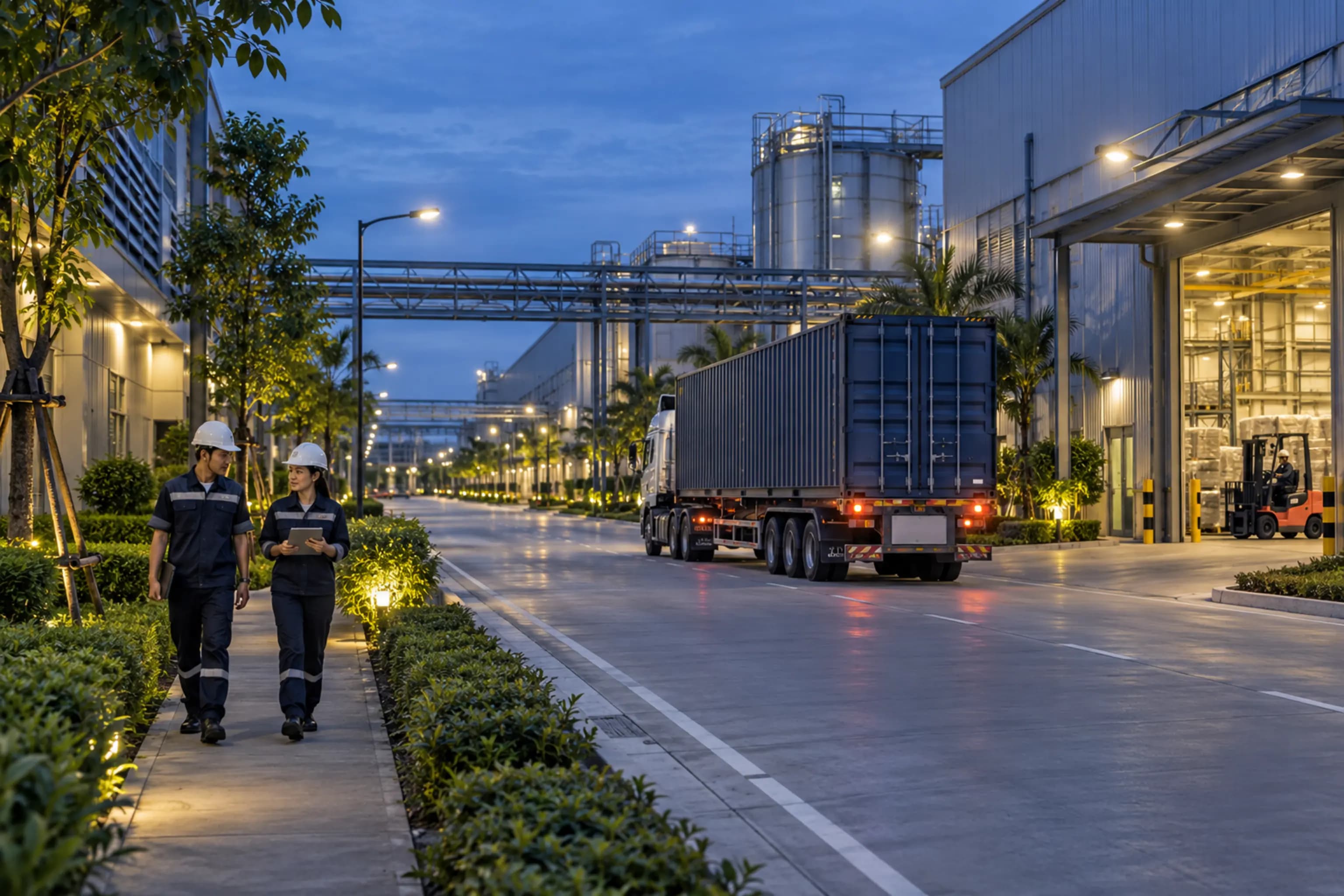
The Industrial Estate Authority of Thailand (IEAT) directly operates some industrial estates and jointly develops others with private-sector partners; separate private industrial-estate developers (e.g. WHA Group, Amata, Hemaraj/Frasers) operate estates under IEAT's regulatory framework without being IEAT itself. Not every estate is a free zone — free-zone status is a specific designation within an estate, covered in the next section.
IEAT-regulated industrial estates
62 estates across 16 provinces
62 industrial estates were reported in operation across 16 provinces, of which 12 are directly operated by IEAT and 50 are jointly developed with private-sector partners. This figure should be confirmed against IEAT's own current estate directory, as counts change as new estates are established.
Source: Industrial Estate Authority of Thailand, via Wikipedia summary of IEAT data (opens in a new tab) · Accessed 5 September 2026
EEC-area industrial estates
29 estates across Rayong, Chonburi & Chachoengsao (BOI figure)
A BOI document cited 29 industrial estates established across Rayong, Chonburi and Chachoengsao provinces — the three provinces forming the core Eastern Economic Corridor area. Private developers separately report additional estates and logistics zones in the same corridor; these are distinct counts from different publishers, not combined here.
Source: Thailand Board of Investment, EEC information booklet (opens in a new tab) · Accessed 5 September 2026
IEAT-operated estates
Estates developed and directly managed by the Industrial Estate Authority of Thailand itself.
IEAT joint-development estates
Estates developed in partnership between IEAT and a private industrial-estate developer, operating under IEAT's regulatory umbrella.
Private industrial-estate developers
Companies such as WHA Group, Amata Corporation and Frasers Property (formerly Hemaraj) that develop and manage industrial estates under IEAT's licensing and regulatory framework, without being IEAT themselves.
Free Zones & Customs-Advantaged Manufacturing
These are six distinct legal structures for customs-advantaged manufacturing in Thailand. They are not interchangeable, and a given factory typically qualifies for one or a specific combination — not all six at once.
IEAT Industrial Estates (general)
Standard industrial-estate zoning and infrastructure, without automatic duty-free status — a factory here still pays normal customs duty unless it separately qualifies for BOI promotion, a bonded warehouse or IEAT free-zone status.
Administered by: Industrial Estate Authority of Thailand (IEAT)
IEAT Free Zones
A specific designation within certain IEAT estates where imported materials, machinery and goods are treated as not having entered Thai customs territory — duty-free and VAT-free without a time limit, for qualifying industrial or commercial operations.
Administered by: Industrial Estate Authority of Thailand (IEAT)
Customs Free Zones (general, non-IEAT)
A general customs free-trade-zone designation where goods can be stored without paying import duty or tax for a defined period (reported as up to two years from the date of deposit) — time-limited, unlike an IEAT free zone.
Administered by: Thai Customs Department
BOI-Promoted Projects
Duty exemptions on imported machinery (and, for qualifying activities, raw materials) granted as part of a BOI investment-promotion certificate — a project-specific, incentive-based structure rather than a physical zone designation.
Administered by: Thailand Board of Investment (BOI)
Bonded Manufacturing Warehouse
A facility on a factory's own premises, licensed to import raw materials duty-free specifically for manufacturing products for export — distinct from an IEAT free zone, and tied to export use of the finished goods.
Administered by: Thai Customs Department
SEZ / Economic Corridors (e.g. EEC)
Geographically defined zones such as the Eastern Economic Corridor combining land-use planning, targeted-industry incentives and infrastructure investment — a policy framework layered on top of, not a replacement for, the customs and BOI structures above.
Administered by: Eastern Economic Corridor Office (EECO) and related SEZ authorities
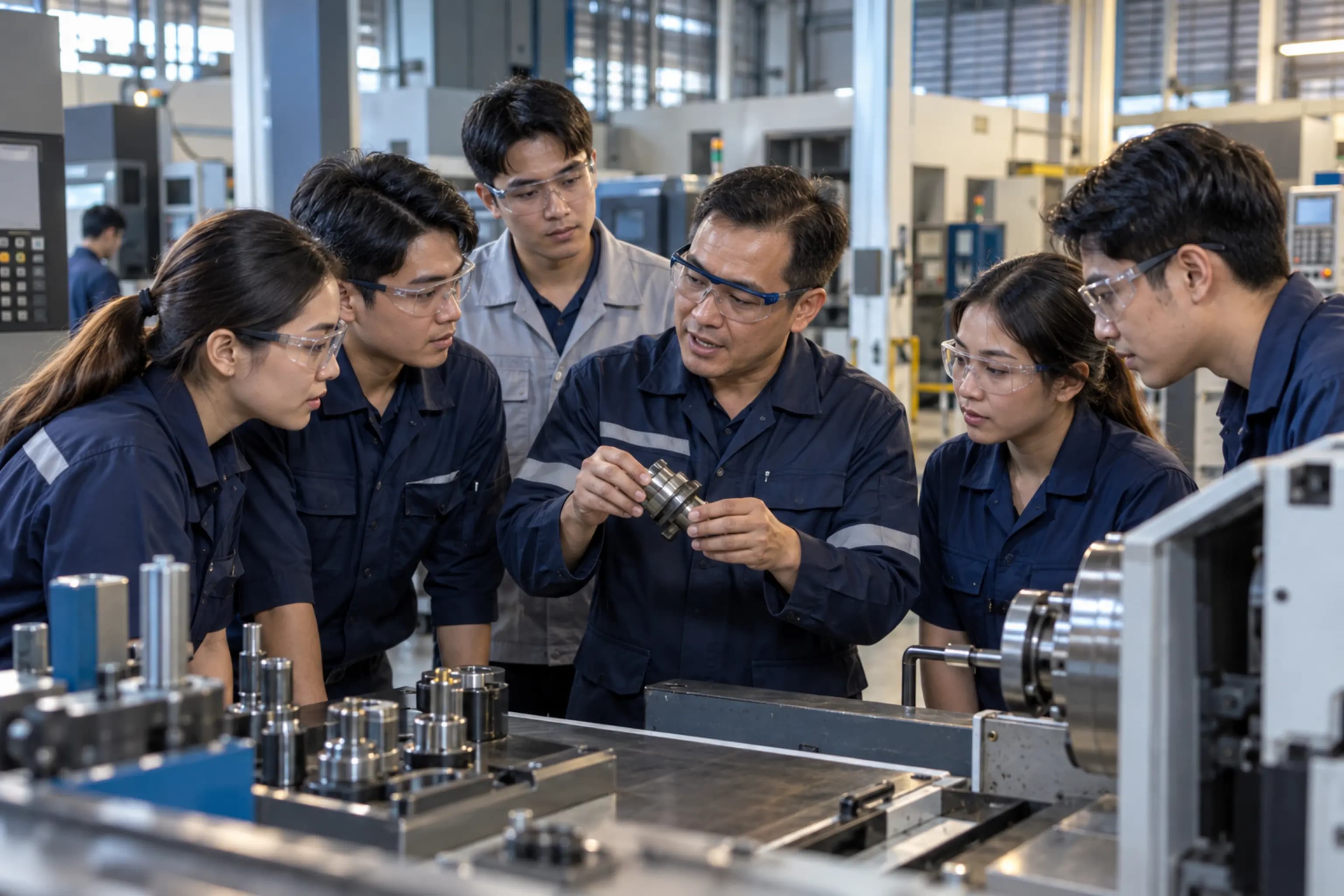
How to Establish a Manufacturing Business
A general, 22-step orientation to the institutions and stages involved — not legal or tax advice.
Orientation Only
This sequence is a general orientation to the institutions and stages involved in establishing a manufacturing operation in Thailand — it is not legal, tax or investment advice, does not apply identically to every activity or investment structure, and should be confirmed with BOI, a licensed Thai lawyer or a qualified advisor before acting.
Scope the product, process, target markets and estimated investment size before approaching any institution.
Confirm whether the specific manufacturing activity appears on BOI's current list of promoted activities and which incentive tier it may fall under.
Determine whether the business will operate as a Thai majority-owned company, a BOI-promoted company (which can permit 100% foreign ownership for many promoted activities), or another structure.
Reserve the proposed Thai company name before registration.
Draft the MOA, shareholder and director details, and registered capital structure.
Complete formal company registration.
Register the new company for a taxpayer identification number.
Register for value-added tax once revenue thresholds or business type require it.
Submit a BOI application (commonly via BOI's e-Investment online system) for the specific promoted activity identified in Step 2.
Choose between an IEAT industrial estate, a privately developed estate, a BOI-promoted zone, or an EEC-area location, based on the activity's zoning and infrastructure needs.
Secure the manufacturing site — foreign land ownership for factory use is generally addressed through BOI promotion or IEAT-zone mechanisms rather than direct freehold foreign ownership.
Certain manufacturing activities and scales require an EIA before construction can proceed.
Apply for the factory licence required to legally operate a manufacturing facility of the relevant size and activity type.
Secure construction/building permits for the factory premises.
For BOI-promoted projects, apply for the machinery import-duty exemption tied to the promotion certificate, commonly coordinated through BOI's single-window services.
Import promoted machinery within the timeframe specified on the promotion certificate and complete installation.
Apply for mandatory Thai Industrial Standards Institute certification for any product category on TISI's mandatory list.
Apply for any additional licences the specific product category requires (for example, Thai FDA registration for food, cosmetics or medical-device products).
Register the company and its employees with Thailand's social security system.
Apply for work permits and visas for any foreign management or technical staff, via BOI's facilitated process for promoted companies or the standard Labour Department/Immigration route otherwise.
Establish banking arrangements for the operating company.
Commence manufacturing operations, maintaining ongoing compliance with environmental monitoring, TISI certification renewal, BOI reporting conditions and standard tax filings.
Foreign Investment & Market Entry
Foreign Ownership Varies by Activity
Foreign ownership rules for manufacturing in Thailand vary by activity and structure — there is no blanket rule that all manufacturing is open to 100% foreign ownership, nor that all of it is restricted. Many manufacturing activities promoted by BOI permit majority or full foreign ownership for the promoted company; activities outside BOI promotion are generally subject to the Foreign Business Act's standard restrictions and exemption routes (including Thailand-US Treaty of Amity provisions for eligible US nationals, and general Board of Investment or Foreign Business License routes for other cases). The exact ownership structure available depends on the specific activity, and should be confirmed with a qualified legal advisor rather than assumed from a general rule of thumb.
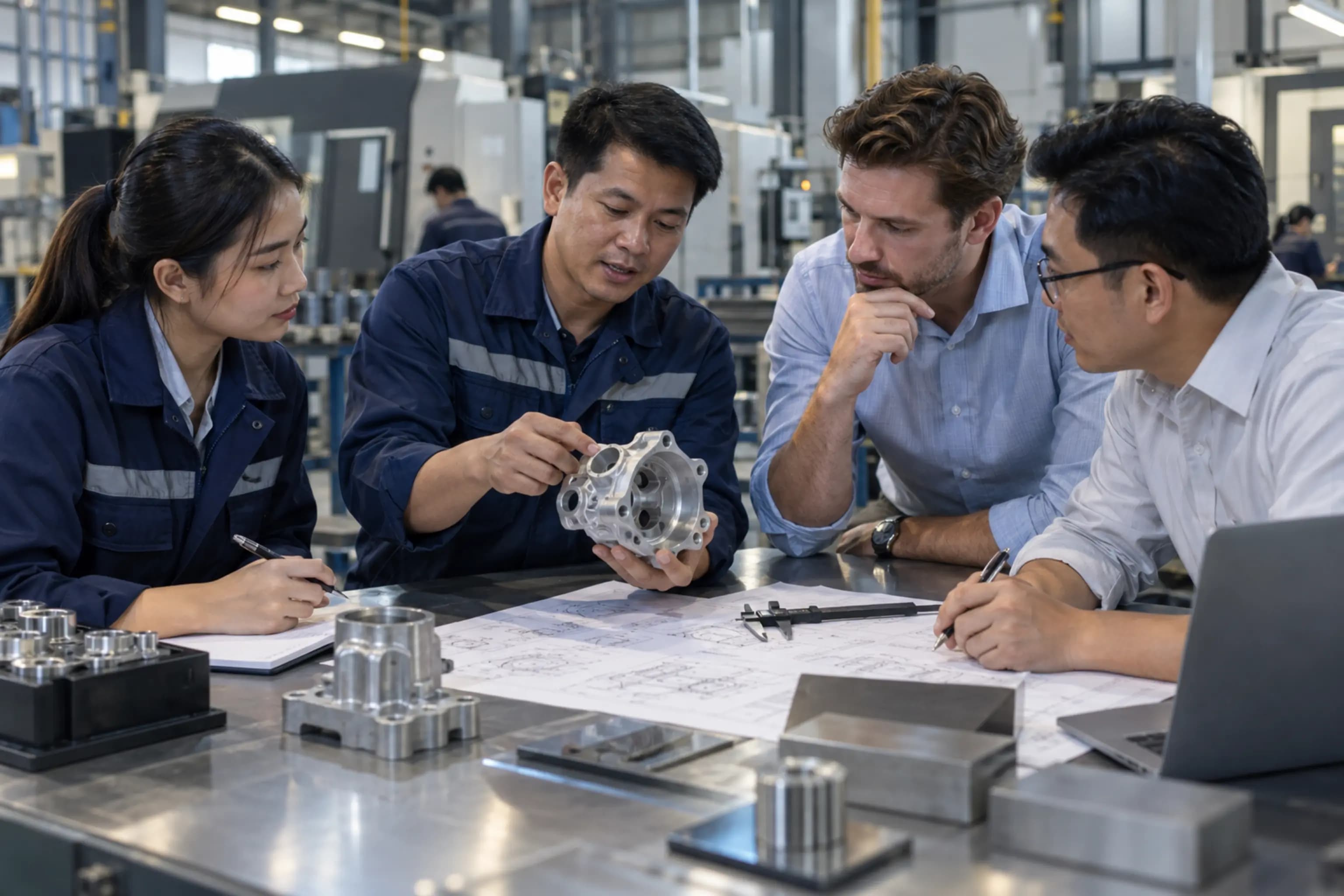
Thailand Board of Investment Pathways
BOI groups promoted activities into incentive tiers from A1+ (highest) to A4, each carrying a different corporate income tax (CIT) exemption structure. Approval is case-specific — the same activity type can receive different treatment depending on technology content, investment scale and location. The summary below describes the current published tier structure; always confirm a specific project's eligibility and tier directly with BOI.
| Tier | CIT Exemption | CIT Cap | Notes |
|---|---|---|---|
| A1+ | 10-13 years | Uncapped | Highest tier — upstream, advanced-technology and high-R&D activities. |
| A1 | Up to 8 years | Uncapped | Maximum incentives for high-priority activities, plus an additional 50% CIT reduction for 5 years in some cases. |
| A2 | Up to 8 years | Capped at 100% of qualifying investment (excluding land and working capital) | High-value activities with strong economic impact. |
| A3 | 5 years | Capped at 100% of qualifying investment | Medium-level incentives for established industries. |
| A4 | 3 years | Capped at 100% of qualifying investment | Standard industrial activities with more limited strategic priority. |
- R&D-linked merit incentive: up to an additional 5 years' CIT exemption for qualifying R&D spending (BOI materials cite thresholds such as R&D spend of at least 1% of first-three-years' sales, or a minimum absolute spend), added on top of a project's base tier.
- Smart and Sustainable Industry measure: supports machinery upgrading, automation, robotics and digital-technology adoption inside existing factories, separate from new-project promotion.
Professional Advice
BOI incentive tiers, eligibility conditions and privilege scopes are assessed project-by-project and change between guide editions and policy updates — the framework above (current as of the 15 January 2026 measures) is illustrative of currently promoted activity types, not a guarantee of eligibility for any specific project. Confirm the current tier, conditions and privileges directly with BOI or a qualified investment-promotion adviser before making an investment decision.
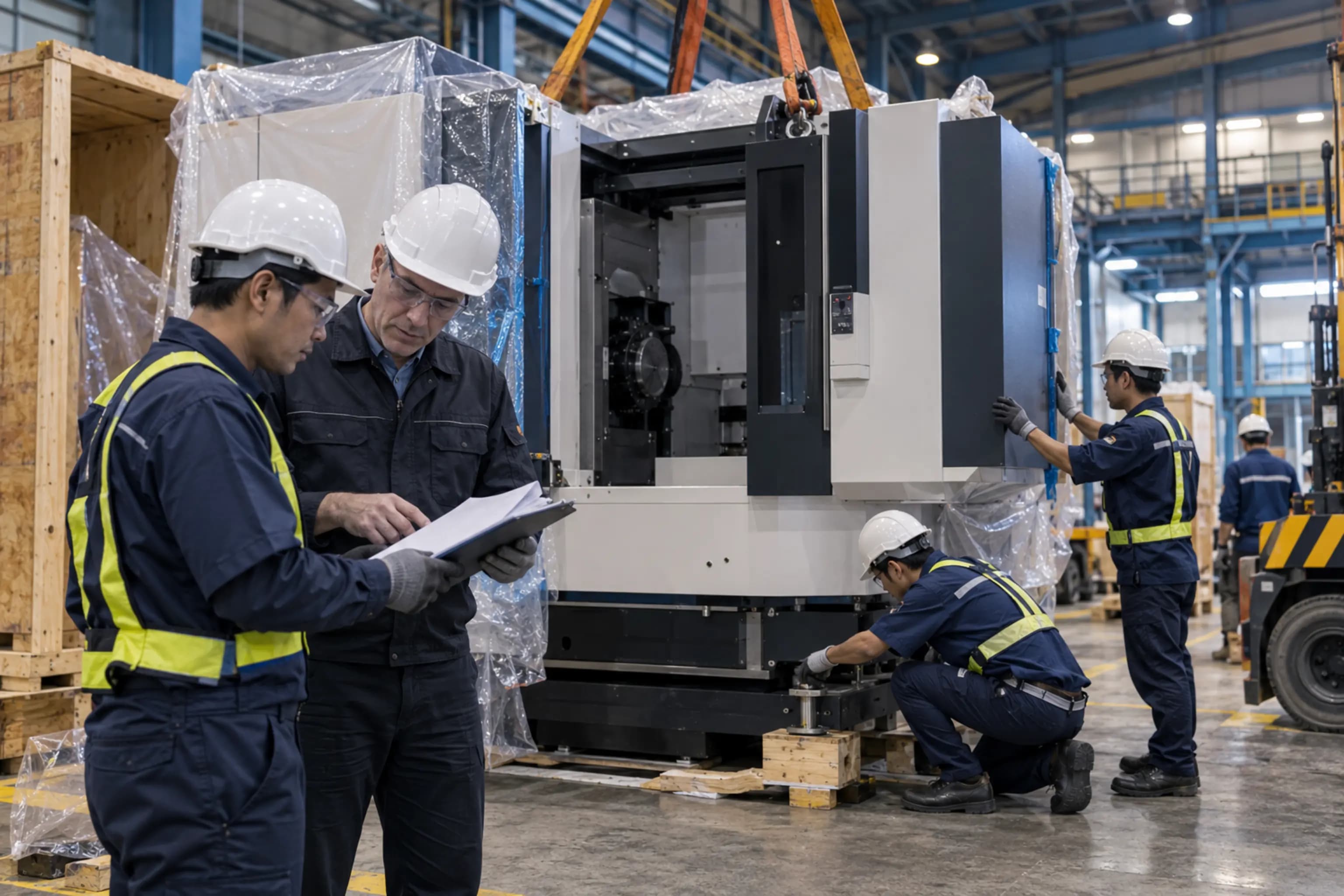
Importing Manufacturing Machinery
There are two distinct pathways for importing manufacturing machinery into Thailand — which one applies depends on whether the project holds BOI promotion, not on the type of machinery itself. Neither pathway makes all machinery imports duty-free automatically.
BOI-Promoted Machinery Import
Machinery used in a BOI-promoted project's production is commonly eligible for full customs-duty exemption, subject to conditions: the machinery must be used solely for the promoted activity, generally must remain in use for more than 5 years, and must be imported within 30 months of the promotion certificate's issue date. This exemption is tied to the specific promotion certificate, not a blanket rule for all machinery a promoted company imports.
Normal (Non-Promoted) Customs Import
Machinery imported without BOI promotion is subject to standard Thai Customs Department tariff classification, valuation and duty rates for the relevant HS code — there is no general duty exemption for machinery outside a promotion certificate, a bonded-warehouse arrangement, or an IEAT free-zone import.
Classification Note
Always confirm the applicable HS classification and duty treatment with the Thai Customs Department or a licensed customs broker before shipping — machinery classification disputes are common, and the same equipment can be classified differently depending on its function and configuration.
Raw Materials & Components Import
Raw-material and component imports for manufacturing follow different customs treatment depending on whether the finished goods are exported, sold domestically, or some combination of both — this page does not claim a blanket duty-free treatment for imported inputs sold into the domestic market.
- BOI-promoted projects can receive duty exemption or reduction on imported raw and essential materials used in production for export, under conditions specific to the promotion certificate — this privilege is generally tied to export use, not automatically extended to materials used in domestically sold output.
- A bonded manufacturing warehouse on a factory's own premises allows duty-free import of raw materials used solely to manufacture products for export — again an export-tied privilege, not a general duty exemption.
- Raw materials and components imported for domestic-market production are generally subject to standard Thai Customs Department duty and VAT (7%) unless another specific exemption or FTA preferential-tariff claim applies.
- Preferential tariff treatment under an FTA (see the FTA Network section below) requires a valid certificate or declaration of origin and confirmation that the specific product meets that agreement's rules-of-origin test — it is not automatic simply because the input is imported from an FTA partner country.
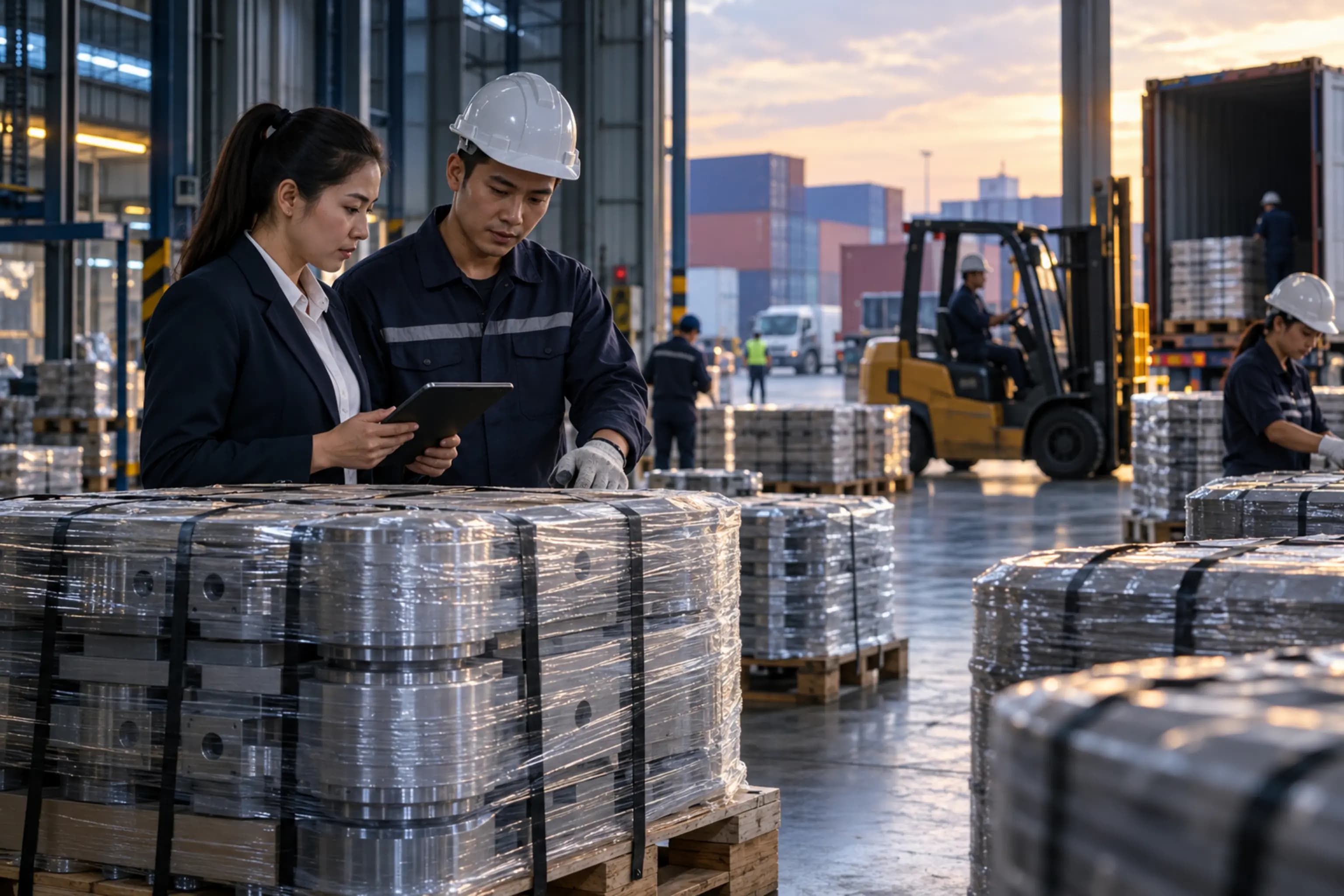
Thailand's FTA Network for Manufacturers
Thailand's free trade agreements affect manufacturers through tariff preference, rules of origin and certificate/declaration-of-origin requirements — the directory below is the same verified FTA dataset used elsewhere on T3's Business Gateway, organised by category rather than re-researched for this page.
Showing 15 of 15 entries
ASEAN & Regional
ASEAN Trade in Goods Agreement
ATIGA
In effectThe foundational ASEAN free-trade framework — preferential or zero tariffs on most goods traded within the ten-member ASEAN Economic Community.
ASEAN & Regional
Regional Comprehensive Economic Partnership
RCEP
In effect (Thailand, since 1 Jan 2022)The largest regional trade pact by GDP, linking ASEAN with China, Japan, South Korea, Australia and New Zealand under common rules of origin.
East Asia
ASEAN–China Free Trade Area
ACFTA / ACFTA 3.0
In effect; 3.0 Upgrade Protocol signed, not yet in forcePreferential tariff access into China, Thailand's largest single food and one of its largest overall export markets. A 3.0 Upgrade Protocol adding digital economy, green economy and supply-chain chapters was signed by ASEAN and China on 28 October 2025.
East Asia
ASEAN–Japan Comprehensive Economic Partnership
AJCEP
In effectRegional preferential access into Japan, alongside Thailand's bilateral JTEPA below.
East Asia
Japan–Thailand Economic Partnership Agreement
JTEPA
In effectBilateral preferential tariffs and streamlined rules of origin between Thailand and Japan, one of Thailand's established premium export markets.
East Asia
ASEAN–Korea Free Trade Area
AKFTA
In effectPreferential tariff access into South Korea for qualifying Thai goods.
East Asia
ASEAN–Hong Kong, China Free Trade Agreement
AHKFTA
In effect since 12 Feb 2021Preferential access into Hong Kong; a 2024 protocol expanded product-specific origin rules from around 200 to almost 600 tariff lines.
South Asia
ASEAN–India Trade in Goods Agreement
AITIGA
In effect (since 2010); under review and upgrade negotiationThe regional ASEAN–India goods agreement is in force but is currently being reviewed and upgraded — the 12th Joint Committee meeting was held in March 2026, targeting substantial conclusion of the upgrade during 2026.
South Asia
Thailand–India Early Harvest Scheme
Bilateral EHS, not a full FTA
In effect since 2006 — limited scopeA limited preferential arrangement covering 82 product categories (including fruit, processed food, gems and jewellery, iron and steel, auto parts and electronics). A comprehensive bilateral FTA/CECA covering services and investment remains under negotiation.
Oceania
Thailand–Australia Free Trade Agreement
TAFTA
In effectBilateral tariff preferences into Australia, complementing the regional AANZFTA below.
Oceania
ASEAN–Australia–New Zealand Free Trade Area
AANZFTA
In effectRegional preferential access into both Australia and New Zealand, alongside Thailand's bilateral agreements with each.
Oceania
Thailand–New Zealand Closer Economic Partnership
TNZCEP
In effectBilateral tariff preferences into New Zealand for qualifying Thai goods.
Americas
Thailand–Chile Free Trade Agreement
In effect since 5 Nov 2015
In effectTariffs eliminated on 90% of goods traded at entry into force, with the remaining 10% phased out between 2020 and 2023 — a rare Latin American market-access route for Thai exporters.
Americas
Thailand–Peru Early Harvest Scheme
Bilateral EHS, not a full FTA
In effect since 2011 — partial scopePreferential tariffs on approximately 70% of goods traded under the Early Harvest Scheme; the full bilateral FTA has not been concluded, so coverage is partial rather than comprehensive.
Under Negotiation
Thailand–European Union Free Trade Agreement
Under negotiation — not yet signed or in force
Under negotiationAround two-thirds of the agreement (15 of 24 chapters) was reported concluded as of July 2026, with both sides targeting conclusion in 2026. A further negotiating round was scheduled for late September 2026 in Thailand. This is not a signed or in-force agreement.

Rules of Origin
An FTA's preferential tariff is never automatic — a manufacturer must first show that a product qualifies as originating under that specific agreement's rules before a lower duty applies at the destination market.
- Origin is determined product-by-product under each FTA's own rule — commonly a change in tariff classification, a regional value-content threshold, or a specific manufacturing process, not simply where final assembly happens.
- Qualifying goods generally need a Certificate of Origin (or, for some agreements, a self-declaration) issued or authorised through Thailand's Department of Foreign Trade (DFT) before shipment.
- The correct HS/AHTN tariff classification must be confirmed first — the rule of origin and the applicable preferential rate both depend on it.
- Keep supporting evidence (bills of materials, supplier declarations, production records) on file — customs authorities on either side of a shipment can request proof that the origin claim is accurate.
- Rules of origin differ by agreement even for the same product, so a shipment can qualify under RCEP but not under a bilateral FTA, or vice versa — check the specific route being used, not the network as a whole.
Confirm Before Shipping
Preferential tariffs are not automatic. Eligibility depends on the correct HS/AHTN classification, the product-specific rule of origin and valid supporting evidence or certification. Confirm the current rate and requirements for each shipment through the official tools above.
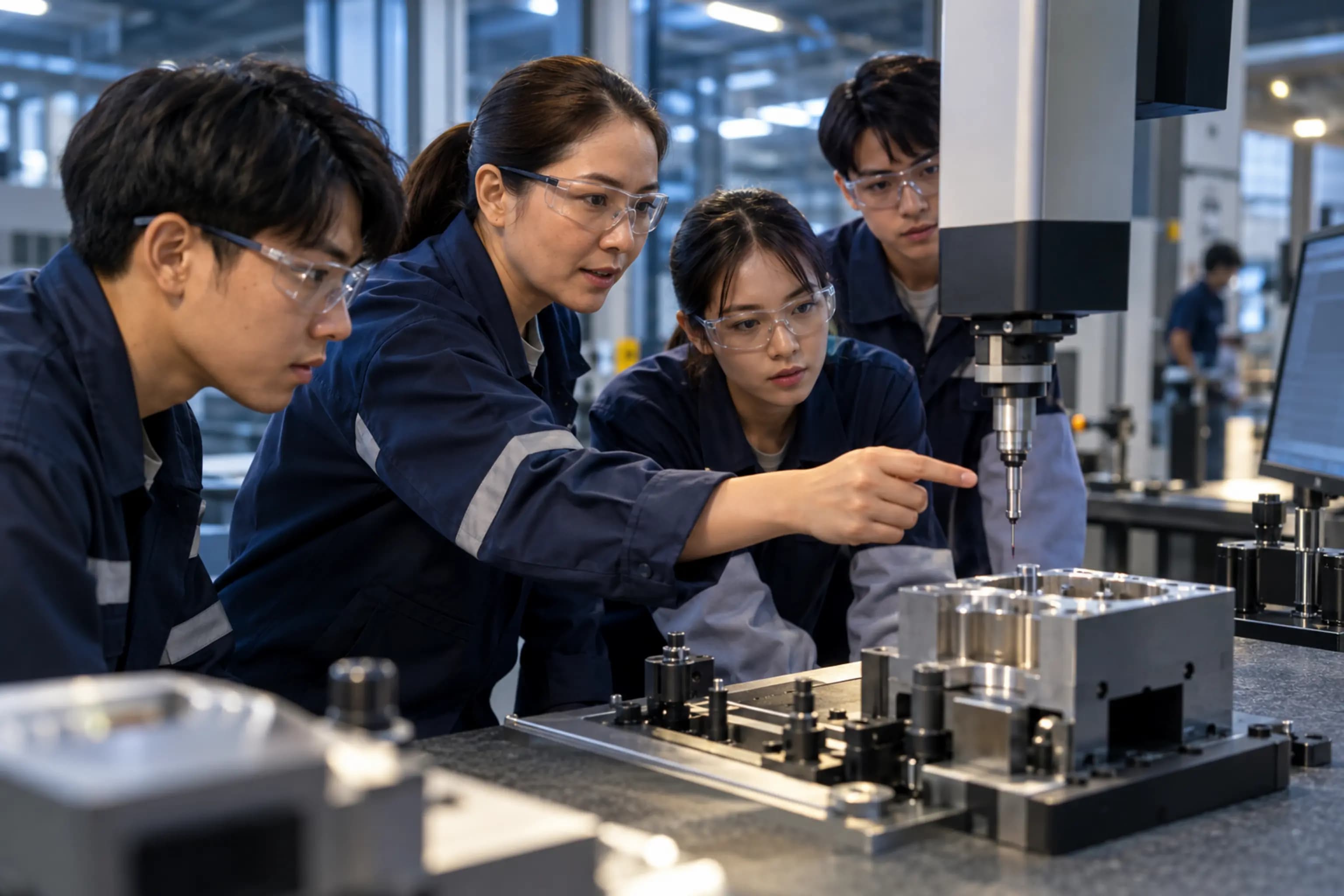
Workforce, Skills & Quality Infrastructure
Manufacturing workforce development and product-quality infrastructure in Thailand sit with distinct institutions, each with a defined role.
Showing 3 of 3 entries
Workforce & Quality
Department of Skill Development (DSD)
The core public institution for workforce skill training, retraining and upgrading across manufacturing, services and commercial sectors, supervising Skill Development Institutes located in every region of Thailand.
Workforce & Quality
Thailand Professional Qualification Institute (TPQI)
A public organization linking occupational standards to Thailand's National Skill Standards, working alongside DSD to align workforce qualifications with industry-recognized competency frameworks.
Workforce & Quality
Thai Industrial Standards Institute (TISI)
Thailand's national standards body and central authority for standardization and conformity assessment under the Ministry of Industry — the operational pillar of Thailand's National Quality Infrastructure for manufactured products.
Government & Regulatory Institutions
Showing 3 of 3 entries
Government & Regulatory
Ministry of Industry
Sets Thailand's industrial policy and oversees the country's manufacturing and standards agencies, including TISI, IEAT, the Office of Industrial Economics (OIE) and the Department of Industrial Works.
Government & Regulatory
Department of Industrial Works (DIW)
Issues and administers factory operating licences and regulates industrial-facility safety, environmental and operational compliance.
Government & Regulatory
Office of Industrial Economics (OIE)
Compiles and publishes Thailand's official manufacturing production index and industrial-economic statistics under the Ministry of Industry.
Associations & Trade Bodies
Verified associations, chambers, federations, business councils and government bodies connected to Manufacturing in Thailand.
- Government Agency
Thailand Board of Investment
BOI
Thailand's national investment-promotion agency — grants tax and non-tax incentives for promoted activities and coordinates investor support through offices across Asia, Europe, Australia and the US.
- IT & AI
- Textiles
- Food, Beverage & FMCG
- Rubber & Raw Materials
- Energy & Renewable Energy
- Cosmetics
- Seafood
- Gems, Jewellery & Precious Stones
- Packaging, Printing & Labelling
- Furniture, Wood & Interior Products
- Electrical, Electronics & Semiconductors
- Halal Economy
- Education
- Real Estate / Living
- Spa, Wellness & Beauty Services
- Logistics
- Trade Services
- Manufacturing
- Professional & Business Services
- Healthcare
- Government Agency
Department of Industrial Works
DIW
Regulates factory licensing, industrial operations and environmental and safety compliance under the Ministry of Industry.
- Government Agency
Thai Industrial Standards Institute
TISI
Sets and certifies Thai industrial product standards and serves as Thailand's ISO member body.
- Government Agency
Industrial Estate Authority of Thailand
IEAT
Develops and manages 66 industrial estates and free zones across 16 provinces, including investor services for estate-based manufacturers.
- Government Agency
Eastern Economic Corridor Office
EECO
Coordinates investment and infrastructure development across the Eastern Economic Corridor provinces of Chachoengsao, Chonburi and Rayong.
- Government Agency
Ministry of Industry
MOI
Sets industrial policy and oversees manufacturing and standards agencies including TISI, IEAT, OIE and DIW.
- Government Agency
Office of Industrial Economics
OIE
Produces industrial economic policy analysis, statistics and research for the Ministry of Industry, including electronics and rubber-linked manufacturing data.
- Apex Federation
Federation of Thai Industries
FTI
Thailand's apex industrial federation — represents manufacturers across every major industry group (48 industry clubs, including dedicated Food Processing and Electrical & Electronics industry clubs) and advises on industrial policy.
- Industry Association
Thai Subcontracting Promotion Association
Thai Subcon
A subcontracting and industrial-parts supply-chain network of 520+ members across six industry clusters.
- Industry Association
Thai Tool and Die Industry Association
TDIA
Represents Thailand's tool, die and mold manufacturing industry.
DATES SUBJECT TO CHANGE
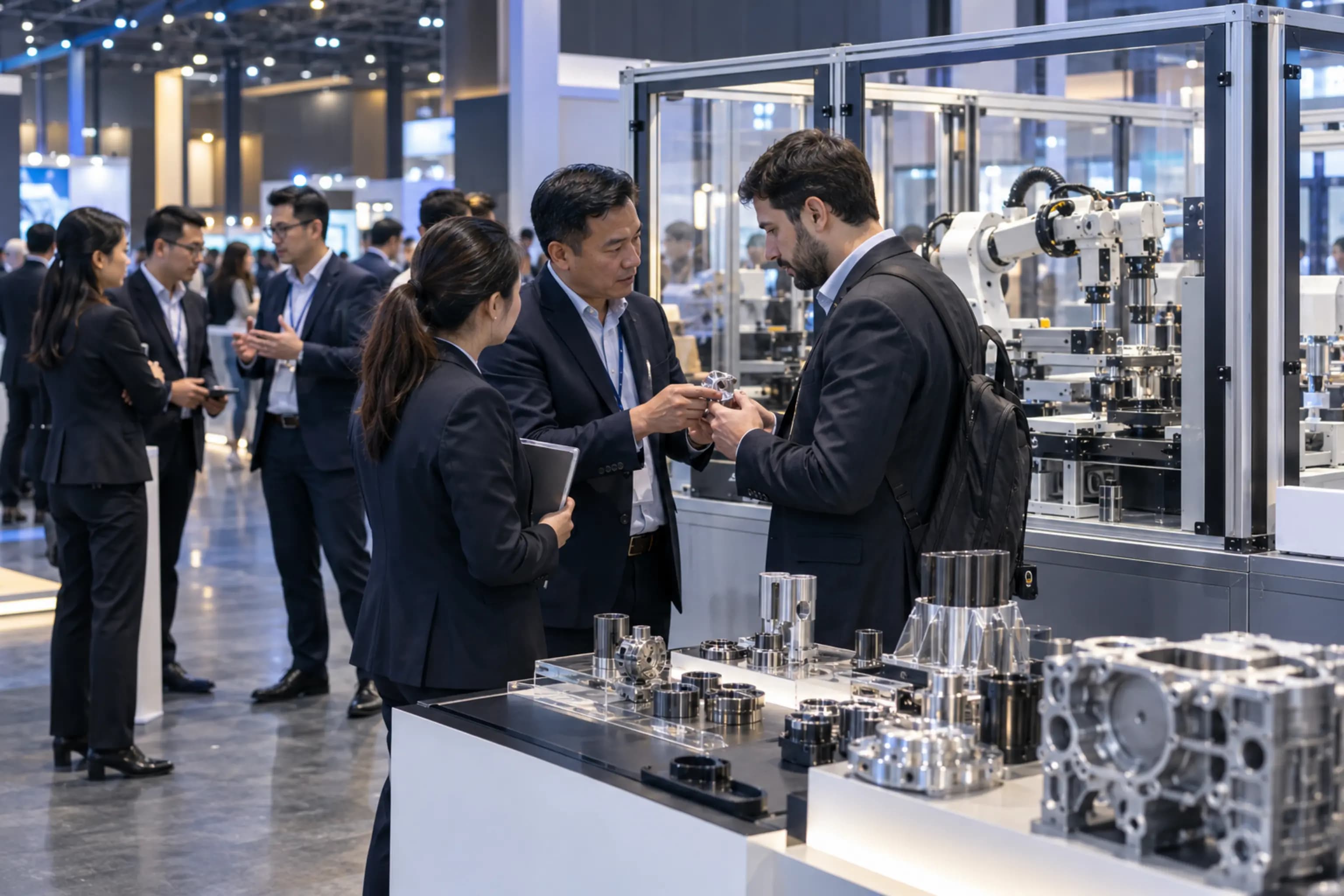
Industrial Events
Manufacturing and industrial trade events in Thailand — confirm dates and venues on each event's official website before planning travel.
METALEX 2026
ASEAN's leading machine-tools and metalworking exhibition, covering CNC machining, sheet-metalworking, welding, automation, industrial robots, metrology and smart-manufacturing solutions.
- Dates:
- 18-21 November 2026
- Venue:
- BITEC, Bangkok
Manufacturing Expo 2026
ASEAN's manufacturing event combining six co-located shows covering plastics, moulding, automotive, surface finishing, assembly and industrial automation.
- Dates:
- 17-20 June 2026
- Venue:
- BITEC, Bangkok
Sources & Methodology
This page separates verified facts from interpretation throughout: every statistic names its publisher, source URL and access date; every disclosure notes where figures from different sources are kept apart rather than merged; and every orientation section (establishment pathway, BOI tiers, free-zone structures) is explicitly flagged as orientation, not legal, tax or investment advice. Company and directory entries are limited to what each company's own materials or a reputable industry source states — no capacities, customers, certifications or financial figures have been invented for this page.
Looking to Source, Invest or Connect?
T3 can point you to sector-specific directories, official government contacts, and the right BOI pathway for your manufacturing activity — this page is a starting map, not a substitute for direct verification with the named institutions.
T3 Business Inquiry
Tell T3 about your manufacturing interest and we'll point you to the right directories, government contacts and BOI pathway. This form does not create a booking, match or guaranteed outcome — see the consent notice below the form for details.